Heart Failure Research Group, Baker IDI Heart and Diabetes Institute, Melbourne, Australia.
PLoS One. 2013 Nov 12;8(11):e80280. doi: 10.1371/journal.pone.0080280. eCollection 2013.
Disturbances in oxygen levels have been found to impair cardiac organogenesis. It is known that stem cells and differentiating cells may respond variably to hypoxic conditions, whereby hypoxia may enhance stem cell pluripotency, while differentiation of multiple cell types can be restricted or enhanced under hypoxia. Here we examined whether HIF-1alpha modulated Wnt signaling affected differentiation of iPS cells into beating cardiomyocytes.
We investigated whether transient and sustained hypoxia affects differentiation of cardiomyocytes derived from murine induced pluripotent stem (iPS) cells, assessed the involvement of HIF-1alpha (hypoxia-inducible factor-1alpha) and the canonical Wnt pathway in this process.
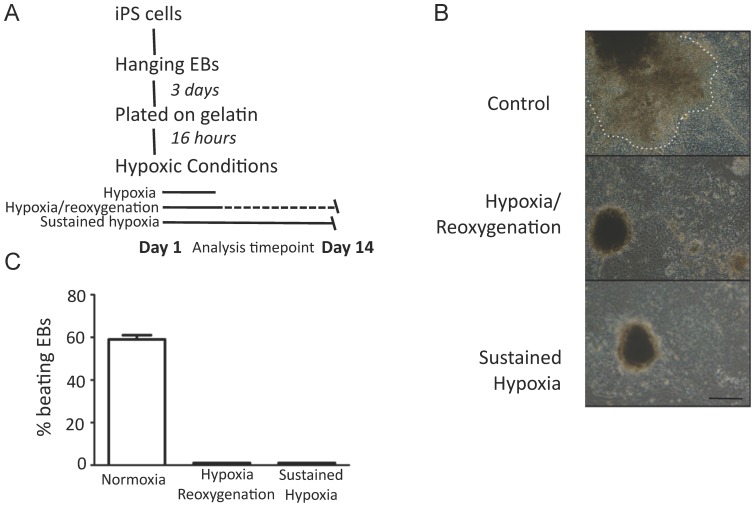
Embryoid bodies (EBs) derived from iPS cells were differentiated into cardiomyocytes and were exposed either to 24 h normoxia or transient hypoxia followed by a further 13 days of normoxic culture.
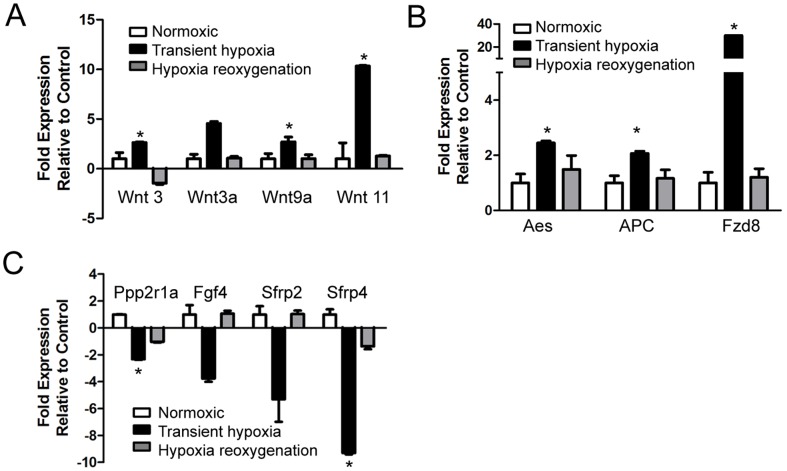
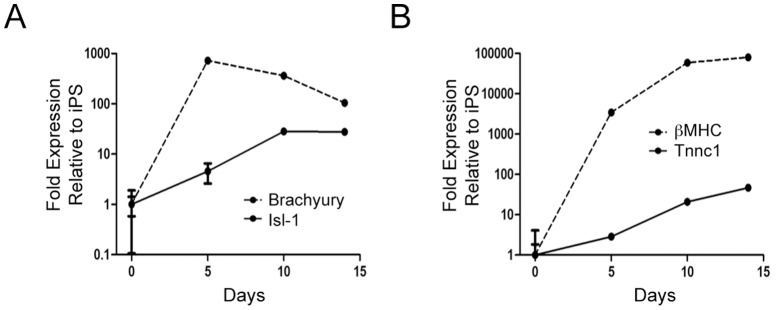
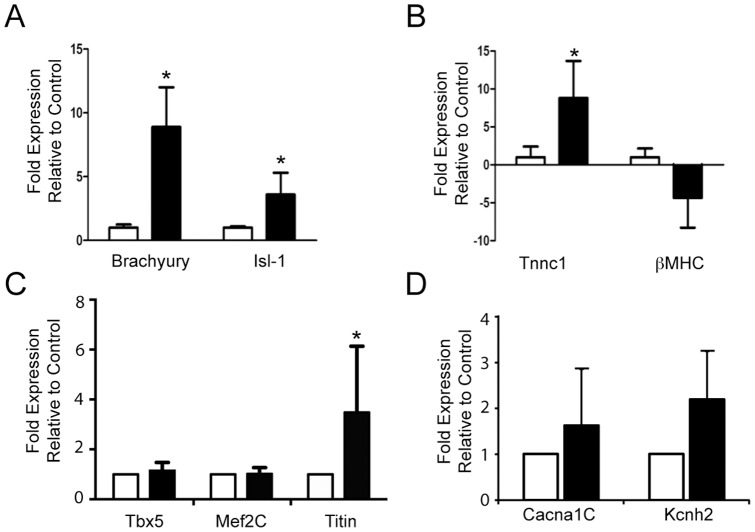
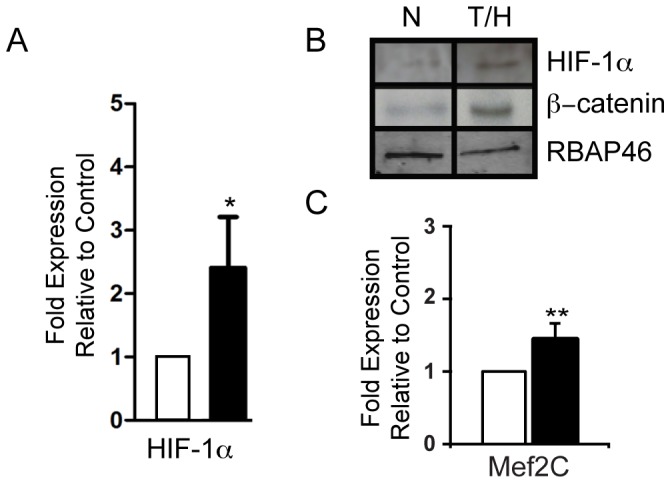
At 14 days of differentiation, 59 ± 2% of normoxic EBs were beating, whilst transient hypoxia abolished beating at 14 days and EBs appeared immature. Hypoxia induced a significant increase in Brachyury and islet-1 mRNA expression, together with reduced troponin C expression. Collectively, these data suggest that transient and sustained hypoxia inhibits maturation of differentiating cardiomyocytes. Compared to normoxia, hypoxia increased HIF-1alpha, Wnt target and ligand genes in EBs, as well as accumulation of HIF-1alpha and beta-catenin in nuclear protein extracts, suggesting involvement of the Wnt/beta-catenin pathway.
Hypoxia impairs cardiomyocyte differentiation and activates Wnt signaling in undifferentiated iPS cells. Taken together the study suggests that oxygenation levels play a critical role in cardiomyocyte differentiation and suggest that hypoxia may play a role in early cardiogenesis.
氧水平的干扰已被发现会损害心脏器官发生。已知干细胞和分化细胞可能对低氧条件有不同的反应,其中低氧可能增强干细胞的多能性,而多种细胞类型的分化在低氧下可能受到限制或增强。在这里,我们研究了 HIF-1alpha 是否调节 Wnt 信号影响 iPS 细胞分化为搏动性心肌细胞。
我们研究了短暂和持续缺氧是否影响从鼠诱导多能干细胞(iPS)分化而来的心肌细胞的分化,评估了 HIF-1alpha(缺氧诱导因子-1alpha)和经典 Wnt 途径在这一过程中的作用。
从 iPS 细胞衍生的类胚体(EBs)分化为心肌细胞,并分别暴露于 24 小时常氧或短暂缺氧,随后进行 13 天的常氧培养。
在分化的第 14 天,59±2%的常氧 EBs 搏动,而短暂缺氧在第 14 天消除了搏动,EBs 显得不成熟。缺氧诱导 Brachyury 和胰岛 1 mRNA 表达显著增加,同时肌钙蛋白 C 表达减少。总的来说,这些数据表明短暂和持续的缺氧抑制了分化心肌细胞的成熟。与常氧相比,缺氧增加了 EBs 中的 HIF-1alpha、Wnt 靶基因和配体基因,以及 HIF-1alpha 和β-连环蛋白在核蛋白提取物中的积累,表明 Wnt/β-连环蛋白途径的参与。
缺氧损害心肌细胞分化并激活未分化 iPS 细胞中的 Wnt 信号。总之,该研究表明氧合水平在心肌细胞分化中起着关键作用,并表明缺氧可能在早期心脏发生中发挥作用。