Department of Molecular Cell Biology, Weizmann Institute of Science, 234 Herzl Street, Rehovot, 76100, Israel.
Cancer Metab. 2013 Feb 4;1(1):9. doi: 10.1186/2049-3002-1-9.
The p53 tumor suppressor protein is a transcription factor that initiates transcriptional programs aimed at inhibiting carcinogenesis. p53 represses metabolic pathways that support tumor development (such as glycolysis and the pentose phosphate pathway (PPP)) and enhances metabolic pathways that are considered counter-tumorigenic such as fatty acid oxidation.
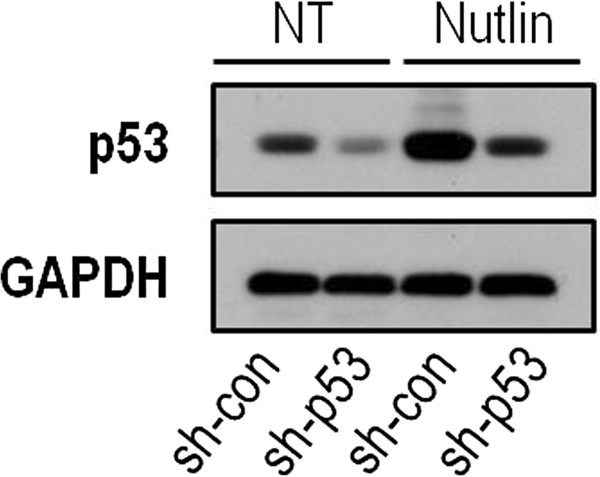
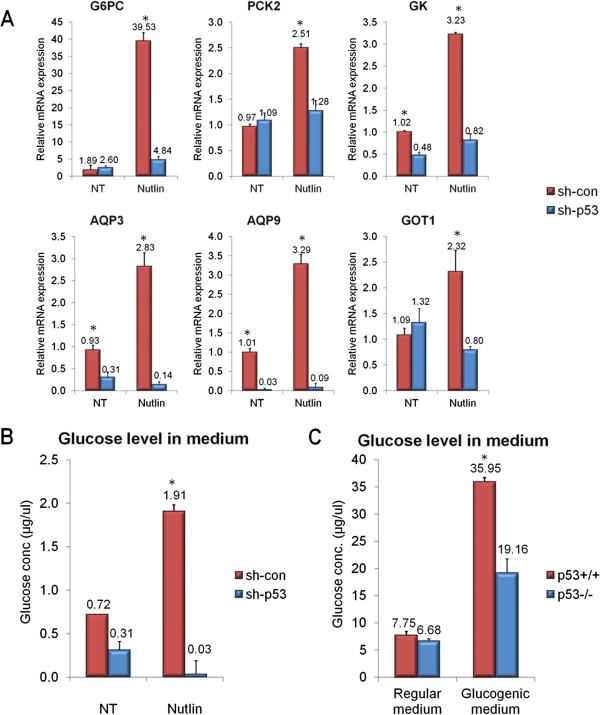
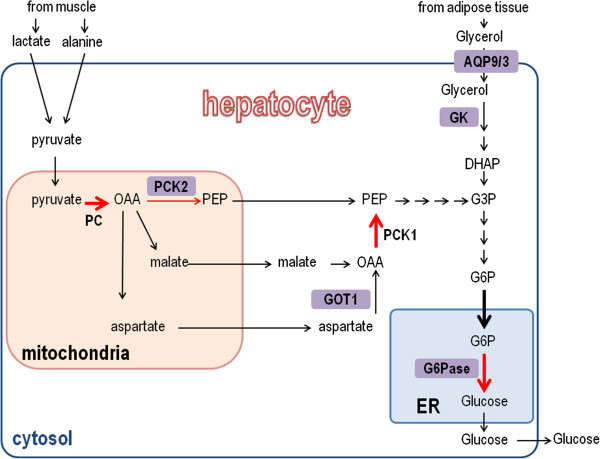
In an attempt to comprehensively define metabolic pathways regulated by p53, we performed two consecutive high-throughput analyses in human liver-derived cells with varying p53 statuses. A gene expression microarray screen followed by constraint-based modeling (CBM) predicting metabolic changes imposed by the transcriptomic changes suggested a role for p53 in enhancing gluconeogenesis (de novo synthesis of glucose). Examining glucogenic gene expression revealed a p53-dependent induction of genes involved in both gluconeogenesis (G6PC, PCK2) and in supplying glucogenic precursors (glycerol kinase (GK), aquaporin 3 (AQP3), aquaporin 9 (AQP9) and glutamic-oxaloacetic transaminase 1 (GOT1)). Accordingly, p53 augmented hepatic glucose production (HGP) in both human liver cells and primary mouse hepatocytes.
These findings portray p53 as a novel regulator of glucose production. By facilitating glucose export, p53 may prevent it from being shunted to pro-cancerous pathways such as glycolysis and the PPP. Thus, our findings suggest a metabolic pathway through which p53 may inhibit tumorigenesis.
p53 肿瘤抑制蛋白是一种转录因子,可启动旨在抑制致癌作用的转录程序。p53 抑制支持肿瘤发展的代谢途径(如糖酵解和戊糖磷酸途径 (PPP)),并增强被认为具有抗肿瘤作用的代谢途径,如脂肪酸氧化。
为了全面定义 p53 调节的代谢途径,我们在具有不同 p53 状态的人源性肝细胞中进行了两次连续的高通量分析。基因表达微阵列筛选后,通过基于约束的建模 (CBM) 预测转录组变化所带来的代谢变化,表明 p53 可增强糖异生(葡萄糖的从头合成)。检查糖异生基因的表达发现,p53 依赖诱导参与糖异生(G6PC、PCK2)和提供糖异生前体的基因(甘油激酶 (GK)、水通道蛋白 3 (AQP3)、水通道蛋白 9 (AQP9) 和谷草转氨酶 1 (GOT1))。因此,p53 可增强人肝细胞和原代小鼠肝细胞中的肝葡萄糖生成 (HGP)。
这些发现将 p53 描绘为葡萄糖生成的新型调节因子。通过促进葡萄糖外排,p53 可能防止其被分流到促癌途径,如糖酵解和 PPP。因此,我们的研究结果表明了 p53 可能抑制肿瘤发生的代谢途径。