Plant Molecular Biology and Biotechnology Laboratory, Department of Botany, University of Calcutta, 35, Ballygunge Circular road, Kolkata 700019, WB, India.
Rice (N Y). 2013 May 15;6(1):12. doi: 10.1186/1939-8433-6-12.
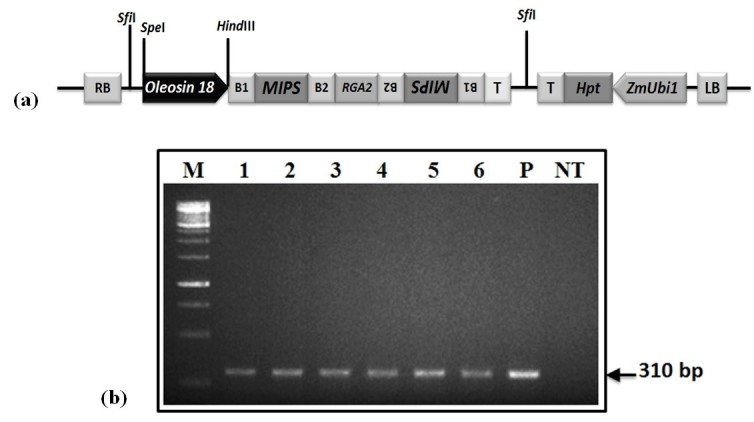
Phytic acid (InsP6) is considered as the major source of phosphorus and inositol phosphates in cereal grains. Reduction of phytic acid level in cereal grains is desirable in view of its antinutrient properties to maximize mineral bioavailability and minimize the load of phosphorus waste management. We report here RNAi mediated seed-specific silencing of myo-inositol-3-phosphate synthase (MIPS) gene catalyzing the first step of phytic acid biosynthesis in rice. Moreover, we also studied the possible implications of MIPS silencing on myo-inositol and related metabolism, since, first step of phytic acid biosynthesis is also the rate limiting step of myo-inositol synthesis, catalyzed by MIPS.
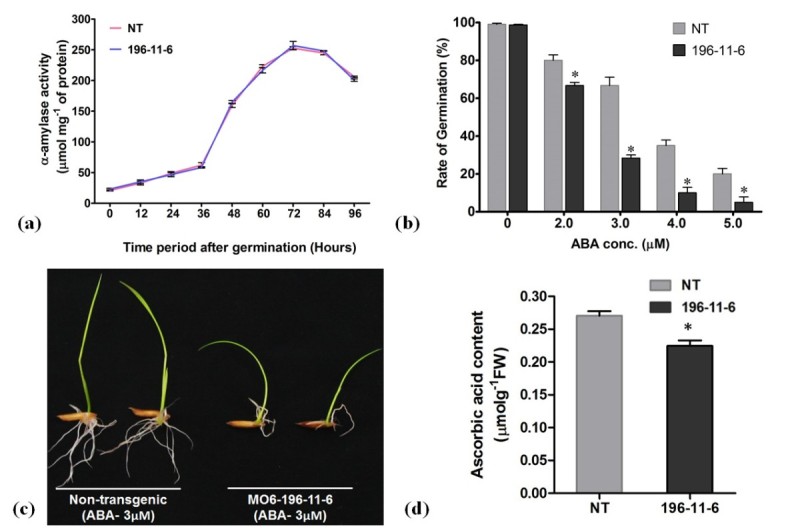
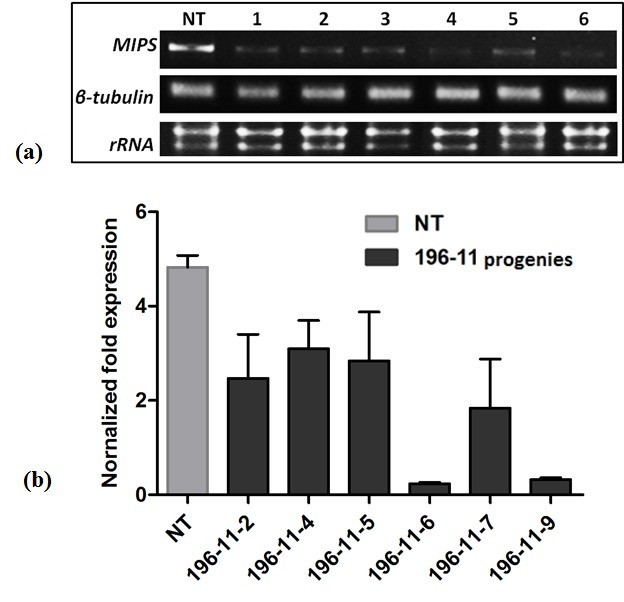
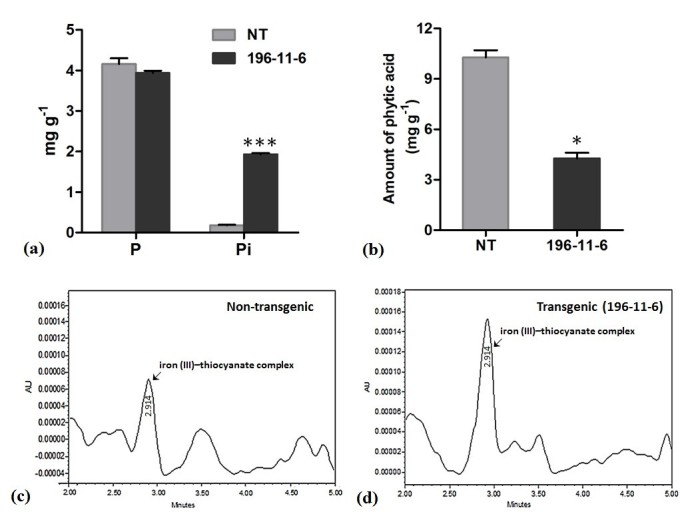
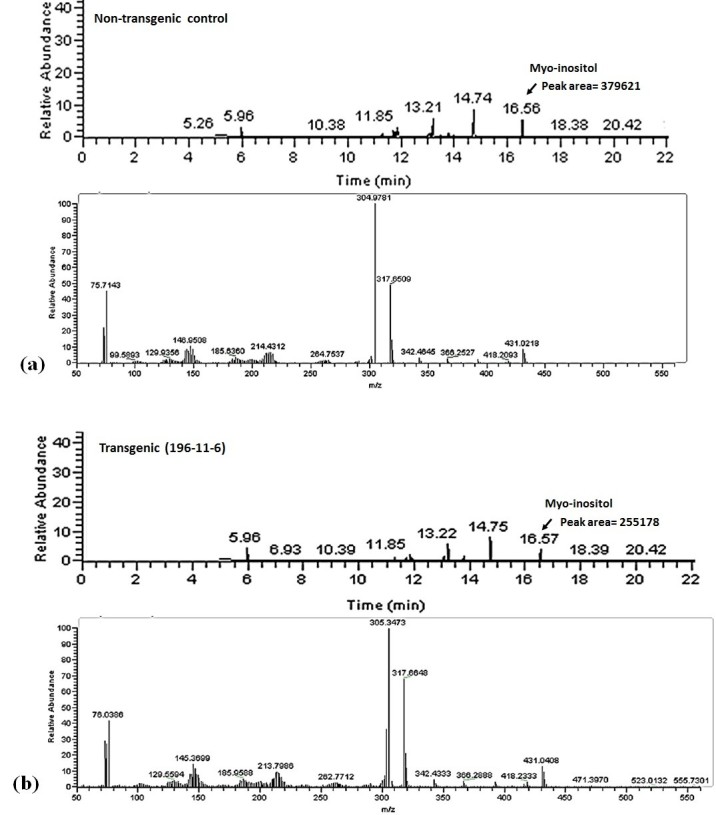
The resulting transgenic rice plants (T3) showed a 4.59 fold down regulation in MIPS gene expression, which corresponds to a significant decrease in phytate levels and a simultaneous increment in the amount of inorganic phosphate in the seeds. A diminution in the myo-inositol content of transgenic plants was also observed due to disruption of the first step of phytic acid biosynthetic pathway, which further reduced the level of ascorbate and altered abscisic acid (ABA) sensitivity of the transgenic plants. In addition, our results shows that in the transgenic plants, the lower phytate levels has led to an increment of divalent cations, of which a 1.6 fold increase in the iron concentration in milled rice seeds was noteworthy. This increase could be attributed to reduced chelation of divalent metal (iron) cations, which may correlate to higher iron bioavailability in the endosperm of rice grains.
The present study evidently suggests that seed-specific silencing of MIPS in transgenic rice plants can yield substantial reduction in levels of phytic acid along with an increase in inorganic phosphate content. However, it was also demonstrated that the low phytate seeds had an undesirable diminution in levels of myo-inositol and ascorbate, which probably led to sensitiveness of seeds to abscisic acid during germination. Therefore, it is suggested that though MIPS is the prime target for generation of low phytate transgenic plants, down-regulation of MIPS can have detrimental effect on myo-inositol synthesis and related pathways which are involved in key plant metabolism.
植酸(InsP6)被认为是谷物中磷和肌醇磷酸盐的主要来源。鉴于其抗营养特性,降低谷物中的植酸水平对于最大限度地提高矿物质生物利用度和最小化磷废物管理负担是可取的。我们在这里报告了 RNAi 介导的水稻中植酸生物合成第一步的肌醇-3-磷酸合酶(MIPS)基因的种子特异性沉默。此外,我们还研究了 MIPS 沉默对肌醇和相关代谢的可能影响,因为植酸生物合成的第一步也是 MIPS 催化的肌醇合成的限速步骤。
所得转基因水稻植株(T3)中 MIPS 基因表达下调 4.59 倍,相应地植酸水平显著降低,种子中无机磷含量同时增加。由于破坏了植酸生物合成途径的第一步,转基因植物的肌醇含量也减少了,这进一步降低了抗坏血酸的水平,并改变了转基因植物对脱落酸(ABA)的敏感性。此外,我们的结果表明,在转基因植物中,较低的植酸水平导致二价阳离子的增加,其中碾磨稻米种子中铁浓度增加 1.6 倍值得注意。这种增加可能归因于二价金属(铁)阳离子螯合的减少,这可能与稻米胚乳中二价铁的生物利用度增加有关。
本研究显然表明,在转基因水稻植株中,MIPS 的种子特异性沉默可以显著降低植酸水平,同时增加无机磷含量。然而,也表明低植酸种子中肌醇和抗坏血酸的水平降低,这可能导致种子在萌发过程中对脱落酸敏感。因此,尽管 MIPS 是生成低植酸转基因植物的主要靶标,但 MIPS 的下调可能对涉及关键植物代谢的肌醇合成和相关途径产生不利影响。