Groudine M, Peretz M, Nakamoto B, Papayannopoulou T, Stamatoyannopoulos G
Proc Natl Acad Sci U S A. 1986 Sep;83(18):6887-91. doi: 10.1073/pnas.83.18.6887.
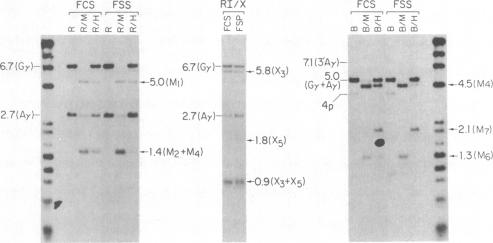
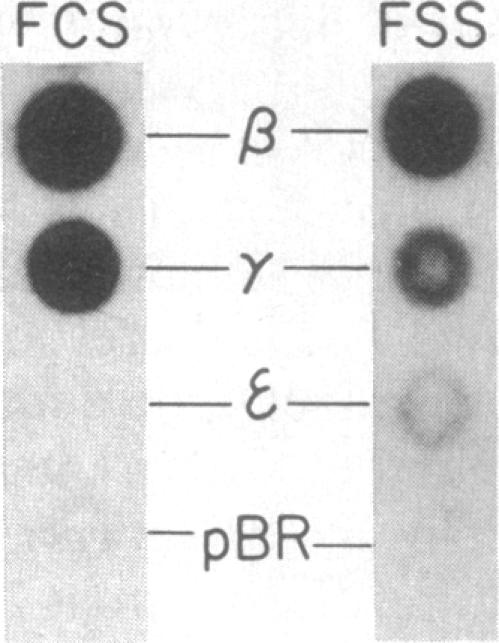
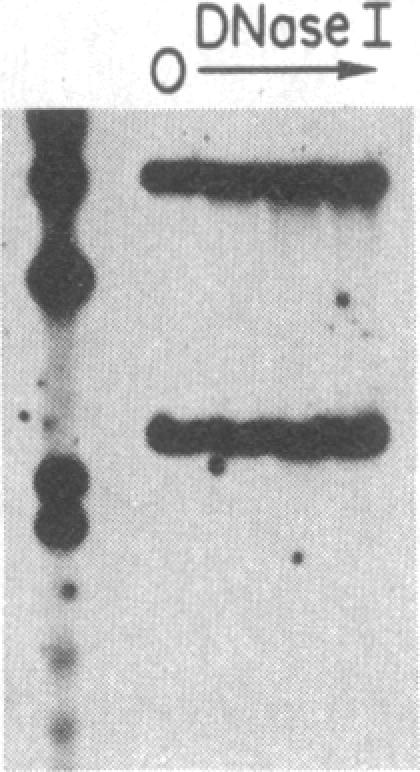
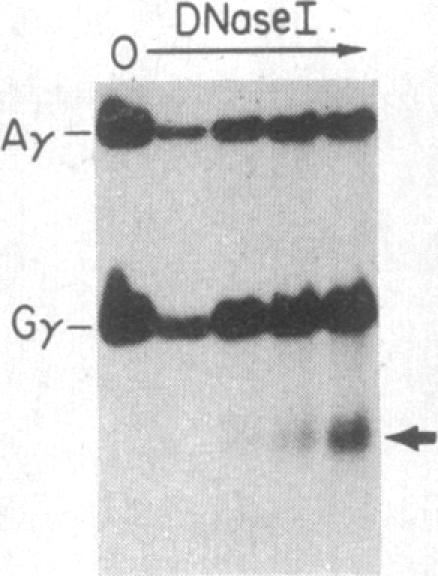
Fetal hemoglobin production can be reactivated in vivo in adult persons with various hemoglobinopathies and other hemopoietic disorders, and in cultures of adult erythroid progenitors. We show that the activation of Hb F in adult cells is transcriptional in nature and is accompanied by the appearance of DNase I-hypersensitive sites and undermethylation of Hpa II sites 5' to the gamma-globin genes. Production of Hb F in culture is strongly modulated by the environment, and the repression of Hb F synthesis by specific culture conditions has been reported. By nuclear runoff, chromatin, and methylation analyses, we show that this inhibition of Hb F production in vitro is at the level of transcription with the concomitant loss of characteristic gamma hypersensitive sites and methylation of gamma Hpa II sites. These data indicate, first, that the organization of globin chromatin of adult cells that produce fetal hemoglobin resembles that of fetal erythroid cells and, second, that this organization switches from a fetal to an adult pattern in response to changes in the environment of the erythroid cells.
在患有各种血红蛋白病和其他造血疾病的成年人以及成体红细胞祖细胞培养物中,胎儿血红蛋白的产生可在体内重新激活。我们发现,成体细胞中Hb F的激活本质上是转录性的,并且伴随着DNase I超敏位点的出现以及γ珠蛋白基因5'端Hpa II位点的低甲基化。培养物中Hb F的产生受到环境的强烈调节,并且已经报道了特定培养条件对Hb F合成的抑制作用。通过核转录、染色质和甲基化分析,我们表明体外对Hb F产生的这种抑制作用发生在转录水平,同时伴随着特征性γ超敏位点的丧失和γ Hpa II位点的甲基化。这些数据表明,首先,产生胎儿血红蛋白的成体细胞的珠蛋白染色质组织类似于胎儿红细胞的染色质组织;其次,这种组织会根据红细胞环境的变化从胎儿模式转变为成人模式。