Dermatology and Venereology Unit, Department of Medicine, Solna, Karolinska Institutet, Karolinska University Hospital, Solna, Sweden.
Cancers (Basel). 2010 Jun 7;2(2):1166-77. doi: 10.3390/cancers2021166.
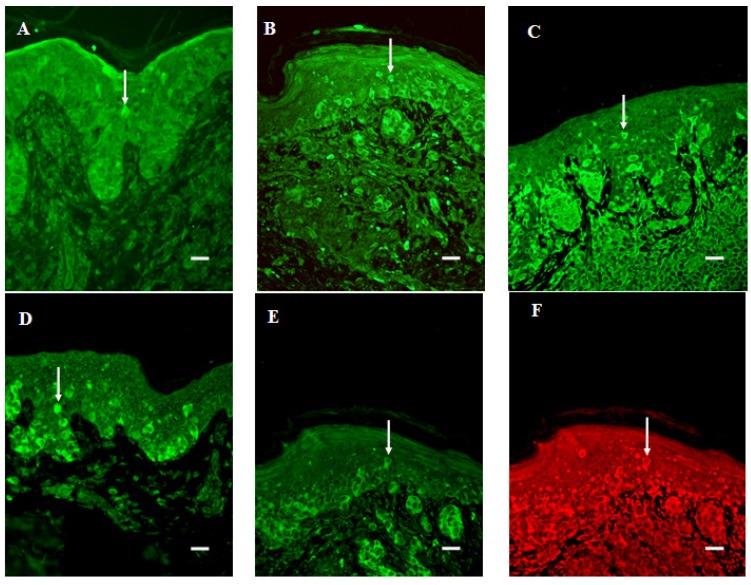
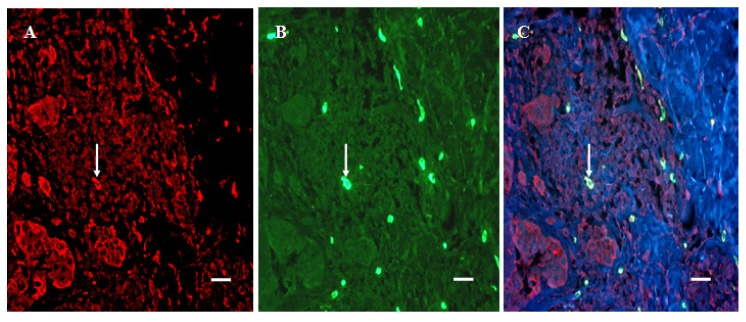
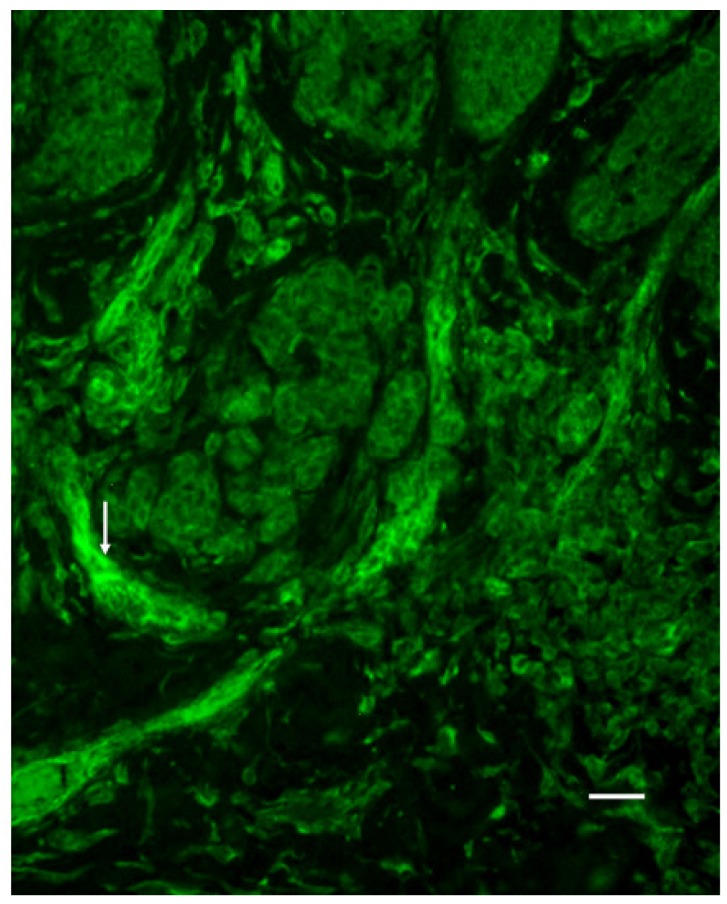
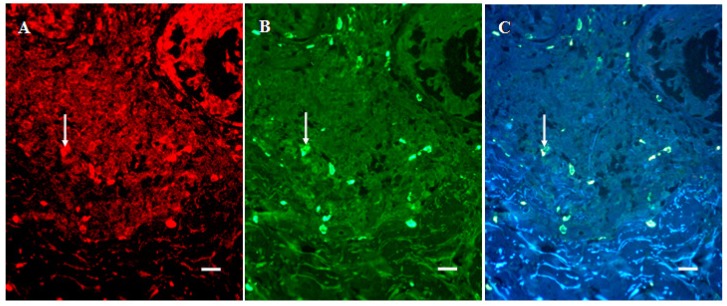
The neuromediator serotonin (5-hydroxytryptamine; 5-HT) has been proposed to play a role in tumor progression. Thus, the aim of the present investigation was to determine whether alterations in the serotonergic system occur in nevomelanocytic tumors. For this purpose, paraffin-embedded biopsies of superficial spreading malignant melanoma (SSM), dysplastic compound nevi (DN) and benign compound nevi (BCN) were characterized with regard to their expression of 5-HT, the 5-HT1A and 5-HT2A receptors, and the serotonin transporter protein (SERT), by immunohistochemical analysis. Melanocytes in the region surrounding the tumor were found to express both the 5-HT1A and 5-HT2A receptors. Tumor cells that immunostained positively for the different serotonergic markers were observed in the suprabasal epidermis of DN tissue and, to an even greater extent, in the case of SSM. Furthermore, some of these latter cells expressed both 5-HT1AR and 5-HT2AR. The level of expression of 5-HT1AR at the junctional area was lower for SSM than for DN or BCN. As the degree of atypia increased, the intensity of tumor cell staining in the dermis for 5-HT1AR and SERT declined. Vessel immunoreactivity for 5-HT2A was more intense in SSM than in BCN tissue. Round-to-dendritic cells that expressed both SERT and 5-HT1AR were seen to infiltrate into the dermal region of the tumor, this infiltration being more evident in the case of DN and SSM. These latter cells were also tryptase-positive, indicating that they are mast cells. Thus, alterations in serotonergic system may be involved in nevomelanocytic tumors and mast cells may play an important role in this connection.
神经递质 5-羟色胺(5-HT)被认为在肿瘤进展中起作用。因此,本研究旨在确定黑色素瘤中是否存在 5-羟色胺能系统的改变。为此,通过免疫组织化学分析,对浅表扩散性恶性黑色素瘤(SSM)、发育不良复合痣(DN)和良性复合痣(BCN)的石蜡包埋活检进行了 5-HT、5-HT1A 和 5-HT2A 受体以及 5-羟色胺转运蛋白(SERT)的表达特征。发现肿瘤周围的黑素细胞表达 5-HT1A 和 5-HT2A 受体。在 DN 组织的表皮基底层观察到免疫染色阳性的肿瘤细胞表达不同的 5-羟色胺能标志物,而在 SSM 中则更为明显。此外,其中一些细胞表达 5-HT1AR 和 5-HT2AR。与 DN 或 BCN 相比,SSM 交界处 5-HT1AR 的表达水平较低。随着异型性程度的增加,真皮中肿瘤细胞对 5-HT1AR 和 SERT 的染色强度降低。与 BCN 组织相比,SSM 中血管对 5-HT2A 的免疫反应性更强。表达 SERT 和 5-HT1AR 的圆形至树突状细胞浸润到肿瘤的真皮区域,在 DN 和 SSM 中更为明显。这些细胞也对 tryptase 呈阳性,表明它们是肥大细胞。因此,5-羟色胺能系统的改变可能与黑色素瘤有关,肥大细胞可能在这方面发挥重要作用。