Center of Excellence in Infectious Disease, Department of Biomedical Sciences, Paul L. Foster School of Medicine, Texas Tech University Health Sciences Center, El Paso, TX 79905, USA.
Viruses. 2013 Nov 14;5(11):2748-66. doi: 10.3390/v5112748.
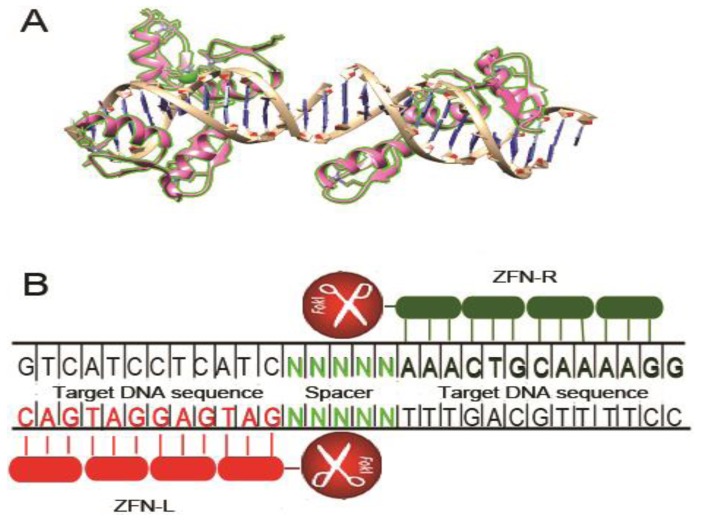
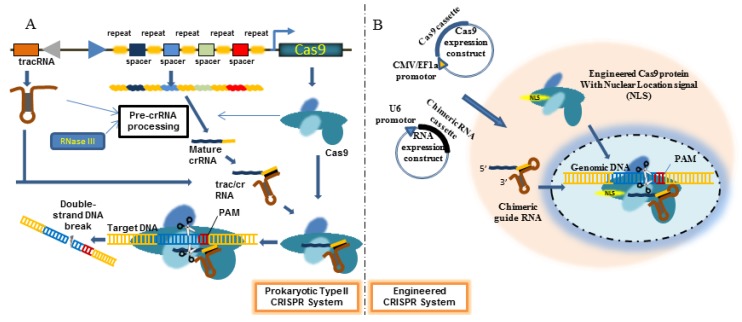
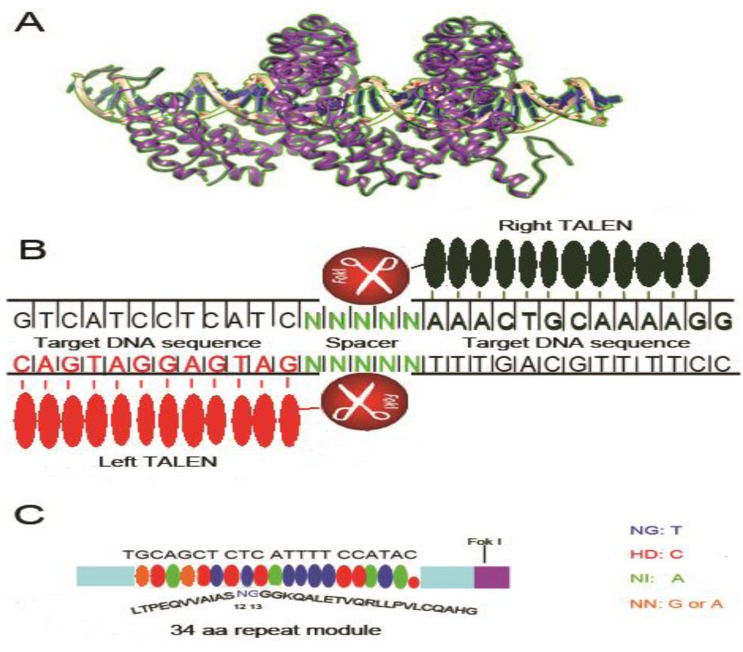
Despite the great success of highly active antiretroviral therapy (HAART) in ameliorating the course of HIV infection, alternative therapeutic approaches are being pursued because of practical problems associated with life-long therapy. The eradication of HIV in the so-called "Berlin patient" who received a bone marrow transplant from a CCR5-negative donor has rekindled interest in genome engineering strategies to achieve the same effect. Precise gene editing within the cells is now a realistic possibility with recent advances in understanding the DNA repair mechanisms, DNA interaction with transcription factors and bacterial defense mechanisms. Within the past few years, four novel technologies have emerged that can be engineered for recognition of specific DNA target sequences to enable site-specific gene editing: Homing Endonuclease, ZFN, TALEN, and CRISPR/Cas9 system. The most recent CRISPR/Cas9 system uses a short stretch of complementary RNA bound to Cas9 nuclease to recognize and cleave target DNA, as opposed to the previous technologies that use DNA binding motifs of either zinc finger proteins or transcription activator-like effector molecules fused to an endonuclease to mediate sequence-specific DNA cleavage. Unlike RNA interference, which requires the continued presence of effector moieties to maintain gene silencing, the newer technologies allow permanent disruption of the targeted gene after a single treatment. Here, we review the applications, limitations and future prospects of novel gene-editing strategies for use as HIV therapy.
尽管高效抗逆转录病毒疗法 (HAART) 在改善 HIV 感染进程方面取得了巨大成功,但由于终身治疗相关的实际问题,人们仍在寻求替代治疗方法。所谓的“柏林患者”在接受 CCR5 阴性供体的骨髓移植后,HIV 被根除,这重新激起了人们对基因组工程策略的兴趣,以期达到同样的效果。随着对 DNA 修复机制、DNA 与转录因子相互作用以及细菌防御机制的理解的最新进展,细胞内精确的基因编辑现在成为一种现实可能性。在过去几年中,出现了四种新型技术,可以对其进行工程设计,以识别特定的 DNA 目标序列,从而实现特定基因的编辑:归巢内切酶、锌指核酸酶(ZFN)、转录激活因子样效应物核酸酶(TALEN)和 CRISPR/Cas9 系统。最新的 CRISPR/Cas9 系统使用一段与 Cas9 核酸酶结合的互补 RNA 来识别和切割目标 DNA,而不是之前使用锌指蛋白或转录激活因子样效应物的 DNA 结合结构域融合到内切酶来介导序列特异性 DNA 切割的技术。与需要持续存在效应结构域来维持基因沉默的 RNA 干扰不同,这些新技术允许在单次治疗后永久破坏靶向基因。在这里,我们综述了新型基因编辑策略作为 HIV 治疗的应用、局限性和未来前景。