USDA Forest Service, Southern Research Station, Center for Bottomland Hardwoods Research, Southern Hardwoods Laboratory, P.O. Box 227, Stoneville, MS 38776, USA.
Sensors (Basel). 2013 Nov 25;13(12):15968-84. doi: 10.3390/s131215968.
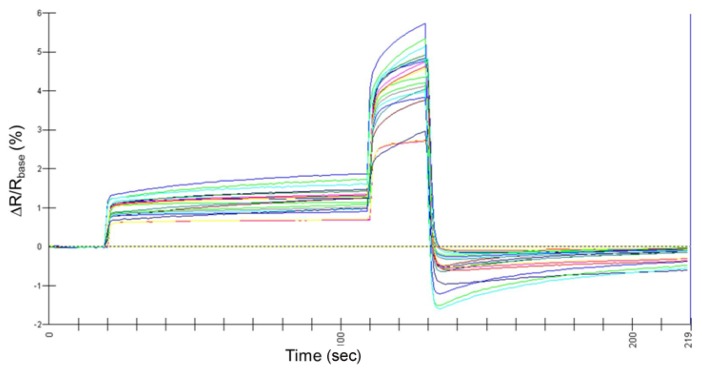
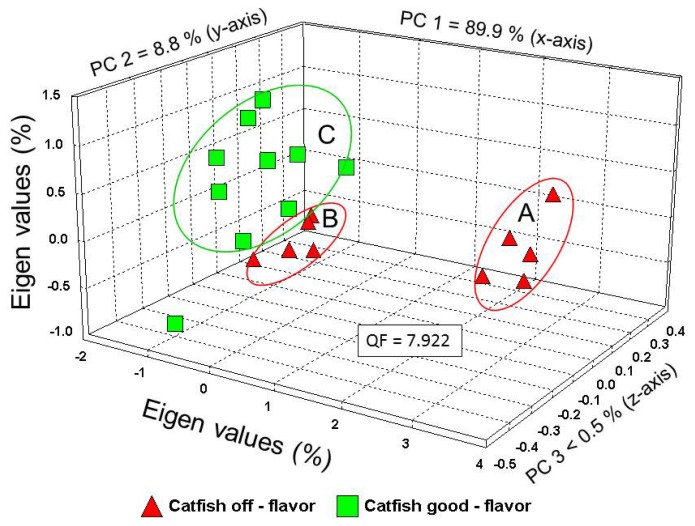
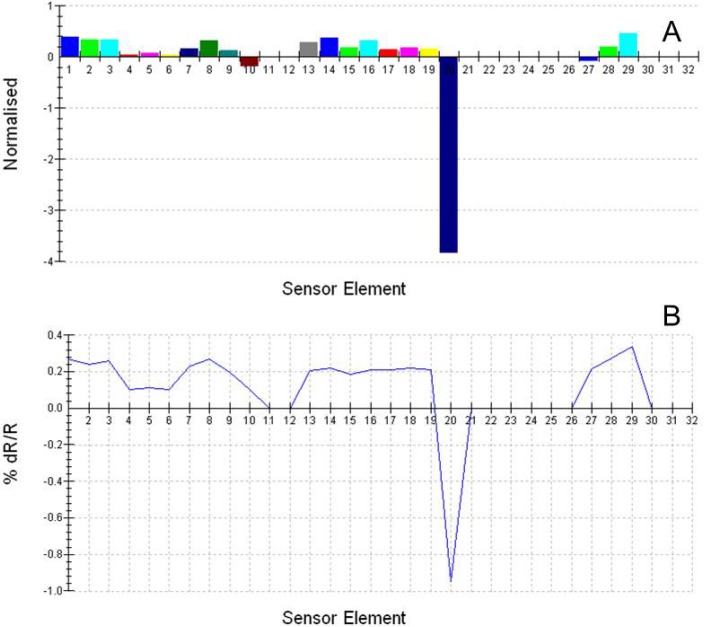
The Aromascan A32S conducting polymer electronic nose was evaluated for the capability of detecting the presence of off-flavor malodorous compounds in catfish meat fillets to assess meat quality for potential merchantability. Sensor array outputs indicated that the aroma profiles of good-flavor (on-flavor) and off-flavor fillets were strongly different as confirmed by a Principal Component Analysis (PCA) and a Quality Factor value (QF > 7.9) indicating a significant difference at (P < 0.05). The A32S e-nose effectively discriminated between good-flavor and off-flavor catfish at high levels of accuracy (>90%) and with relatively low rates (≤5%) of unknown or indecisive determinations in three trials. This A32S e-nose instrument also was capable of detecting the incidence of mild off-flavor in fillets at levels lower than the threshold of human olfactory detection. Potential applications of e-nose technologies for pre- and post-harvest management of production and meat-quality downgrade problems associated with catfish off-flavor are discussed.
Aromascan A32S 导电聚合物电子鼻用于检测鲶鱼片异味恶臭化合物的存在,以评估其潜在可销售的肉质质量。传感器阵列输出表明,好味(原味)和异味鱼片的香气特征差异很大,这一点通过主成分分析(PCA)和质量因子值(QF>7.9)得到了证实,表明在(P<0.05)时有显著差异。在三次试验中,A32S 电子鼻能够以高精度(>90%)有效地区分好味和异味鲶鱼,且不确定或犹豫不决的比例相对较低(≤5%)。该 A32S 电子鼻仪器还能够检测到鱼片中轻微异味的发生,其水平低于人类嗅觉检测的阈值。讨论了电子鼻技术在鲶鱼异味相关生产和肉质降级问题的产前和产后管理中的潜在应用。