Division of Developmental Immunology, Biocenter, Innsbruck Medical University, Innsbruck, Austria.
Cell Death Dis. 2013 Dec 5;4(12):e942. doi: 10.1038/cddis.2013.470.
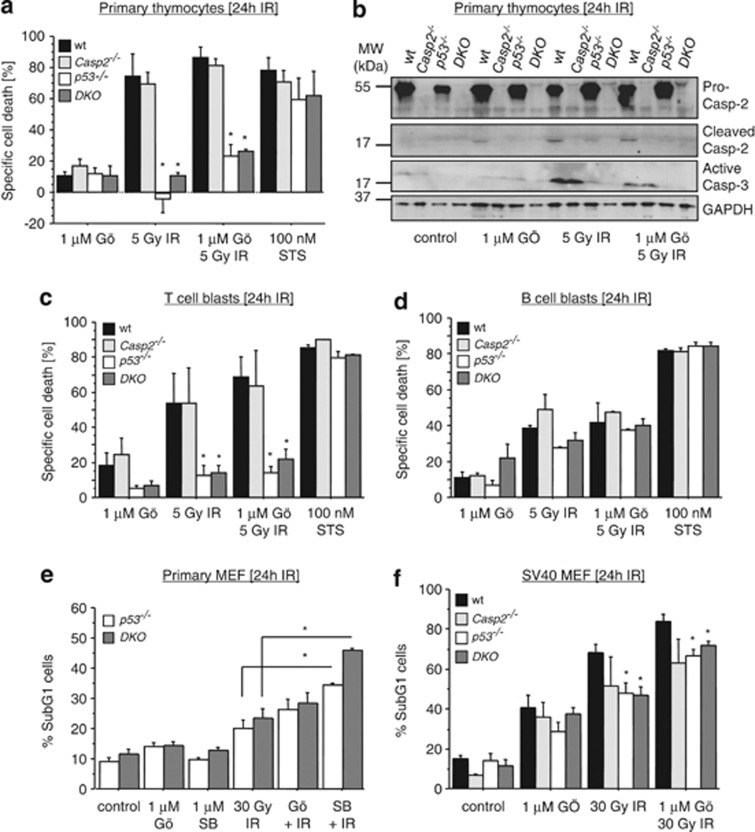
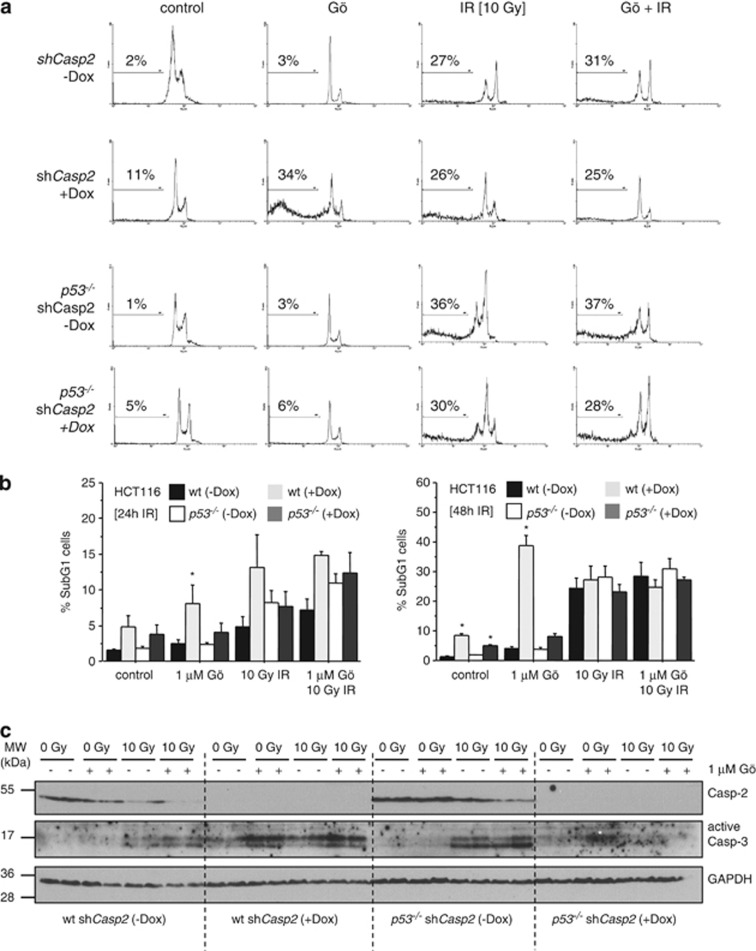
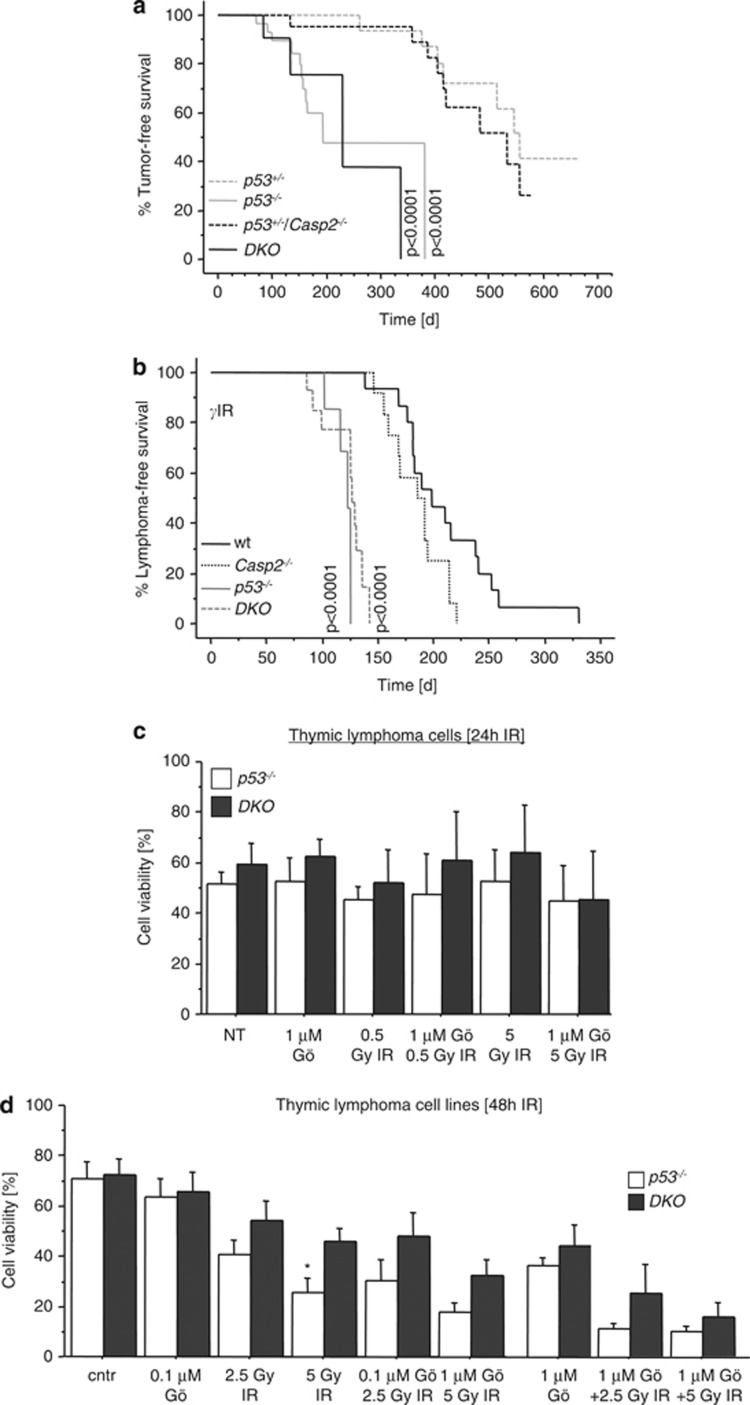
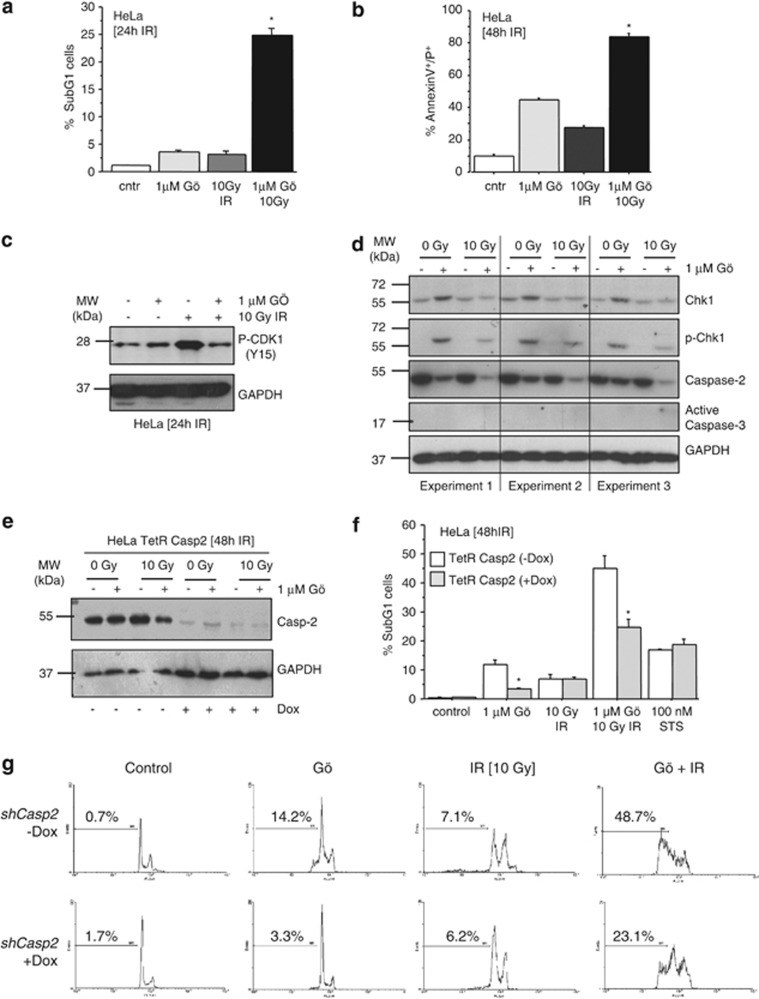
Much effort has been put in the discovery of ways to selectively kill p53-deficient tumor cells and targeting cell cycle checkpoint pathways has revealed promising candidates. Studies in zebrafish and human cell lines suggested that the DNA damage response kinase, checkpoint kinase 1 (Chk1), not only regulates onset of mitosis but also cell death in response to DNA damage in the absence of p53. This effect reportedly relies on ataxia telangiectasia mutated (ATM)-dependent and PIDDosome-mediated activation of Caspase-2. However, we show that genetic ablation of PIDDosome components in mice does not affect cell death in response to γ-irradiation. Furthermore, Chk1 inhibition largely failed to sensitize normal and malignant cells from p53(-/-) mice toward DNA damaging agents, and p53 status did not affect the death-inducing activity of DNA damage after Chk1 inhibition in human cancer cells. These observations argue against cross-species conservation of a Chk1-controlled cell survival pathway demanding further investigation of the molecular machinery responsible for cell death elicited by forced mitotic entry in the presence of DNA damage in different cell types and model organisms.
人们付出了大量努力来寻找选择性杀死 p53 缺陷型肿瘤细胞的方法,而靶向细胞周期检查点途径的研究则揭示了有前景的候选药物。在斑马鱼和人类细胞系中的研究表明,DNA 损伤反应激酶、检查点激酶 1(Chk1)不仅调节有丝分裂的开始,而且在没有 p53 的情况下,还能响应 DNA 损伤而引发细胞死亡。据报道,这种效应依赖于共济失调毛细血管扩张突变(ATM)依赖性和 PIDDosome 介导的 Caspase-2 的激活。然而,我们发现,在小鼠中敲除 PIDDosome 成分并不会影响对 γ 射线辐射的细胞死亡。此外,Chk1 抑制在很大程度上未能使 p53(-/-) 小鼠的正常和恶性细胞对 DNA 损伤剂敏感,并且 p53 状态也不会影响在人类癌细胞中 Chk1 抑制后 DNA 损伤的致死活性。这些观察结果表明,Chk1 控制的细胞存活途径在不同细胞类型和模式生物中,在存在 DNA 损伤的情况下强制有丝分裂进入时引发细胞死亡的分子机制在种间可能没有保守性,需要进一步研究。