Department of Pharmacology, University of Oxford Oxford, UK ; UCT/MRC Receptor Biology Unit, Division of Medical Biochemistry, Faculty of Health Sciences, Institute of Infectious Disease and Molecular Medicine, University of Cape Town Cape Town, South Africa.
Front Cell Neurosci. 2013 Nov 13;7:202. doi: 10.3389/fncel.2013.00202. eCollection 2013.
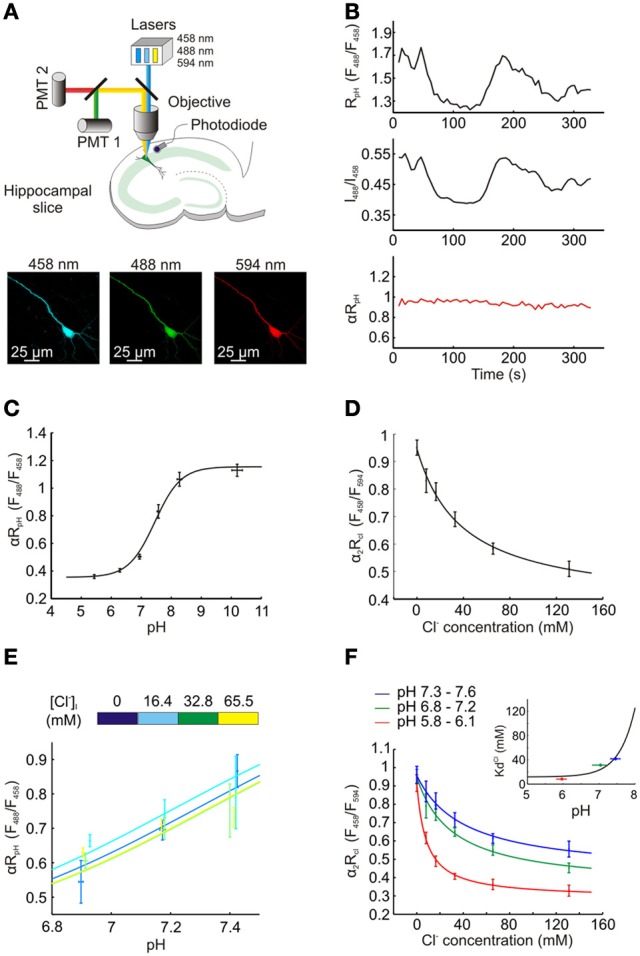
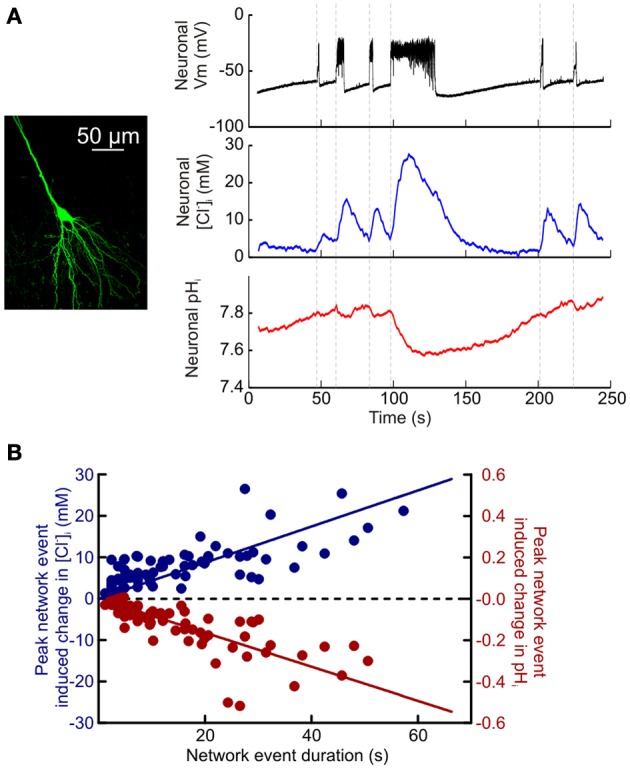
Within the nervous system, intracellular Cl(-) and pH regulate fundamental processes including cell proliferation, metabolism, synaptic transmission, and network excitability. Cl(-) and pH are often co-regulated, and network activity results in the movement of both Cl(-) and H(+). Tools to accurately measure these ions are crucial for understanding their role under physiological and pathological conditions. Although genetically-encoded Cl(-) and pH sensors have been described previously, these either lack ion specificity or are unsuitable for neuronal use. Here we present ClopHensorN-a new genetically-encoded ratiometric Cl(-) and pH sensor that is optimized for the nervous system. We demonstrate the ability of ClopHensorN to dissociate and simultaneously quantify Cl(-) and H(+) concentrations under a variety of conditions. In addition, we establish the sensor's utility by characterizing activity-dependent ion dynamics in hippocampal neurons.
在神经系统中,细胞内的 Cl(-) 和 pH 值调节着包括细胞增殖、代谢、突触传递和网络兴奋性在内的基本过程。Cl(-) 和 pH 值通常是共同调节的,网络活动会导致 Cl(-) 和 H(+) 的移动。准确测量这些离子的工具对于了解它们在生理和病理条件下的作用至关重要。尽管之前已经描述了遗传编码的 Cl(-) 和 pH 传感器,但这些传感器要么缺乏离子特异性,要么不适合神经元使用。在这里,我们提出了 ClopHensorN——一种新的遗传编码的比率型 Cl(-) 和 pH 传感器,它针对神经系统进行了优化。我们证明了 ClopHensorN 在各种条件下能够解离并同时定量 Cl(-) 和 H(+) 浓度。此外,我们通过描述海马神经元中活动依赖性离子动力学来确定传感器的实用性。