Brain Dynamics Institute, Inserm UMR1106, Aix-Marseille University Marseille, France ; Laboratory of Neurobiology, Institute of Fundamental Medicine and Biology, Kazan Federal University Kazan, Russia.
Front Mol Neurosci. 2013 Apr 18;6:9. doi: 10.3389/fnmol.2013.00009. eCollection 2013.
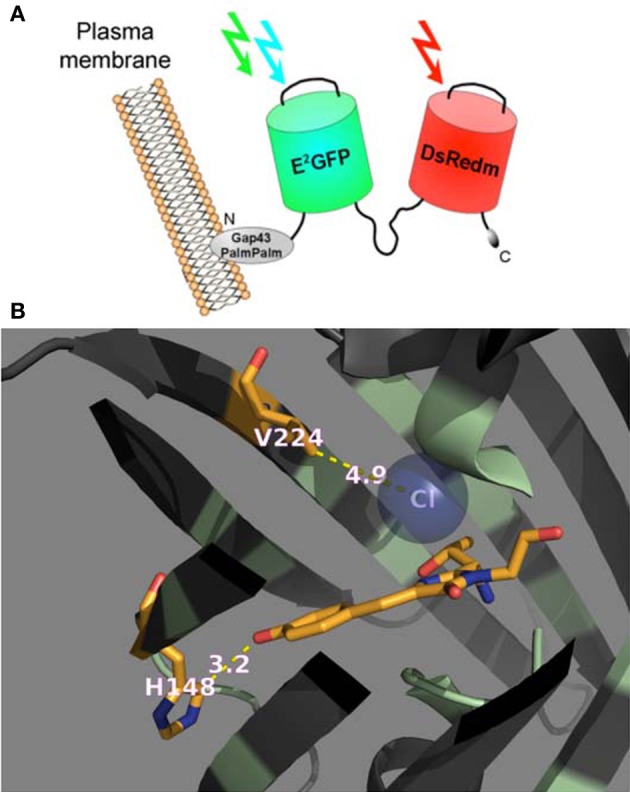
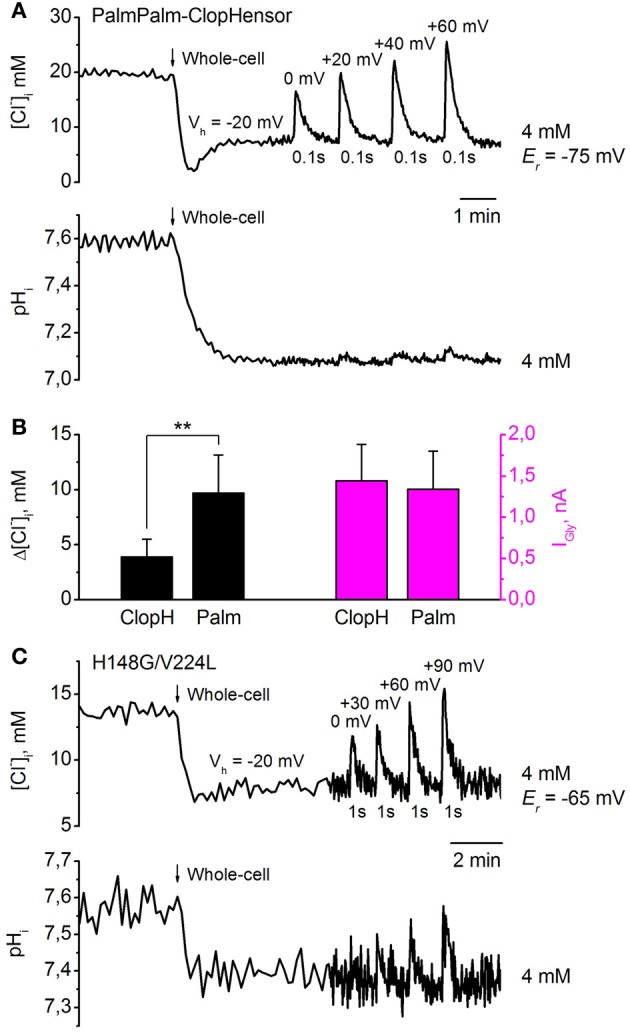
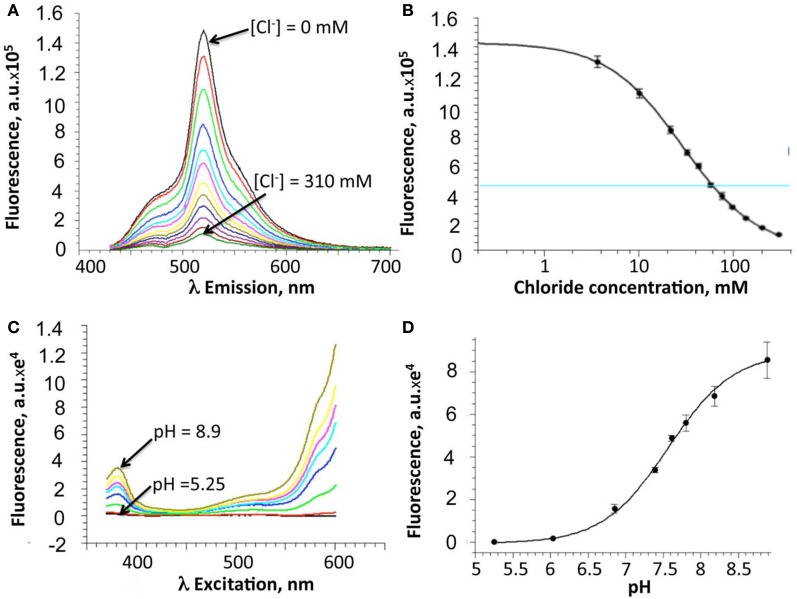
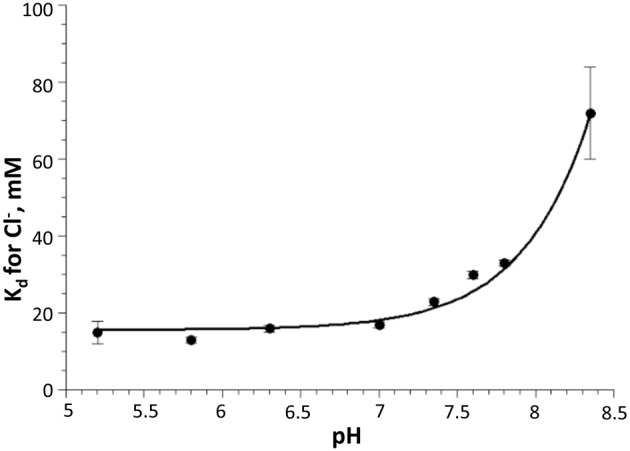
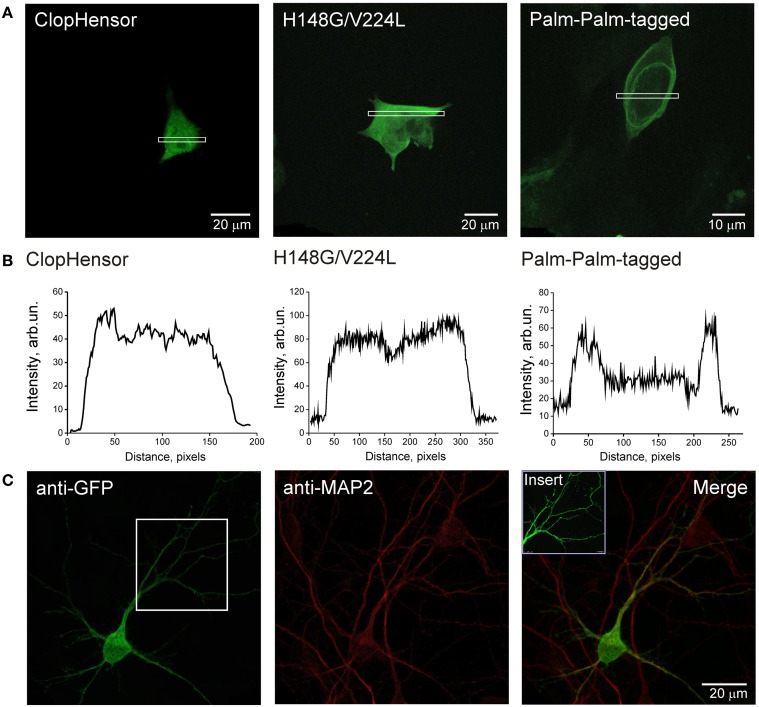
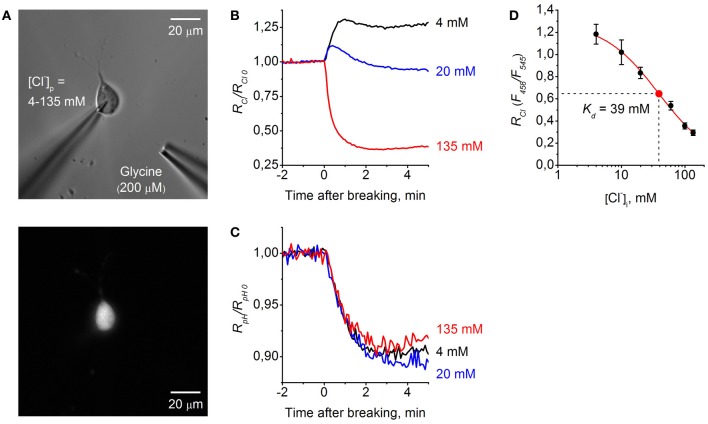
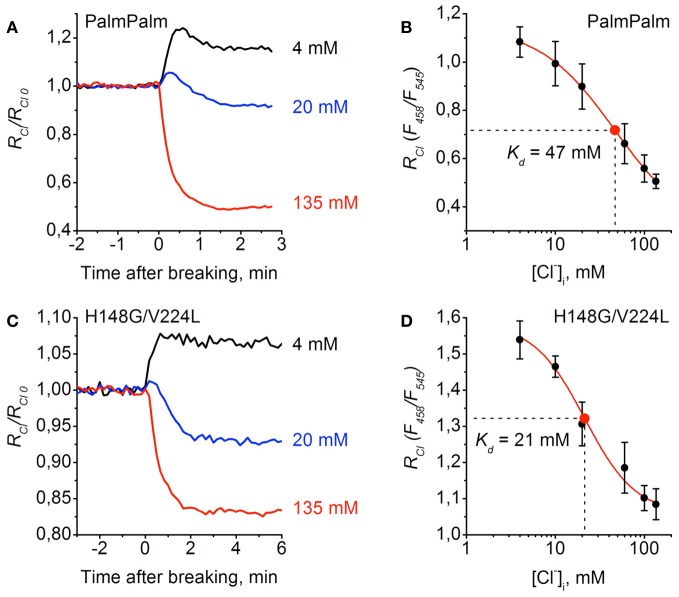
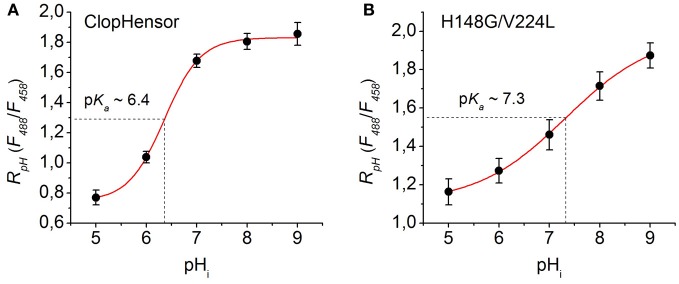
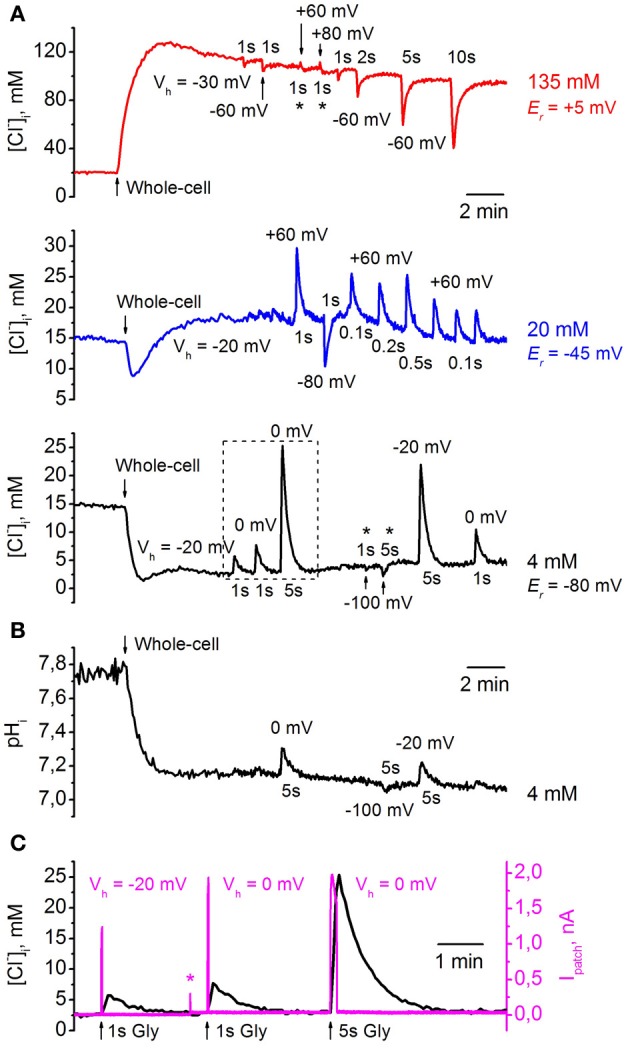
Monitoring of the intracellular concentrations of Cl(-) and H(+) requires sensitive probes that allow reliable quantitative measurements without perturbation of cell functioning. For these purposes the most promising are genetically encoded fluorescent biosensors, which have become powerful tools for non-invasive intracellular monitoring of ions, molecules, and enzymatic activity. A ratiometric CFP/YFP-based construct with a relatively good sensitivity to Cl(-) has been developed (Markova et al., 2008; Waseem et al., 2010). Recently, a combined Cl(-)/pH sensor (ClopHensor) opened the way for simultaneous ratiometric measurement of these two ions (Arosio et al., 2010). ClopHensor was obtained by fusion of a red-fluorescent protein (DsRed-monomer) to the E(2)GFP variant that contains a specific Cl(-)-binding site. This construct possesses pK a = 6.8 for H(+) and K d in the 40-50 mM range for Cl(-) at physiological pH (~7.3). As in the majority of cell types the intracellular Cl(-) concentration ([Cl(-)] i ) is about 10 mM, the development of sensors with higher sensitivity is highly desirable. Here, we report the intracellular calibration and functional characterization of ClopHensor and its two derivatives: the membrane targeting PalmPalm-ClopHensor and the H148G/V224L mutant with improved Cl(-) affinity, reduced pH dependence, and pK a shifted to more alkaline values. For functional analysis, constructs were expressed in CHO cells and [Cl(-)] i was changed by using pipettes with different Cl(-) concentrations during whole-cell recordings. K d values for Cl(-) measured at 33°C and pH ~7.3 were, respectively, 39, 47, and 21 mM for ClopHensor, PalmPalm-ClopHensor, and the H148G/V224L mutant. PalmPalm-ClopHensor resolved responses to activation of Cl(-)-selective glycine receptor (GlyR) channels better than did ClopHensor. Our observations indicate that these different ClopHensor constructs are promising tools for non-invasive measurement of [Cl(-)] i in various living cells.
监测细胞内 Cl(-) 和 H(+) 的浓度需要灵敏的探针,这些探针能够在不干扰细胞功能的情况下进行可靠的定量测量。为此,最有前途的是遗传编码的荧光生物传感器,它已成为非侵入性细胞内离子、分子和酶活性监测的强大工具。已经开发出一种对 Cl(-) 具有相对较好灵敏度的基于 CFP/YFP 的比率型构建体(Markova 等人,2008 年;Waseem 等人,2010 年)。最近,一种组合的 Cl(-)/pH 传感器(ClopHensor)为同时进行这两种离子的比率测量开辟了道路(Arosio 等人,2010 年)。ClopHensor 通过将红色荧光蛋白(DsRed-单体)融合到包含特定 Cl(-)结合位点的 E(2)GFP 变体而获得。该构建体在生理 pH(约 7.3)下对 H(+) 的 pK a 为 6.8,对 Cl(-) 的 K d 在 40-50 mM 范围内。由于在大多数细胞类型中,细胞内 Cl(-)浓度 ([Cl(-)] i )约为 10 mM,因此开发具有更高灵敏度的传感器是非常理想的。在这里,我们报告了 ClopHensor 及其两种衍生物的细胞内校准和功能特征:膜靶向 PalmPalm-ClopHensor 和 H148G/V224L 突变体,该突变体具有更高的 Cl(-)亲和力、降低的 pH 依赖性以及 pK a 移至更碱性值。对于功能分析,在 CHO 细胞中表达构建体,并在全细胞记录过程中使用具有不同 Cl(-)浓度的吸管来改变 [Cl(-)] i。在 33°C 和 pH~7.3 下测量的 Cl(-)的 K d 值分别为 39、47 和 21 mM,用于 ClopHensor、PalmPalm-ClopHensor 和 H148G/V224L 突变体。与 ClopHensor 相比,PalmPalm-ClopHensor 更好地解析了对 Cl(-)选择性甘氨酸受体 (GlyR) 通道激活的反应。我们的观察表明,这些不同的 ClopHensor 构建体是在各种活细胞中进行非侵入性测量 [Cl(-)] i 的有前途的工具。