Center for Biological Resources and Informatics, Tokyo Institute of Technology Yokohama, Japan.
Front Plant Sci. 2013 Nov 19;4:469. doi: 10.3389/fpls.2013.00469. eCollection 2013.
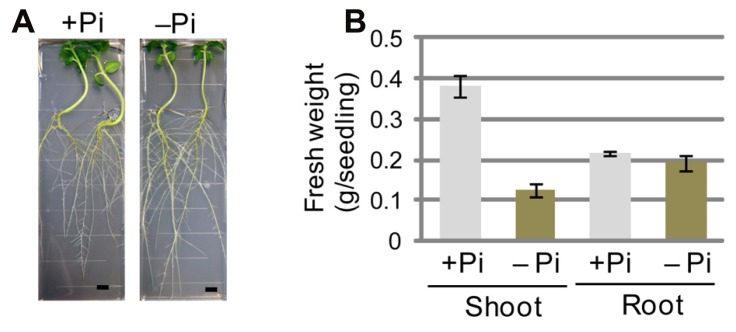
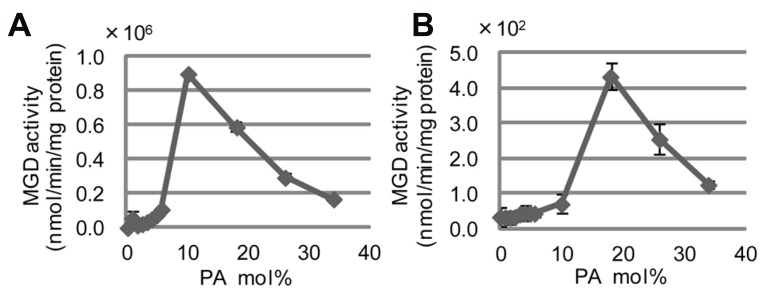
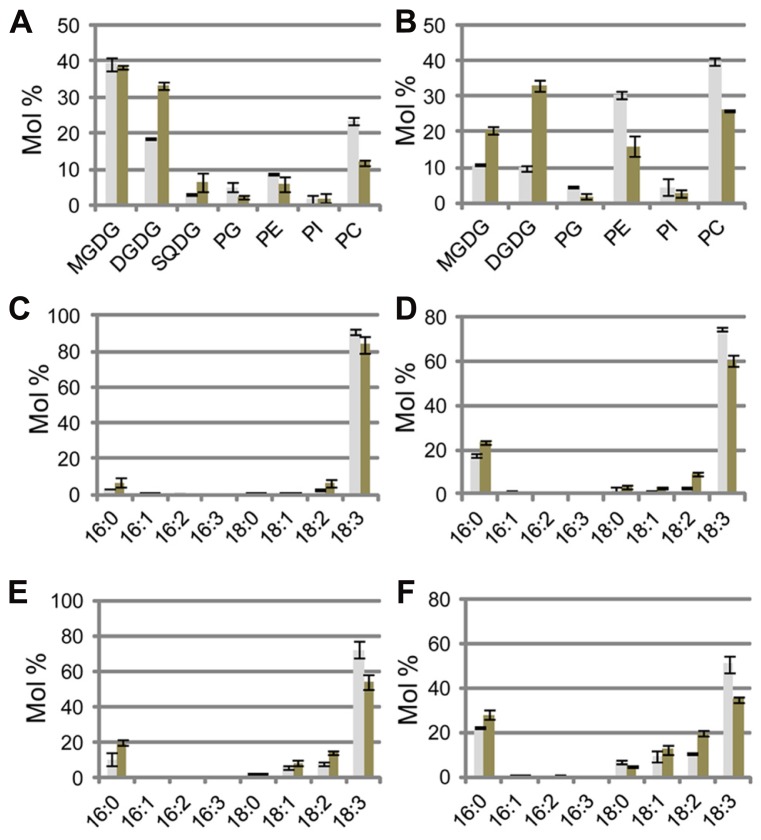
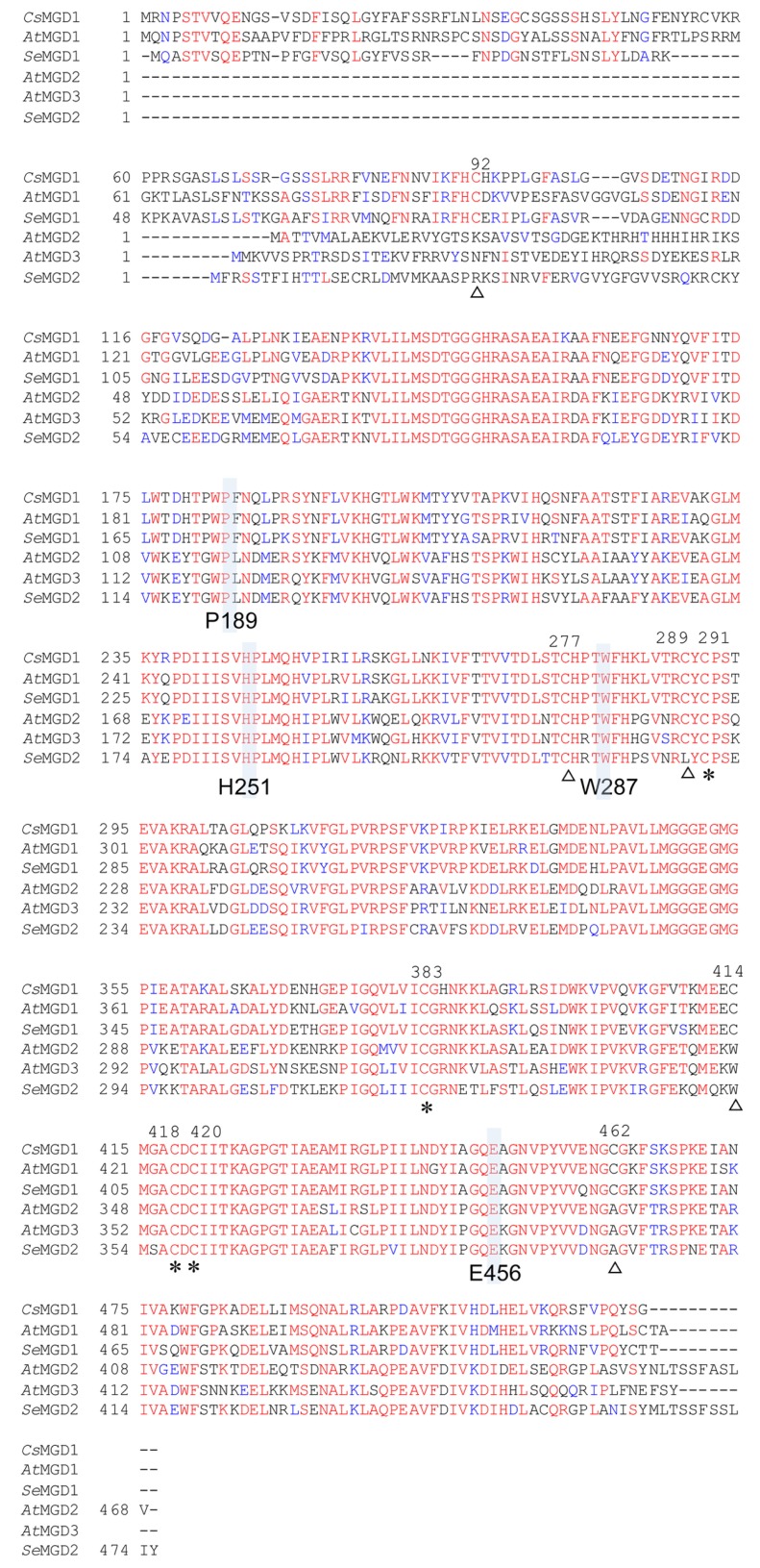
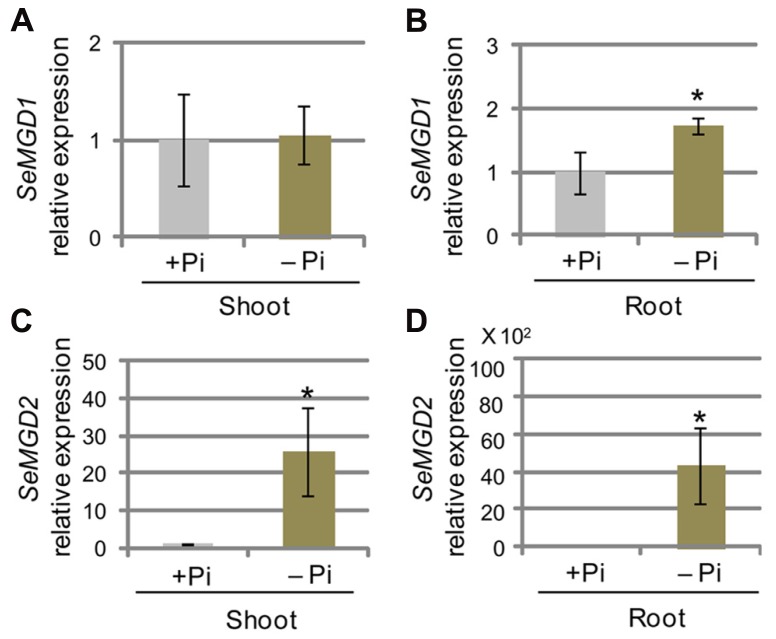
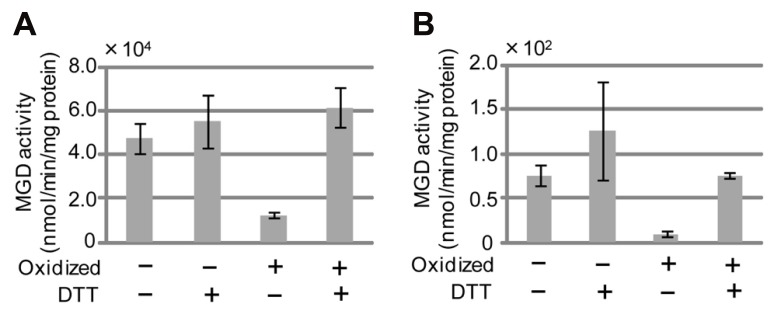
Phosphate (Pi) limitation causes drastic lipid remodeling in plant membranes. Glycolipids substitute for the phospholipids that are degraded, thereby supplying Pi needed for essential biological processes. Two major types of remodeling of membrane lipids occur in higher plants: whereas one involves an increase in the concentration of sulfoquinovosyldiacylglycerol in plastids to compensate for a decreased concentration of phosphatidylglycerol, the other involves digalactosyldiacylglycerol (DGDG) synthesis in plastids and the export of DGDG to extraplastidial membranes to compensate for reduced abundances of phospholipids. Lipid remodeling depends on an adequate supply of monogalactosyldiacylglycerol (MGDG), which is a substrate that supports the elevated rate of DGDG synthesis that is induced by low Pi availability. Regulation of MGDG synthesis has been analyzed most extensively using the model plant Arabidopsis thaliana, although orthologous genes that encode putative MGDG synthases exist in photosynthetic organisms from bacteria to higher plants. We recently hypothesized that two types of MGDG synthase diverged after the appearance of seed plants. This divergence might have both enabled plants to adapt to a wide range of Pi availability in soils and contributed to the diversity of seed plants. In the work presented here, we found that membrane lipid remodeling also takes place in sesame, which is one of the most common traditional crops grown in Asia. We identified two types of MGDG synthase from sesame (encoded by SeMGD1 and SeMGD2) and analyzed their enzymatic properties. Our results show that both genes correspond to the Arabidopsis type-A and -B isoforms of MGDG synthase. Notably, whereas Pi limitation up-regulates only the gene encoding the type-B isoform of Arabidopsis, low Pi availability up-regulates the expression of both SeMGD1 and SeMGD2. We discuss the significance of the different responses to low Pi availability in sesame and Arabidopsis.
磷酸盐(Pi)限制会导致植物膜中的脂质发生剧烈重构。糖脂替代被降解的磷脂,从而为必需的生物过程提供 Pi。高等植物中发生两种主要类型的膜脂重塑:一种涉及质体中磺基奎诺糖二酰甘油(sulfoquinovosyldiacylglycerol)浓度的增加,以补偿磷脂酰甘油浓度的降低,另一种涉及质体中二半乳糖基二酰甘油(digalactosyldiacylglycerol,DGDG)的合成和 DGDG 向质外体膜的输出,以补偿磷脂含量的减少。脂质重构依赖于单半乳糖基二酰甘油(MGDG)的充足供应,MGDG 是一种支持低 Pi 可用性诱导的 DGDG 合成速率升高的底物。使用模式植物拟南芥对 MGDG 合成的调控进行了最广泛的分析,尽管在从细菌到高等植物的光合生物中存在编码假定 MGDG 合酶的同源基因。我们最近假设,在种子植物出现后,两种类型的 MGDG 合酶发生了分化。这种分化可能使植物能够适应土壤中广泛的 Pi 可用性,并有助于种子植物的多样性。在本文的工作中,我们发现芝麻也会发生膜脂质重构,芝麻是亚洲最常见的传统作物之一。我们从芝麻中鉴定出两种 MGDG 合酶(由 SeMGD1 和 SeMGD2 编码)并分析了它们的酶学特性。结果表明,这两个基因分别对应于拟南芥的 A 型和 B 型 MGDG 合酶。值得注意的是,尽管 Pi 限制仅上调拟南芥 B 型同工型的基因表达,但低 Pi 可用性上调 SeMGD1 和 SeMGD2 的表达。我们讨论了芝麻和拟南芥对低 Pi 可用性的不同响应的意义。