Smurfit Institute of Genetics and Institute of Neuroscience, Trinity College Dublin, Dublin, Ireland.
PLoS One. 2013 Nov 27;8(11):e80491. doi: 10.1371/journal.pone.0080491. eCollection 2013.
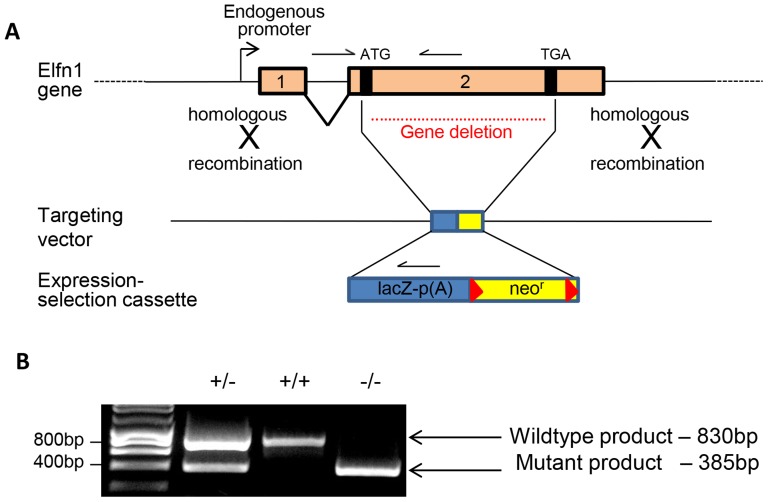
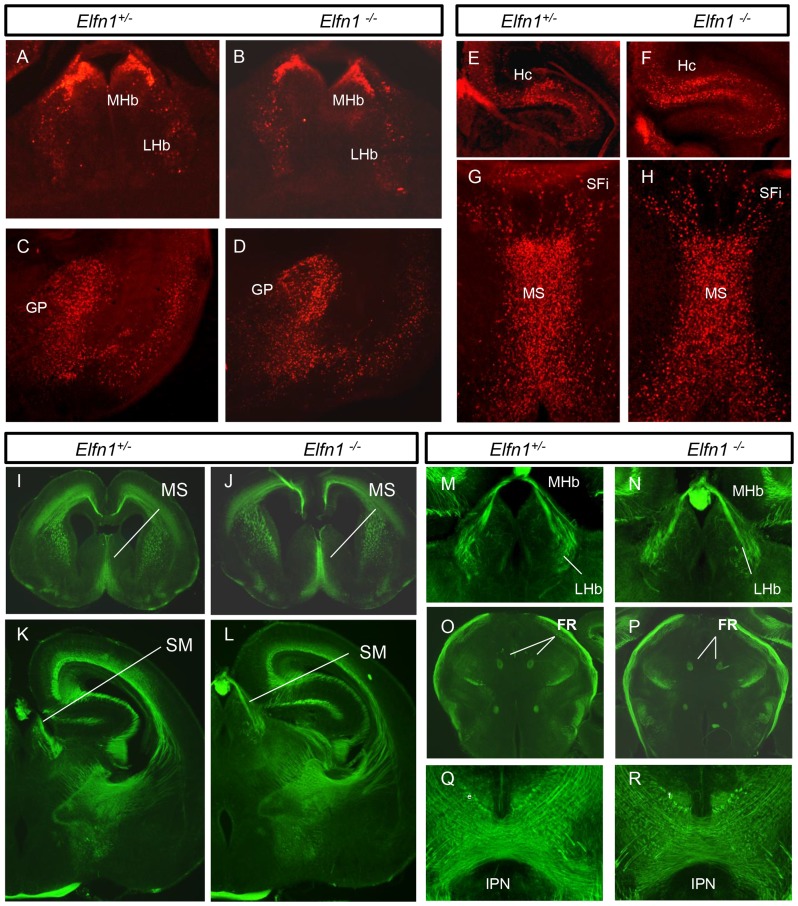
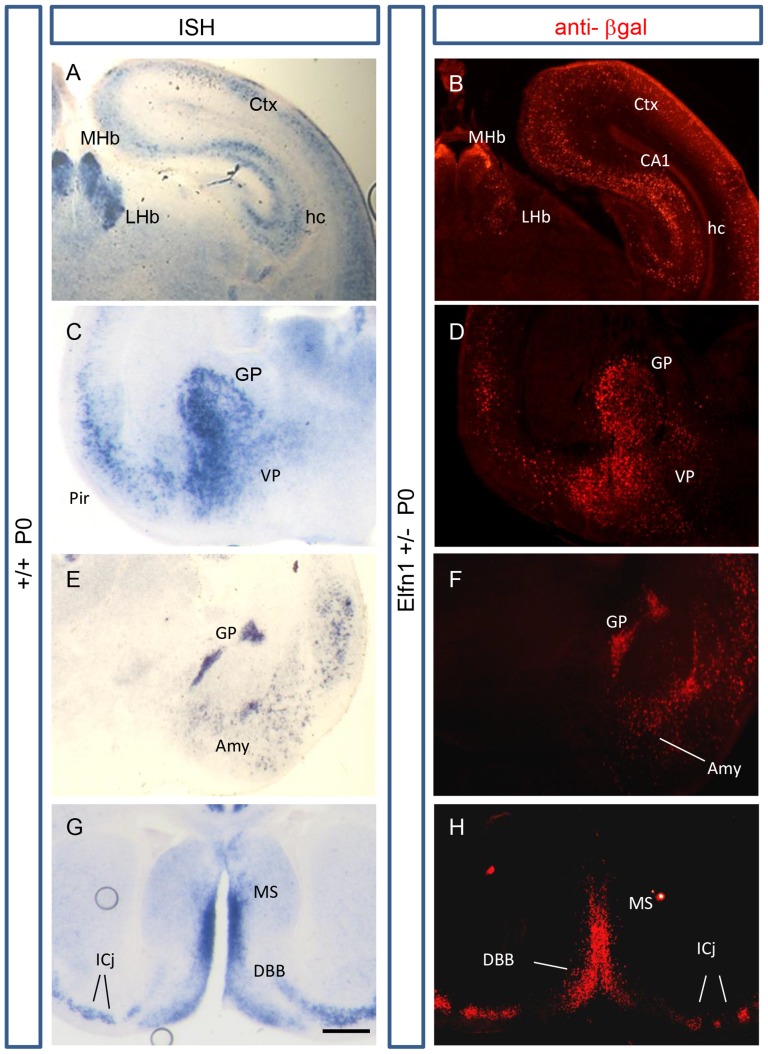
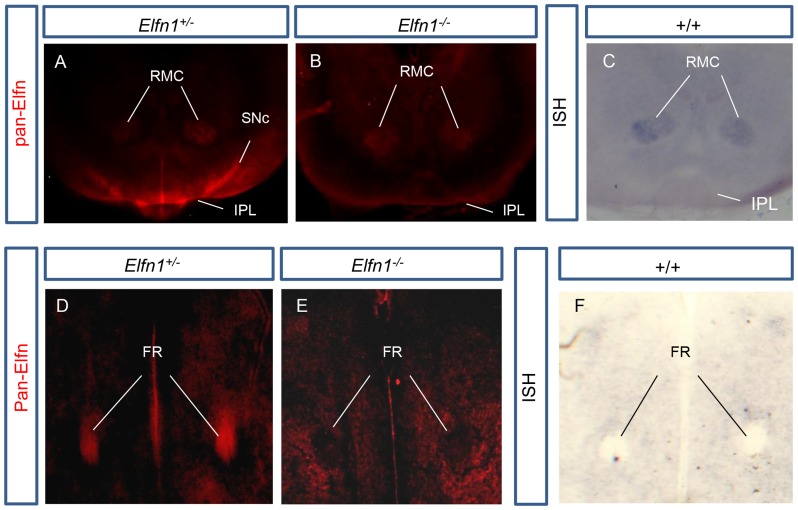
A growing number of proteins with extracellular leucine-rich repeats (eLRRs) have been implicated in directing neuronal connectivity. We previously identified a novel family of eLRR proteins in mammals: the Elfns are transmembrane proteins with 6 LRRs, a fibronectin type-3 domain and a long cytoplasmic tail. The recent discovery that Elfn1 protein, expressed postsynaptically, can direct the elaboration of specific electrochemical properties of synapses between particular cell types in the hippocampus strongly reinforces this hypothesis. Here, we present analyses of an Elfn1 mutant mouse line and demonstrate a functional requirement for this gene in vivo. We first carried out detailed expression analysis of Elfn1 using a β-galactosidase reporter gene in the knockout line. Elfn1 is expressed in distinct subsets of interneurons of the hippocampus and cortex, and also in discrete subsets of cells in the habenula, septum, globus pallidus, dorsal subiculum, amygdala and several other regions. Elfn1 is expressed in diverse cell types, including local GABAergic interneurons as well as long-range projecting GABAergic and glutamatergic neurons. Elfn1 protein localises to axons of excitatory neurons in the habenula, and long-range GABAergic neurons of the globus pallidus, suggesting the possibility of additional roles for Elfn1 in axons or presynaptically. While gross anatomical analyses did not reveal any obvious neuroanatomical abnormalities, behavioural analyses clearly illustrate functional effects of Elfn1 mutation. Elfn1 mutant mice exhibit seizures, subtle motor abnormalities, reduced thigmotaxis and hyperactivity. The hyperactivity is paradoxically reversible by treatment with the stimulant amphetamine, consistent with phenotypes observed in animals with habenular lesions. These analyses reveal a requirement for Elfn1 in brain function and are suggestive of possible relevance to the etiology and pathophysiology of epilepsy and attention-deficit hyperactivity disorder.
越来越多具有细胞外亮氨酸丰富重复(eLRR)的蛋白质被认为在指导神经元连接中起作用。我们之前在哺乳动物中鉴定了一种新型的 eLRR 蛋白家族:Elfns 是跨膜蛋白,具有 6 个 LRR、一个纤维连接蛋白 3 结构域和一个长胞质尾巴。最近的发现表明,突触后表达的 Elf n1 蛋白可以指导海马体中特定细胞类型之间特定突触的电化学特性的形成,这强烈地证实了这一假设。在这里,我们分析了 Elf n1 突变小鼠品系,并证明了该基因在体内的功能需求。我们首先使用β-半乳糖苷酶报告基因在敲除系中进行了 Elf n1 的详细表达分析。Elfn1 在海马体和皮层的特定中间神经元亚群中表达,也在缰核、隔核、苍白球、背侧下托、杏仁核和其他几个区域的离散细胞亚群中表达。Elfn1 在多种细胞类型中表达,包括局部 GABA 能中间神经元以及长程投射的 GABA 能和谷氨酸能神经元。Elfn1 蛋白定位于缰核兴奋性神经元的轴突,以及苍白球的长程 GABA 能神经元,这表明 Elfn1 可能在轴突或突触前具有额外的作用。虽然大体解剖分析没有发现任何明显的神经解剖异常,但行为分析清楚地说明了 Elf n1 突变的功能影响。Elfn1 突变小鼠表现出癫痫发作、细微的运动异常、触诱发应减少和过度活跃。这种过度活跃通过安非他命刺激物的治疗呈反相逆转,这与缰核损伤动物的表型一致。这些分析揭示了 Elf n1 在大脑功能中的必要性,并提示其可能与癫痫和注意缺陷多动障碍的病因和病理生理学有关。