Cordelières Fabrice P, Petit Valérie, Kumasaka Mayuko, Debeir Olivier, Letort Véronique, Gallagher Stuart J, Larue Lionel
Institut Curie, CNRS UMR3348, plate-forme IBISA d'imagerie cellulaire et tissulaire, Orsay, France.
PLoS One. 2013 Nov 27;8(11):e81266. doi: 10.1371/journal.pone.0081266. eCollection 2013.
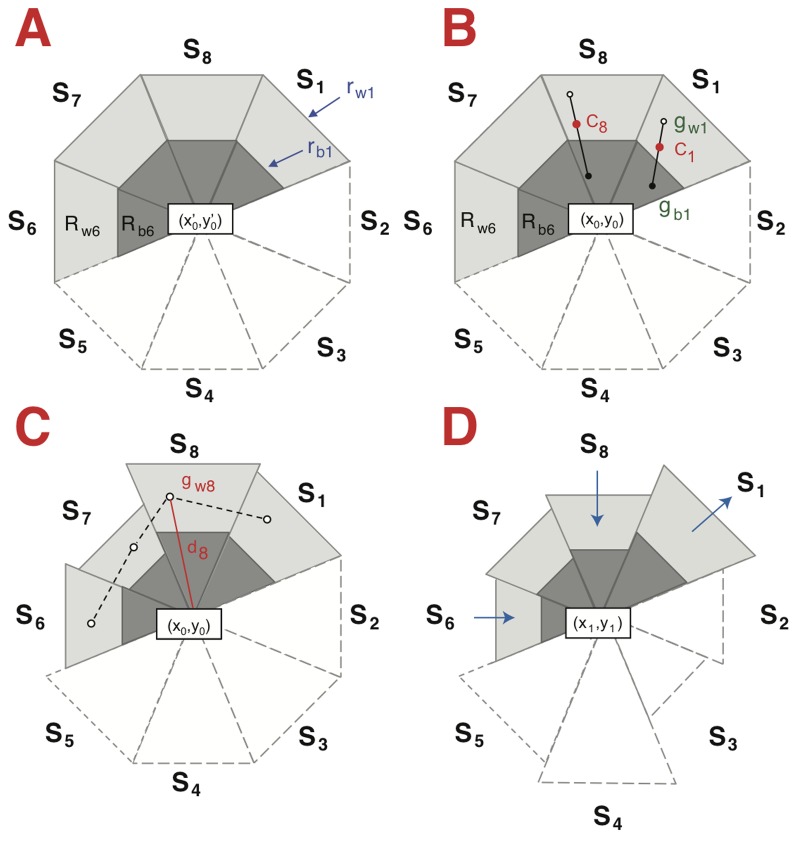
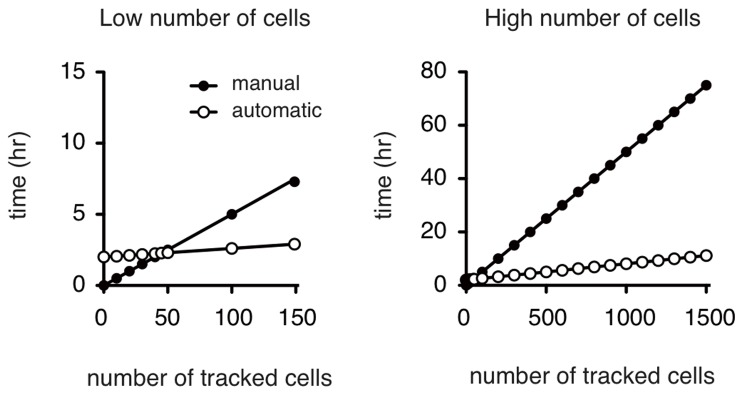
Cell migration is a key biological process with a role in both physiological and pathological conditions. Locomotion of cells during embryonic development is essential for their correct positioning in the organism; immune cells have to migrate and circulate in response to injury. Failure of cells to migrate or an inappropriate acquisition of migratory capacities can result in severe defects such as altered pigmentation, skull and limb abnormalities during development, and defective wound repair, immunosuppression or tumor dissemination. The ability to accurately analyze and quantify cell migration is important for our understanding of development, homeostasis and disease. In vitro cell tracking experiments, using primary or established cell cultures, are often used to study migration as cells can quickly and easily be genetically or chemically manipulated. Images of the cells are acquired at regular time intervals over several hours using microscopes equipped with CCD camera. The locations (x,y,t) of each cell on the recorded sequence of frames then need to be tracked. Manual computer-assisted tracking is the traditional method for analyzing the migratory behavior of cells. However, this processing is extremely tedious and time-consuming. Most existing tracking algorithms require experience in programming languages that are unfamiliar to most biologists. We therefore developed an automated cell tracking program, written in Java, which uses a mean-shift algorithm and ImageJ as a library. iTrack4U is a user-friendly software. Compared to manual tracking, it saves considerable amount of time to generate and analyze the variables characterizing cell migration, since they are automatically computed with iTrack4U. Another major interest of iTrack4U is the standardization and the lack of inter-experimenter differences. Finally, iTrack4U is adapted for phase contrast and fluorescent cells.
细胞迁移是一个关键的生物学过程,在生理和病理条件下均发挥作用。胚胎发育过程中细胞的移动对于其在机体中的正确定位至关重要;免疫细胞必须响应损伤而迁移和循环。细胞迁移失败或迁移能力的不当获得可导致严重缺陷,如发育过程中色素沉着改变、颅骨和肢体异常,以及伤口修复缺陷、免疫抑制或肿瘤扩散。准确分析和量化细胞迁移的能力对于我们理解发育、体内平衡和疾病很重要。使用原代或已建立的细胞培养物进行的体外细胞追踪实验常用于研究迁移,因为细胞可以快速且容易地进行基因或化学操作。使用配备CCD相机的显微镜在数小时内以固定的时间间隔获取细胞图像。然后需要追踪记录的帧序列上每个细胞的位置(x,y,t)。手动计算机辅助追踪是分析细胞迁移行为的传统方法。然而,这种处理极其繁琐且耗时。大多数现有的追踪算法需要使用大多数生物学家不熟悉的编程语言的经验。因此,我们开发了一个用Java编写的自动细胞追踪程序,它使用均值漂移算法并将ImageJ作为库。iTrack4U是一个用户友好的软件。与手动追踪相比,它在生成和分析表征细胞迁移的变量时节省了大量时间,因为这些变量是由iTrack4U自动计算的。iTrack4U的另一个主要优点是标准化且不存在实验者间差异。最后,iTrack4U适用于相差和荧光细胞。