Gaston David C, Odom Carl I, Li Li, Markert James M, Roth Justin C, Cassady Kevin A, Whitley Richard J, Parker Jacqueline N
Department of Cell, Developmental, and Integrative Biology, The University of Alabama at Birmingham, Birmingham, Alabama, United States of America ; School of Medicine, The University of Alabama at Birmingham, Birmingham, Alabama, United States of America.
PLoS One. 2013 Nov 27;8(11):e81768. doi: 10.1371/journal.pone.0081768. eCollection 2013.
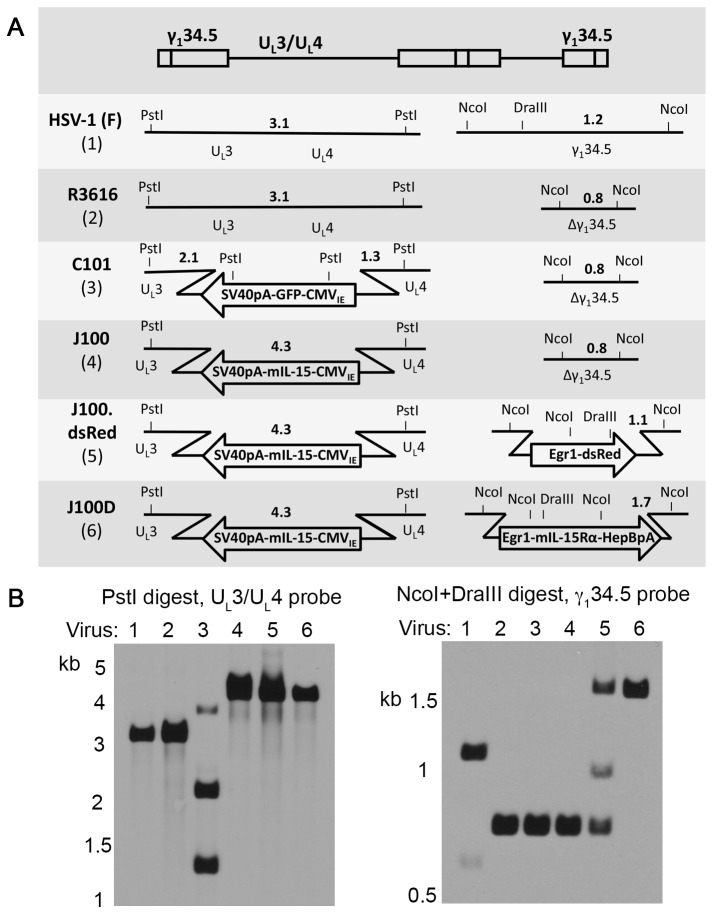
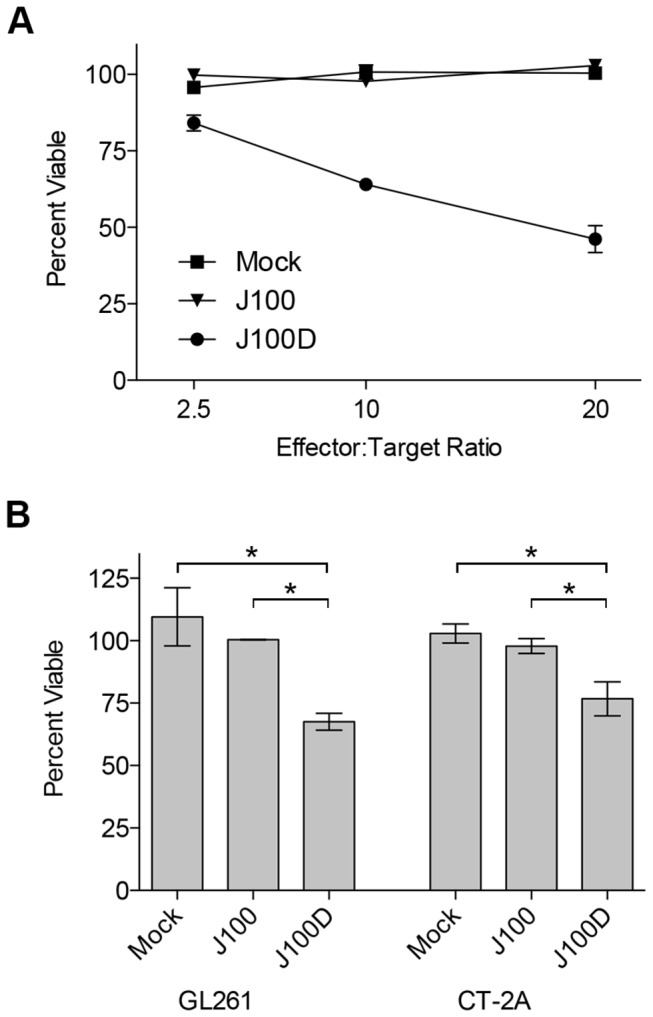
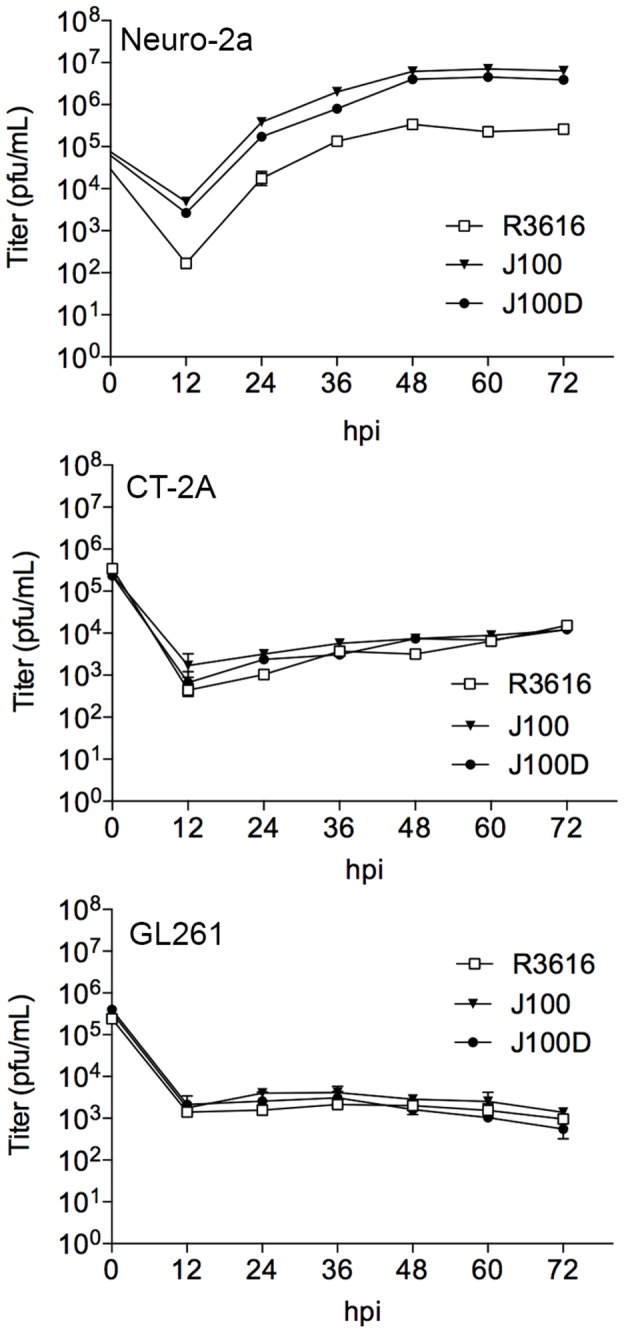
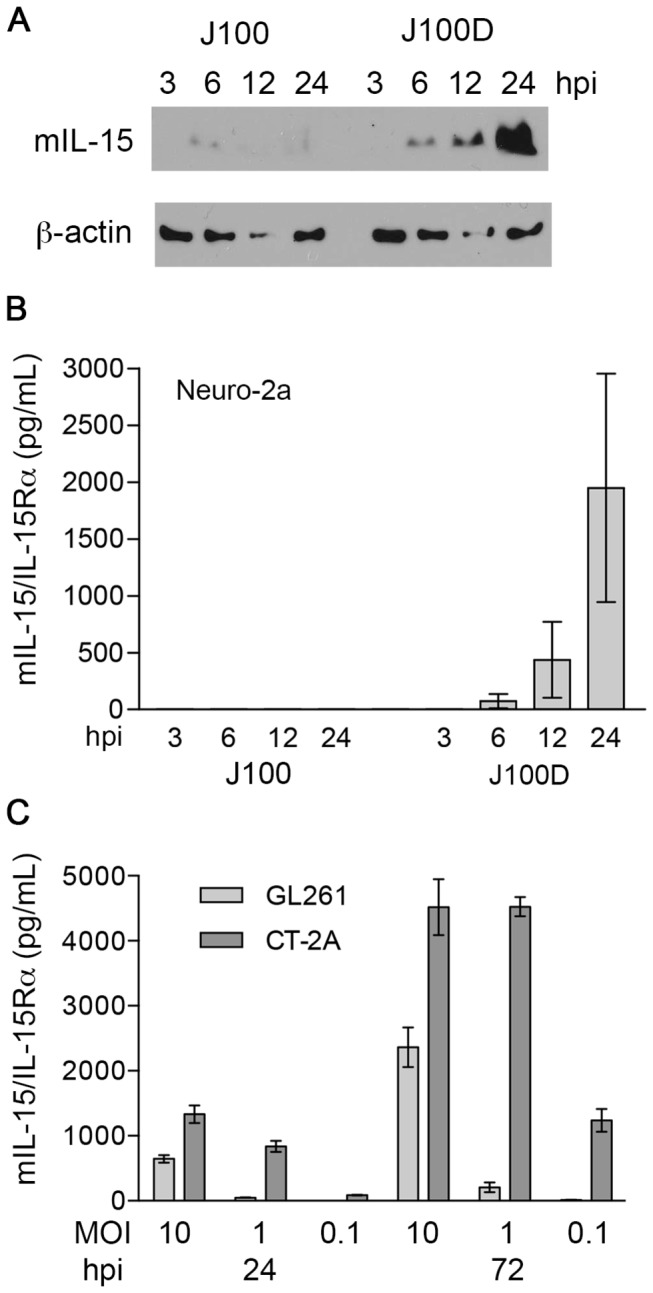
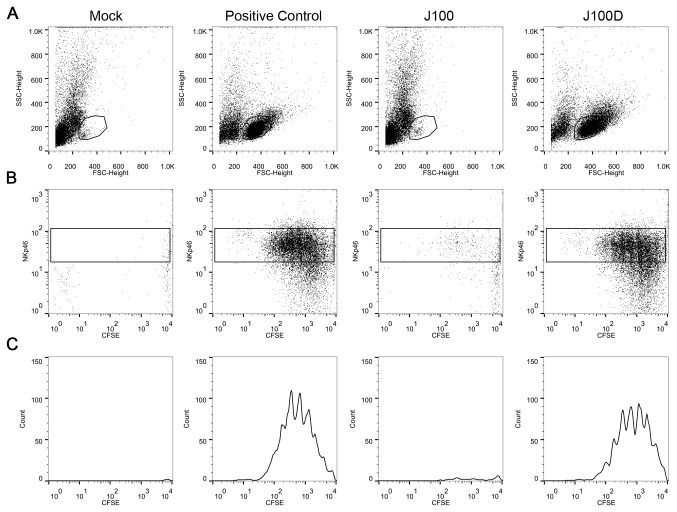
Oncolytic type-1 herpes simplex viruses (oHSVs) lacking the γ134.5 neurovirulence gene are being evaluated for treatment of a variety of malignancies. oHSVs replicate within and directly kill permissive cancer cells. To augment their anti-tumor activity, oHSVs have been engineered to express immunostimulatory molecules, including cytokines, to elicit tumor-specific immune responses. Interleukin-15 (IL-15) holds potential as an immunotherapeutic cytokine because it has been demonstrated to promote both natural killer (NK) cell-mediated and CD8(+) T cell-mediated cytotoxicity against cancer cells. The purpose of these studies was to engineer an oHSV producing bioactive IL-15. Two oHSVs were constructed encoding murine (m)IL-15 alone (J100) or with the mIL-15 receptor α (mIL-15Rα, J100D) to determine whether co-expression of these proteins is required for production of bioactive mIL-15 from oHSV. The following were demonstrated: i) both oHSVs retain replication competence and cytotoxicity in permissive tumor cell lines. ii) Enhanced production of mIL-15 was detected in cell lysates of neuro-2a cells following J100D infection as compared to J100 infection, suggesting that mIL-15Rα improved mIL-15 production. iii) Soluble mIL-15 in complex with mIL-15Rα was detected in supernates from J100D-infected, but not J100-infected, neuro-2a, GL261, and CT-2A cells. These cell lines vary in permissiveness to oHSV replication and cytotoxicity, demonstrating soluble mIL-15/IL-15Rα complex production from J100D was independent of direct oHSV effects. iv) The soluble mIL-15/IL-15Rα complex produced by J100D was bioactive, stimulating NK cells to proliferate and reduce the viability of syngeneic GL261 and CT-2A cells. v) J100 and J100D were aneurovirulent inasmuch as no neuropathologic effects were documented following direct inoculation into brains of CBA/J mice at up to 1x10(7) plaque forming units. The production of mIL-15/mIL-15Rα from multiple tumor lines, as well as the lack of neurovirulence, renders J100D suitable for investigating the combined effects of oHSV and mIL-15/IL-15Rα in various cancer models.
缺乏γ134.5神经毒力基因的溶瘤1型单纯疱疹病毒(oHSV)正在接受评估,用于治疗多种恶性肿瘤。oHSV在允许的癌细胞内复制并直接杀死它们。为了增强其抗肿瘤活性,oHSV已被改造以表达免疫刺激分子,包括细胞因子,以引发肿瘤特异性免疫反应。白细胞介素-15(IL-15)作为一种免疫治疗细胞因子具有潜力,因为它已被证明可促进自然杀伤(NK)细胞介导的和CD8(+) T细胞介导的对癌细胞的细胞毒性。这些研究的目的是构建一种能产生生物活性IL-15的oHSV。构建了两种oHSV,一种单独编码小鼠(m)IL-15(J100),另一种同时编码mIL-15受体α(mIL-15Rα,J100D),以确定这些蛋白的共表达是否是oHSV产生生物活性mIL-15所必需的。结果表明:i)两种oHSV在允许的肿瘤细胞系中均保持复制能力和细胞毒性。ii)与J100感染相比,J100D感染后在神经2a细胞的细胞裂解物中检测到mIL-15的产生增加,表明mIL-15Rα提高了mIL-15的产生。iii)在J100D感染而非J100感染的神经2a、GL261和CT-2A细胞的上清液中检测到与mIL-15Rα复合的可溶性mIL-15。这些细胞系对oHSV复制和细胞毒性的允许性各不相同,表明J100D产生的可溶性mIL-15/IL-15Rα复合物与oHSV的直接作用无关。iv)J100D产生的可溶性mIL-15/IL-15Rα复合物具有生物活性,可刺激NK细胞增殖并降低同基因GL261和CT-2A细胞的活力。v)J100和J100D无神经毒性,因为在以高达1x10(7) 蚀斑形成单位直接接种到CBA/J小鼠脑内后未记录到神经病理学效应。从多个肿瘤系产生mIL-15/mIL-15Rα以及缺乏神经毒性,使得J100D适合用于研究oHSV和mIL-15/IL-15Rα在各种癌症模型中的联合作用。