Instituto de Bioquímica Médica, Programa de Biologia Molecular e Biotecnologia, CCS, Universidade Federal do Rio de Janeiro, Rio de Janeiro, Rio de Janeiro, Brazil ; Instituto Nacional de Ciência e Tecnologia em Entomologia Molecular- INCT-EM, Universidade Federal do Rio de Janeiro, Rio de Janeiro, Rio de Janeiro, Brazil.
PLoS One. 2013 Sep 30;8(9):e76233. doi: 10.1371/journal.pone.0076233. eCollection 2013.
Lysophosphatidylcholine (LPC) is the main phospholipid component of oxidized low-density lipoprotein (oxLDL) and is usually noted as a marker of several human diseases, such as atherosclerosis, cancer and diabetes. Some studies suggest that oxLDL modulates Toll-like receptor (TLR) signaling. However, effector molecules that are present in oxLDL particles and can trigger TLR signaling are not yet clear. LPC was previously described as an attenuator of sepsis and as an immune suppressor. In the present study, we have evaluated the role of LPC as a dual modulator of the TLR-mediated signaling pathway.
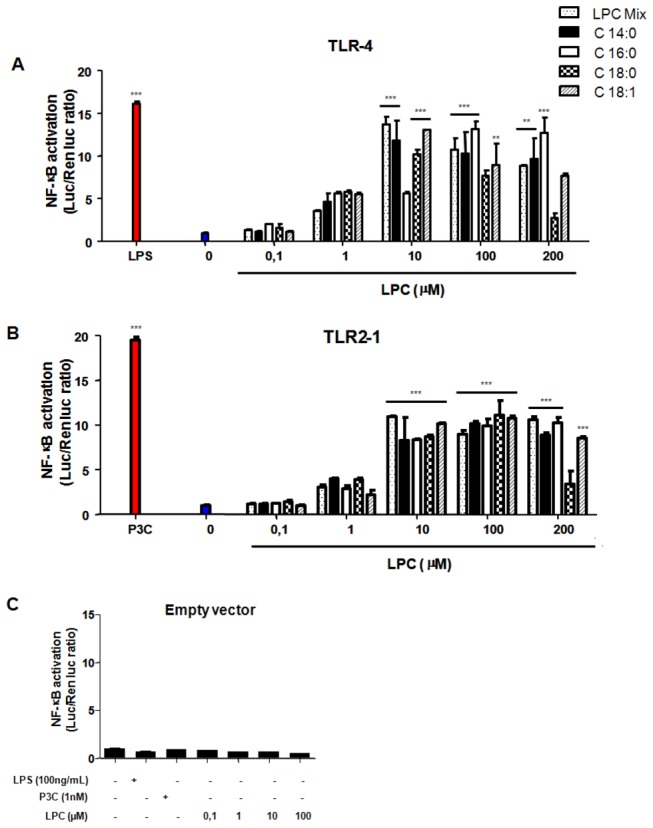
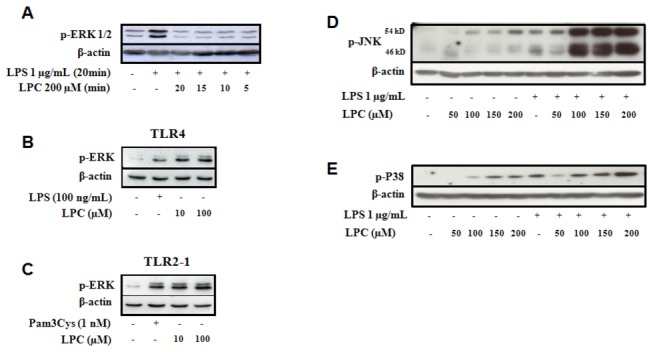
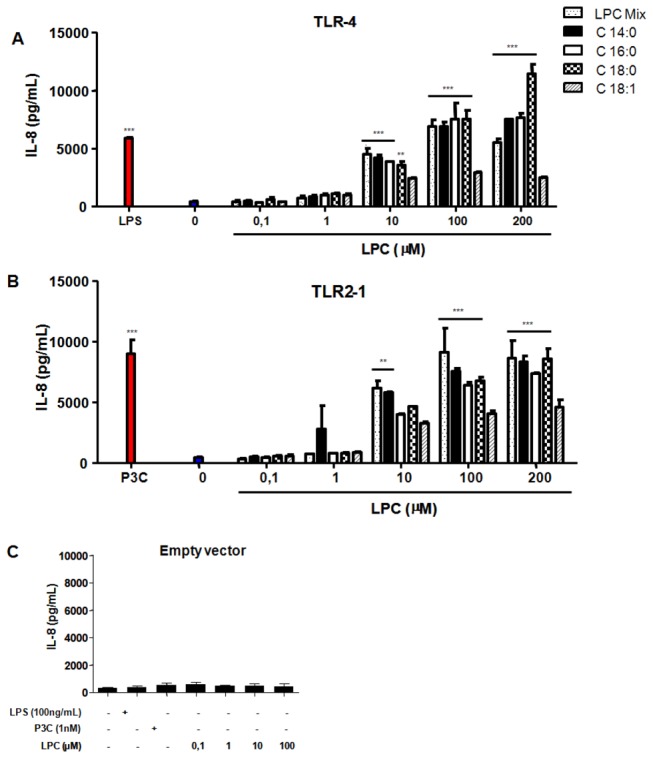
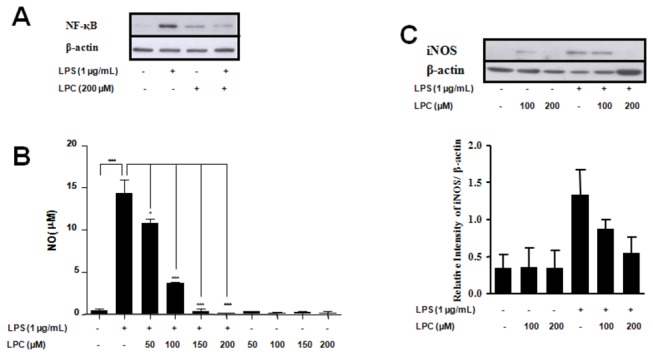
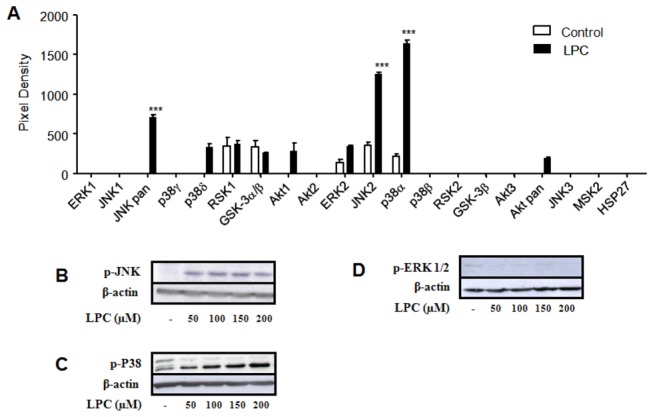
METHODOLOGY/PRINCIPAL FINDINGS: HEK 293A cells were transfected with TLR expression constructs and stimulated with LPC molecules with different fatty acid chain lengths and saturation levels. All LPC molecules activated both TLR4 and TLR2-1 signaling, as evaluated by NF-қB activation and IL-8 production. These data were confirmed by Western blot analysis of NF-қB translocation in isolated nuclei of peritoneal murine macrophages. However, LPC counteracted the TLR4 signaling induced by LPS. In this case, NF-қB translocation, nitric oxide (NO) synthesis and the expression of inducible nitric oxide synthase (iNOS) were blocked. Moreover, LPC activated the MAP Kinases p38 and JNK, but not ERK, in murine macrophages. Interestingly, LPC blocked LPS-induced ERK activation in peritoneal macrophages but not in TLR-transfected cells.
CONCLUSIONS/SIGNIFICANCE: The above results indicate that LPC is a dual-activity ligand molecule. It is able to trigger a classical proinflammatory phenotype by activating TLR4- and TLR2-1-mediated signaling. However, in the presence of classical TLR ligands, LPC counteracts some of the TLR-mediated intracellular responses, ultimately inducing an anti-inflammatory phenotype; LPC may thus play a role in the regulation of cell immune responses and disease progression.
溶血磷脂酰胆碱(LPC)是氧化型低密度脂蛋白(oxLDL)的主要磷脂成分,通常被认为是几种人类疾病的标志物,如动脉粥样硬化、癌症和糖尿病。一些研究表明,oxLDL 调节 Toll 样受体(TLR)信号。然而,存在于 oxLDL 颗粒中并能触发 TLR 信号的效应分子尚不清楚。LPC 先前被描述为败血症的抑制剂和免疫抑制剂。在本研究中,我们评估了 LPC 作为 TLR 介导的信号通路双重调节剂的作用。
方法/主要发现:用 TLR 表达构建体转染 HEK 293A 细胞,并用具有不同脂肪酸链长和饱和度的 LPC 分子刺激。所有 LPC 分子均激活 TLR4 和 TLR2-1 信号,如 NF-κB 激活和 IL-8 产生所评估。这些数据通过分离的腹膜鼠巨噬细胞核中 NF-κB 易位的 Western blot 分析得到证实。然而,LPC 拮抗 LPS 诱导的 TLR4 信号。在这种情况下,NF-κB 易位、一氧化氮(NO)合成和诱导型一氧化氮合酶(iNOS)的表达被阻断。此外,LPC 激活了鼠巨噬细胞中的 MAP 激酶 p38 和 JNK,但不激活 ERK。有趣的是,LPC 阻断了 LPS 诱导的腹膜巨噬细胞中的 ERK 激活,但不阻断 TLR 转染细胞中的 ERK 激活。
结论/意义:上述结果表明,LPC 是一种双活性配体分子。它能够通过激活 TLR4 和 TLR2-1 介导的信号来触发经典的促炎表型。然而,在存在经典 TLR 配体的情况下,LPC 拮抗一些 TLR 介导的细胞内反应,最终诱导抗炎表型;LPC 可能因此在调节细胞免疫反应和疾病进展中发挥作用。