Zakhari Samir
Division of Metabolism and Health Effects, National Institute on Alcohol Abuse and Alcoholism, USA.
Alcohol Res. 2013;35(1):6-16.
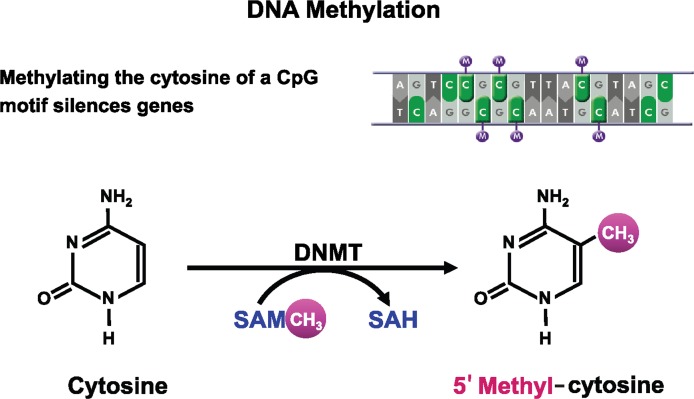
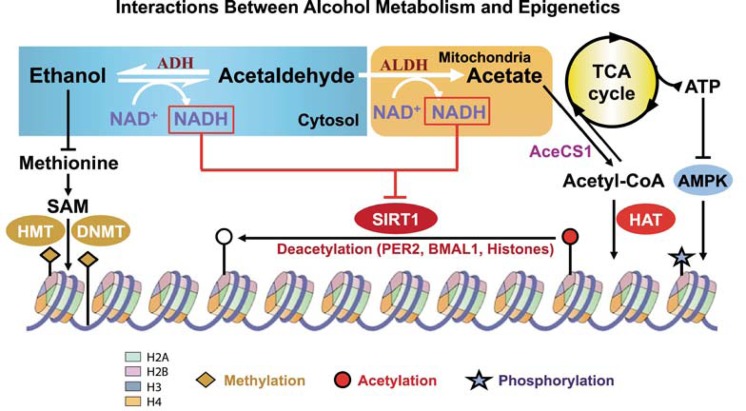
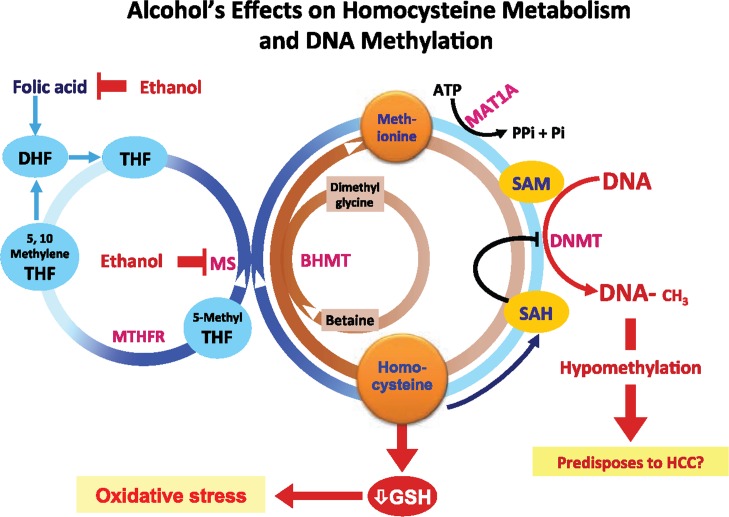
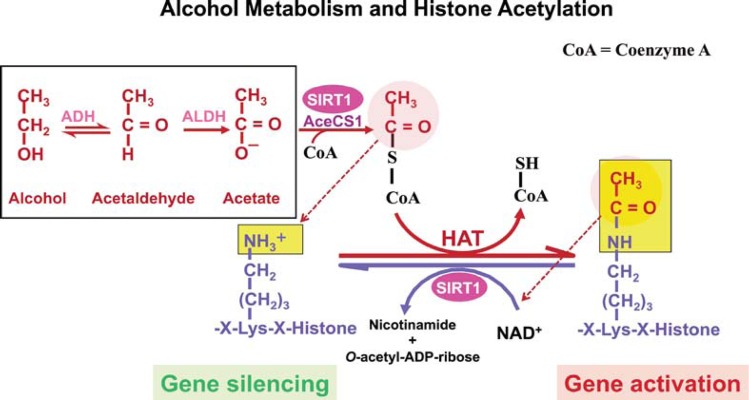
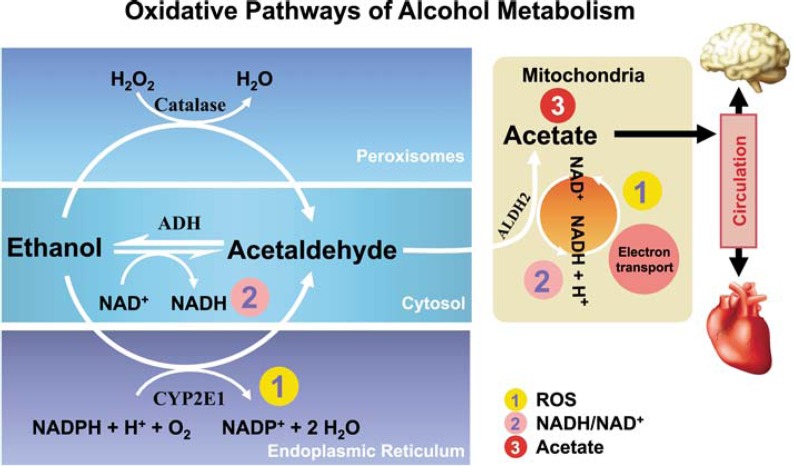
Metabolites, including those generated during ethanol metabolism, can impact disease states by binding to transcription factors and/or modifying chromatin structure, thereby altering gene expression patterns. For example, the activities of enzymes involved in epigenetic modifications such as DNA and histone methylation and histone acetylation, are influenced by the levels of metabolites such as nicotinamide adenine dinucleotide (NAD), adenosine triphosphate (ATP), and S-adenosylmethionine (SAM). Chronic alcohol consumption leads to significant reductions in SAM levels, thereby contributing to DNA hypomethylation. Similarly, ethanol metabolism alters the ratio of NAD+ to reduced NAD (NADH) and promotes the formation of reactive oxygen species and acetate, all of which impact epigenetic regulatory mechanisms. In addition to altered carbohydrate metabolism, induction of cell death, and changes in mitochondrial permeability transition, these metabolism-related changes can lead to modulation of epigenetic regulation of gene expression. Understanding the nature of these epigenetic changes will help researchers design novel medications to treat or at least ameliorate alcohol-induced organ damage.
代谢物,包括乙醇代谢过程中产生的那些代谢物,可通过与转录因子结合和/或修饰染色质结构来影响疾病状态,从而改变基因表达模式。例如,参与表观遗传修饰(如DNA和组蛋白甲基化以及组蛋白乙酰化)的酶的活性,受烟酰胺腺嘌呤二核苷酸(NAD)、三磷酸腺苷(ATP)和S-腺苷甲硫氨酸(SAM)等代谢物水平的影响。长期饮酒会导致SAM水平显著降低,从而导致DNA低甲基化。同样,乙醇代谢会改变NAD+与还原型NAD(NADH)的比例,并促进活性氧和乙酸盐的形成,所有这些都会影响表观遗传调控机制。除了碳水化合物代谢改变、细胞死亡诱导和线粒体通透性转换变化外,这些与代谢相关的变化还可导致基因表达的表观遗传调控的调节。了解这些表观遗传变化的本质将有助于研究人员设计新型药物来治疗或至少改善酒精引起的器官损伤。