Department of Internal Medicine, University of Iowa, Iowa City, IA, USA.
Blood Cancer J. 2013 Dec 6;3(12):e167. doi: 10.1038/bcj.2013.64.
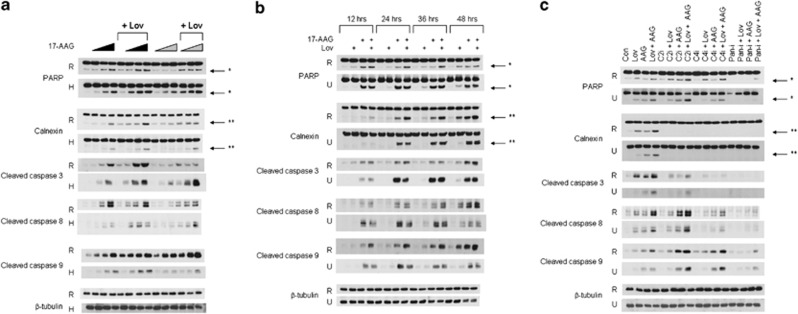
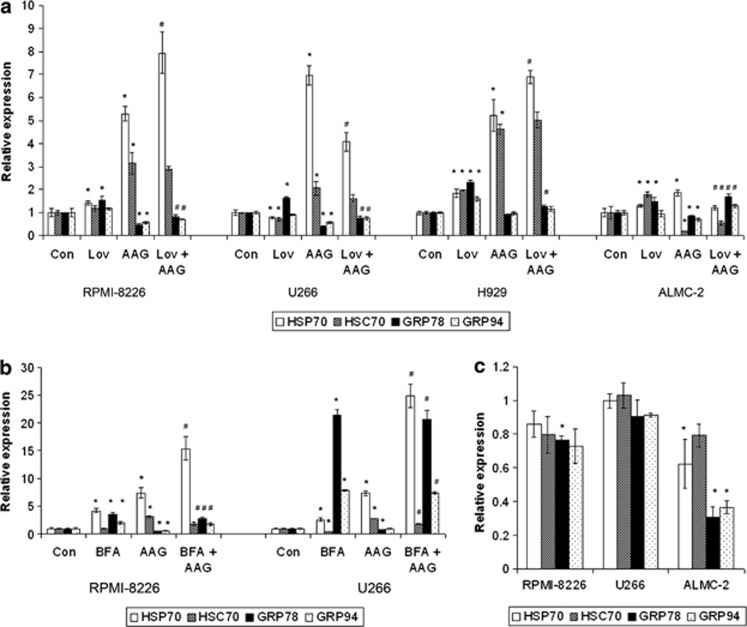
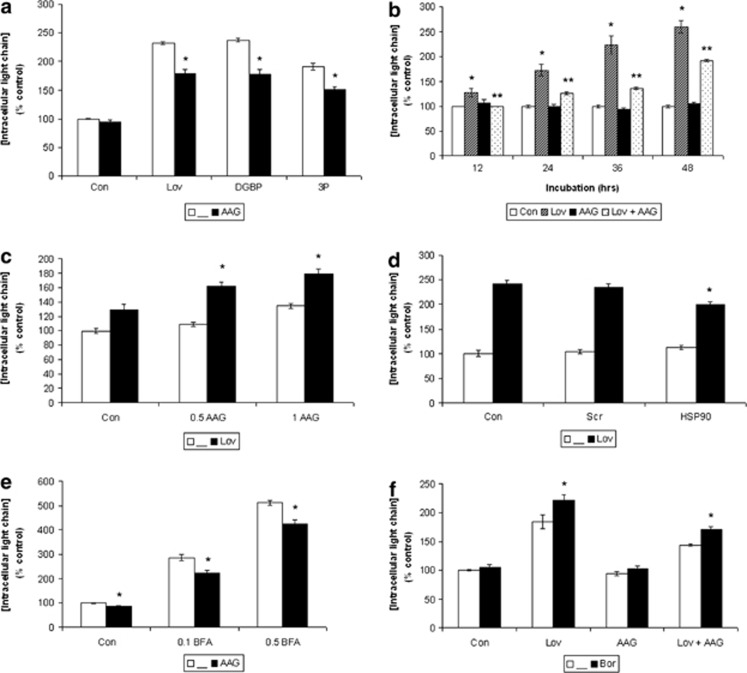
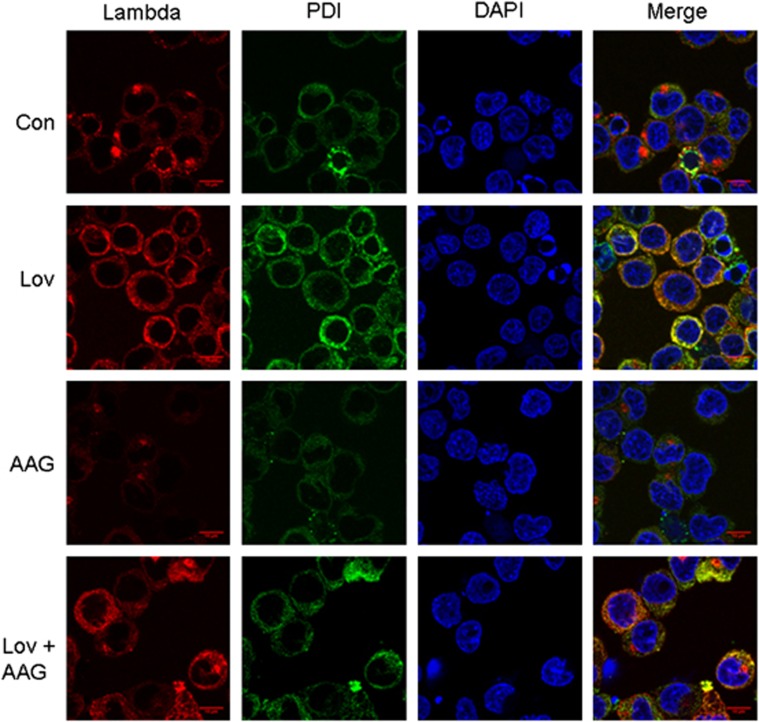
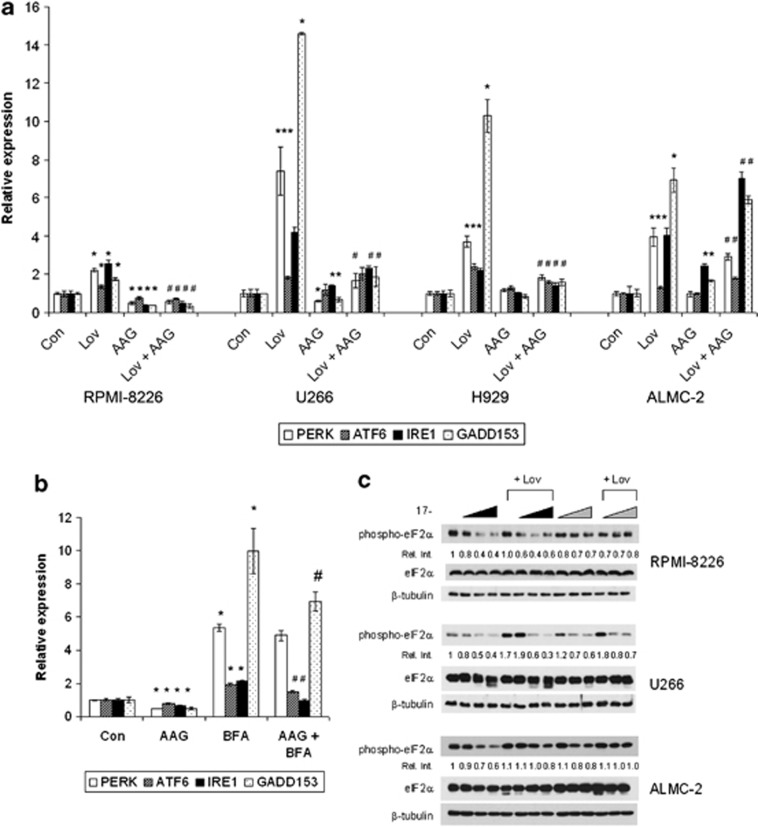
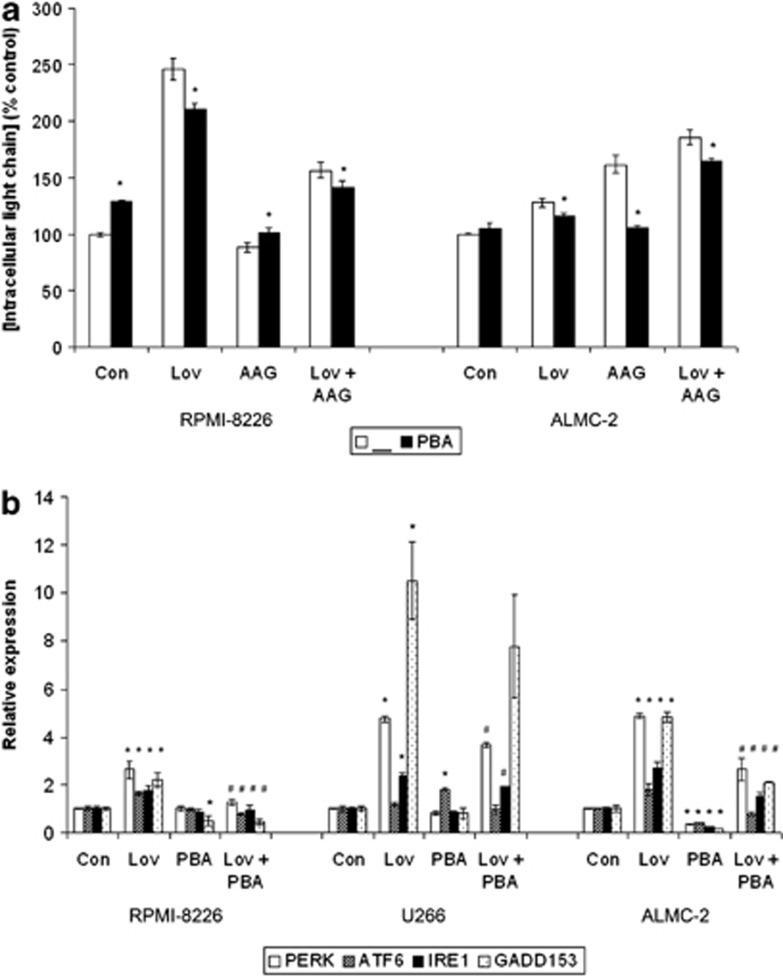
Multiple myeloma is characterized by the production of substantial quantities of monoclonal protein. We have previously demonstrated that select inhibitors of the isoprenoid biosynthetic pathway (IBP) induce apoptosis of myeloma cells via inhibition of Rab geranylgeranylation, leading to disruption of monoclonal protein trafficking and induction of the unfolded protein response (UPR) pathway. Heat-shock protein 90 (HSP90) inhibitors disrupt protein folding and are currently under clinical investigation in myeloma. The effects of combining IBP and HSP90 inhibitors on cell death, monoclonal protein trafficking, the UPR and chaperone regulation were investigated in monoclonal protein-producing cells. An enhanced induction of cell death was observed following treatment with IBP and HSP90 inhibitors, which occurred through both ER stress and non-ER stress pathways. The HSP90 inhibitor 17-AAG abrogated the effects of the IBP inhibitors on intracellular monoclonal protein levels and localization as well as induction of the UPR in myeloma cells. Disparate effects on chaperone expression were observed in myeloma vs amyloid light chain cells. Here we demonstrate that the novel strategy of targeting MP trafficking in concert with HSP90 enhances myeloma cell death via a complex modulation of ER stress, UPR, and cell death pathways.
多发性骨髓瘤的特征是大量单克隆蛋白的产生。我们之前已经证明,选择的异戊烯基生物合成途径(IBP)抑制剂通过抑制 Rab 香叶酰香叶酰化诱导骨髓瘤细胞凋亡,导致单克隆蛋白运输中断和未折叠蛋白反应(UPR)途径的诱导。热休克蛋白 90(HSP90)抑制剂破坏蛋白质折叠,目前正在骨髓瘤的临床研究中。在产生单克隆蛋白的细胞中,研究了 IBP 和 HSP90 抑制剂对细胞死亡、单克隆蛋白运输、UPR 和伴侣调节的影响。用 IBP 和 HSP90 抑制剂处理后,观察到细胞死亡的增强诱导,这是通过内质网应激和非内质网应激途径发生的。HSP90 抑制剂 17-AAG 消除了 IBP 抑制剂对骨髓瘤细胞内单克隆蛋白水平和定位以及 UPR 诱导的影响。在骨髓瘤与淀粉样轻链细胞中观察到伴侣表达的不同影响。在这里,我们证明了靶向 MP 运输的新策略与 HSP90 一起增强了骨髓瘤细胞的死亡,通过对 ER 应激、UPR 和细胞死亡途径的复杂调节。