Johnston Paul R, Makarova Olga, Rolff Jens
Evolutionary Biology, Institute for Biology, Free University of Berlin, 14195 Berlin, Germany
Evolutionary Biology, Institute for Biology, Free University of Berlin, 14195 Berlin, Germany.
G3 (Bethesda). 2013 Dec 6;4(6):947-55. doi: 10.1534/g3.113.008516.
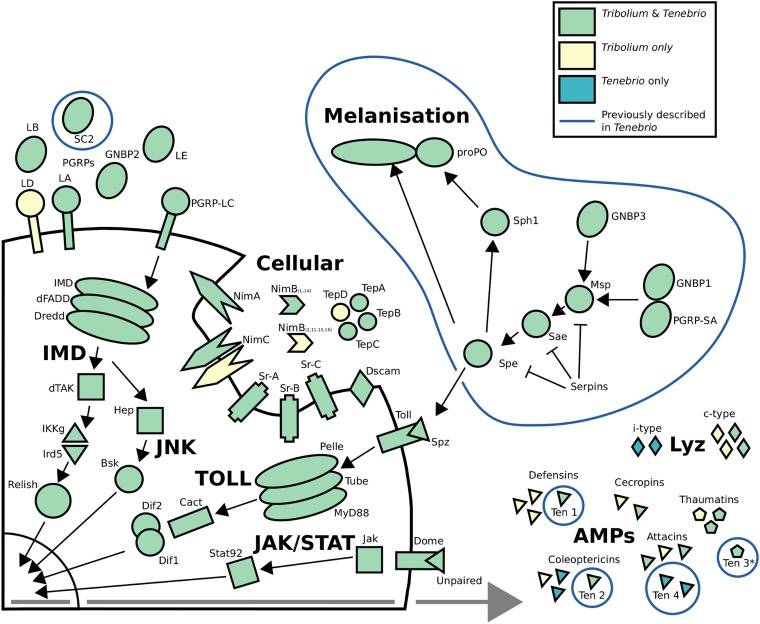
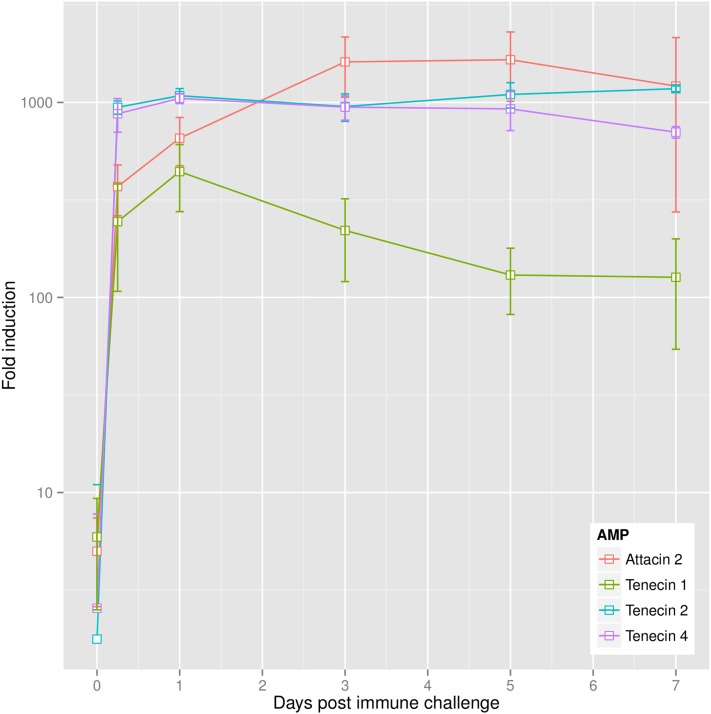
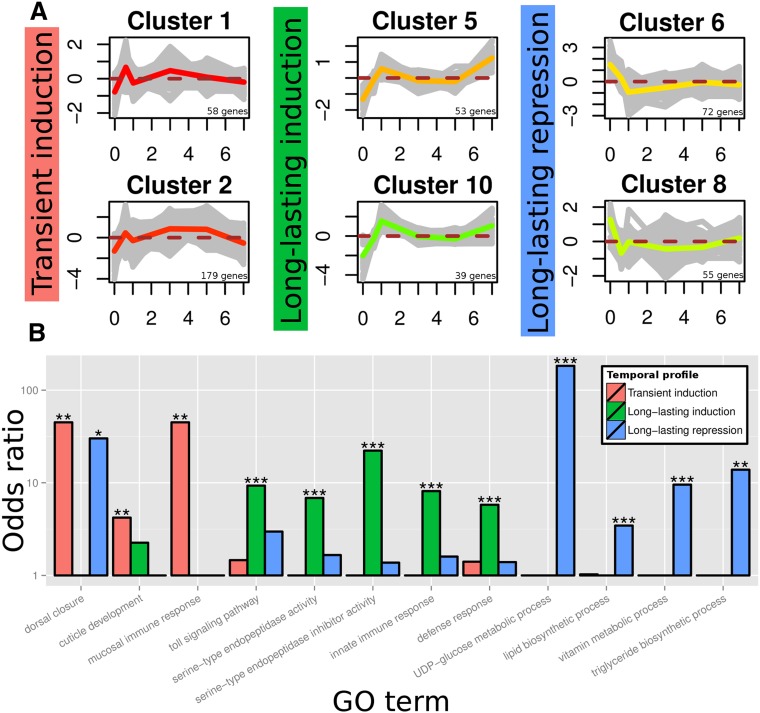
The course of microbial infection in insects is shaped by a two-stage process of immune defense. Constitutive defenses, such as engulfment and melanization, act immediately and are followed by inducible defenses, archetypically the production of antimicrobial peptides, which eliminate or suppress the remaining microbes. By applying RNAseq across a 7-day time course, we sought to characterize the long-lasting immune response to bacterial challenge in the mealworm beetle Tenebrio molitor, a model for the biochemistry of insect immunity and persistent bacterial infection. By annotating a hybrid de novo assembly of RNAseq data, we were able to identify putative orthologs for the majority of components of the conserved insect immune system. Compared with Tribolium castaneum, the most closely related species with a reference genome sequence and a manually curated immune system annotation, the T. molitor immune gene count was lower, with lineage-specific expansions of genes encoding serine proteases and their countervailing inhibitors accounting for the majority of the deficit. Quantitative mapping of RNAseq reads to the reference assembly showed that expression of genes with predicted functions in cellular immunity, wound healing, melanization, and the production of reactive oxygen species was transiently induced immediately after immune challenge. In contrast, expression of genes encoding antimicrobial peptides or components of the Toll signaling pathway and iron sequestration response remained elevated for at least 7 days. Numerous genes involved in metabolism and nutrient storage were repressed, indicating a possible cost of immune induction. Strikingly, the expression of almost all antibacterial peptides followed the same pattern of long-lasting induction, regardless of their spectra of activity, signaling possible interactive roles in vivo.
昆虫体内微生物感染的进程由免疫防御的两阶段过程塑造。组成性防御,如吞噬作用和黑化作用,会立即发挥作用,随后是诱导性防御,典型的是抗菌肽的产生,抗菌肽可消除或抑制剩余的微生物。通过在7天的时间进程中应用RNA测序技术,我们试图描绘黄粉虫(一种昆虫免疫生物化学和持续性细菌感染的模型)对细菌攻击的持久免疫反应特征。通过注释RNA测序数据的混合从头组装,我们能够识别出保守昆虫免疫系统大多数组分的假定直系同源基因。与具有参考基因组序列和人工策划的免疫系统注释的最密切相关物种——赤拟谷盗相比,黄粉虫的免疫基因数量较少,编码丝氨酸蛋白酶及其相应抑制剂的基因的谱系特异性扩增占了大部分差异。将RNA测序读数定量映射到参考组装上显示,在细胞免疫、伤口愈合、黑化作用和活性氧产生中具有预测功能的基因的表达在免疫攻击后立即被短暂诱导。相比之下,编码抗菌肽或Toll信号通路组分以及铁螯合反应的基因的表达至少持续7天保持升高。许多参与代谢和营养储存的基因受到抑制,表明免疫诱导可能存在代价。引人注目的是,几乎所有抗菌肽的表达都遵循相同的长期诱导模式,无论它们的活性谱如何,这表明它们在体内可能具有相互作用的角色。