Laboratory of Immunogenetics; Department of Medical Sciences; University of Torino; Torino, Italy ; Research Center for Experimental Medicine; University of Torino; Torino, Italy ; Transplantation Immunology; "Città della Salute e della Scienza" Hospital; Torino, Italy.
Oncoimmunology. 2013 Sep 1;2(9):e26246. doi: 10.4161/onci.26246. Epub 2013 Sep 26.
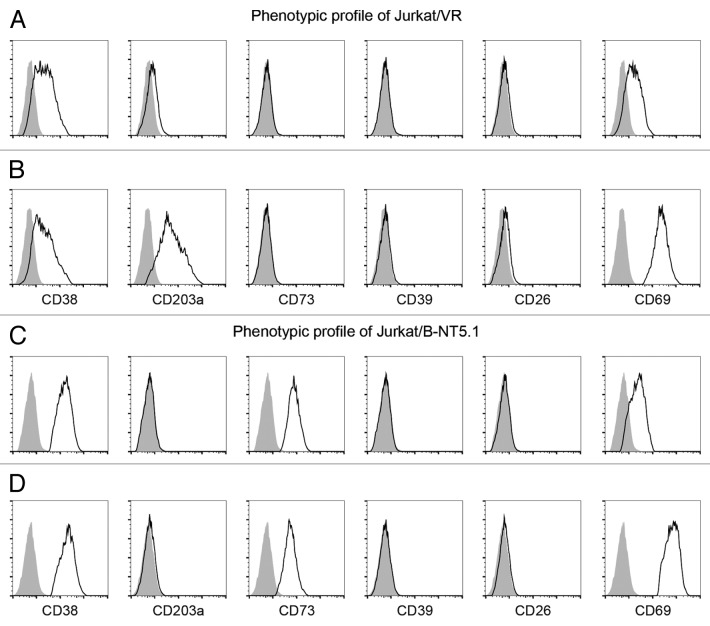
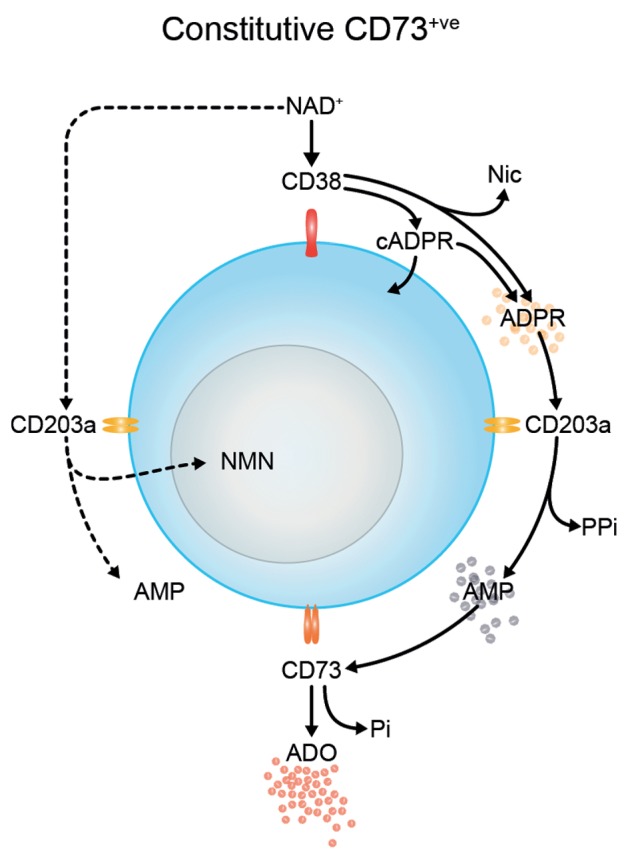
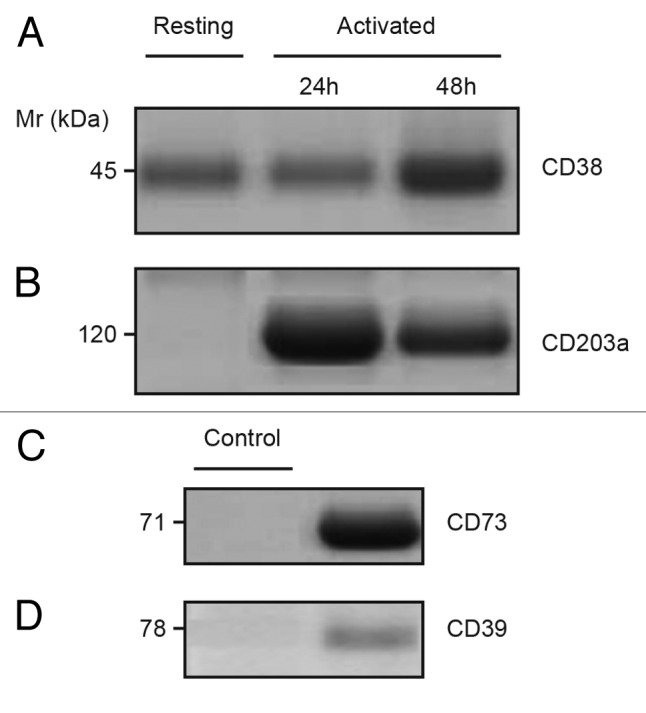
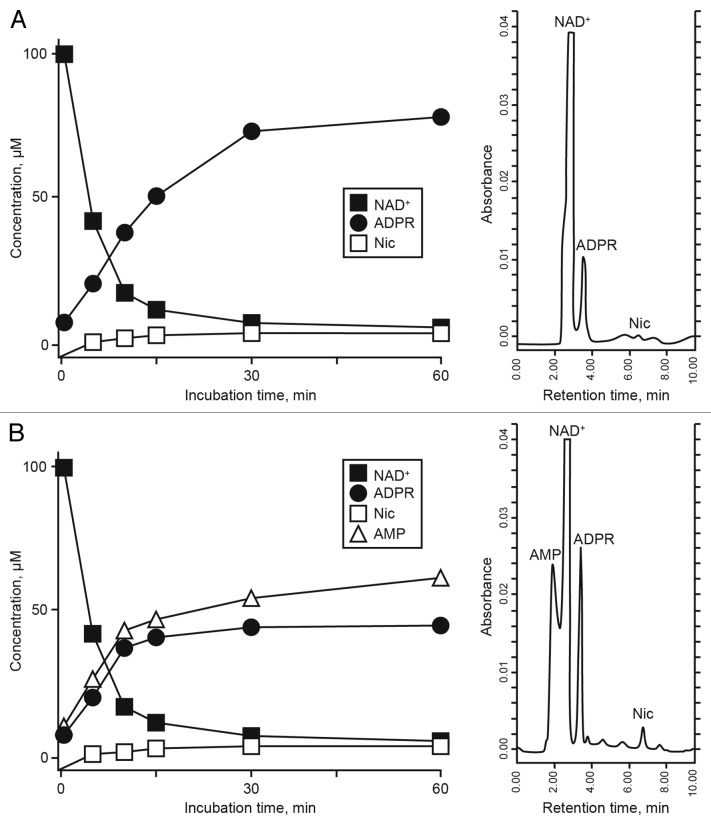
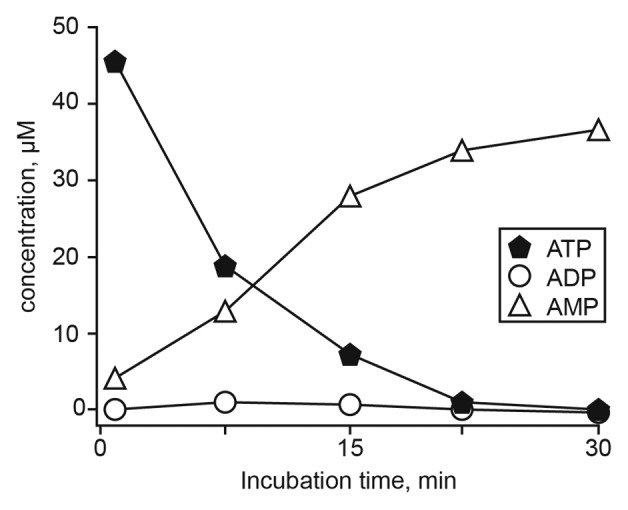
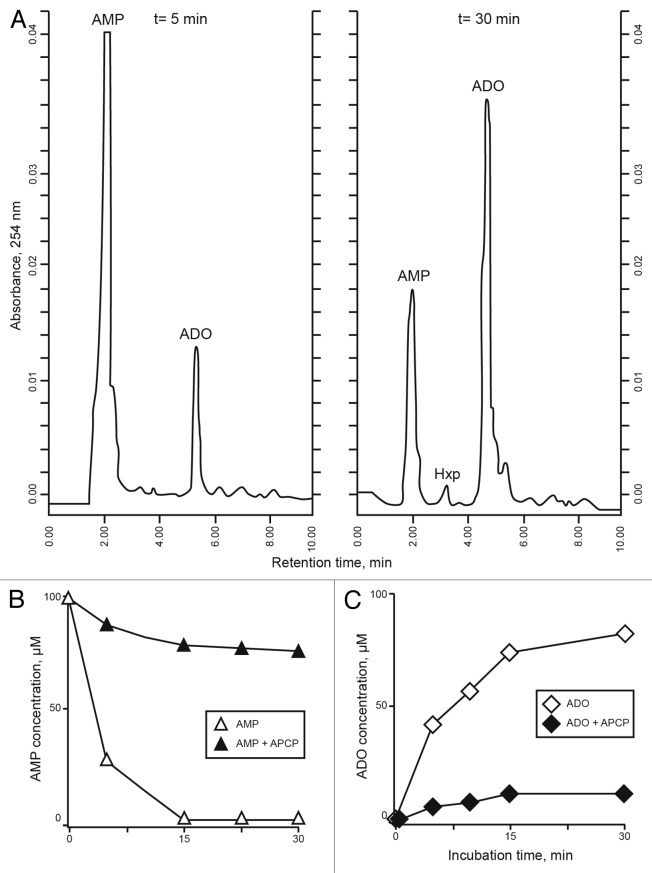
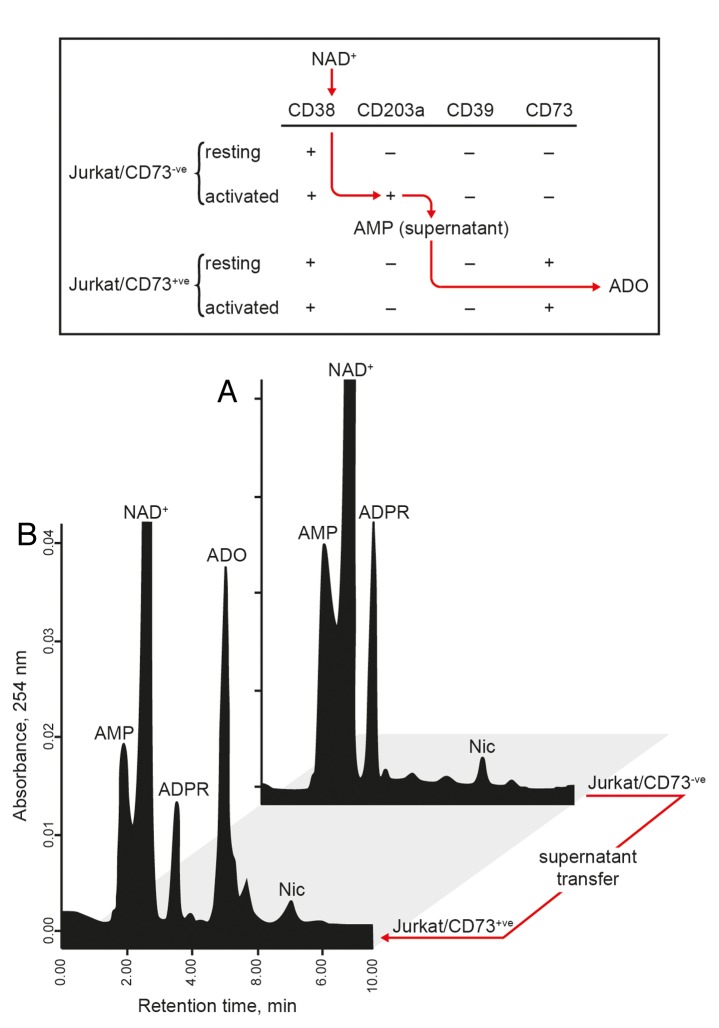
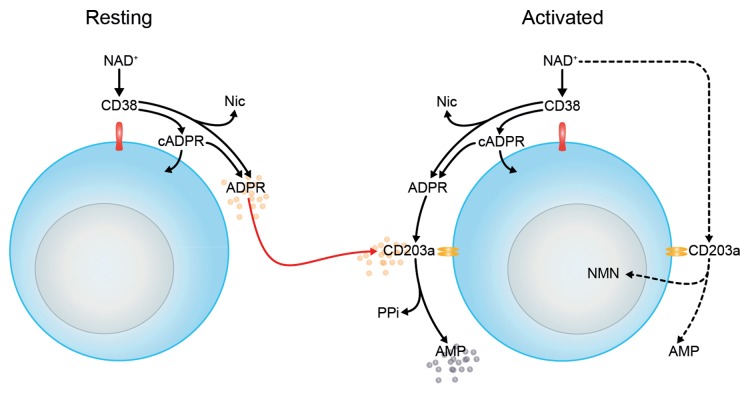
The tumor microenvironment is characterized by of high levels of extracellular nucleotides that are metabolized through the dynamic and sequential action of cell surface enzymes (ectoenzymes). These ectoenzymes operate according to their spatial arrangement, as part of (1) continuous (molecules on the same cell) or (2) discontinuous (molecules on different cells) pathways, the latter being facilitated by restricted cellular microenvironment. The outcome of this catabolic activity is an increase in the local concentration of adenosine, a nucleoside involved in the control of inflammation and immune responses. The aim of the work presented here was to demonstrate that a previously unexplored enzymatic pathway may be an alternate route to produce extracellular adenosine. Our data show that this new axis is driven by the nucleotide-metabolizing ectoenzymes CD38 (an NAD nucleosidase), the ecto-nucleotide pyrophosphatase/phosphodiesterase 1 (NPP1, also known as CD203a or PC-1) and the 5' ectonucleotidase (5'-NT) CD73, while bypassing the canonical catabolic pathway mediated by the nucleoside tri- and diphosphohydrolase (NTPDase) CD39. To determine the relative contributions of these cell surface enzymes to the production of adenosine, we exploited a human T-cell model allowing for the modular expression of the individual components of this alternative pathway upon activation and transfection. The biochemical analysis of the products of these ectoenzymes by high-performance liquid chromatography (HPLC) fully substantiated our working hypothesis. This newly characterized pathway may facilitate the emergence of an adaptive immune response in selected cellular contexts. Considering the role for extracellular adenosine in the regulation of inflammation and immunogenicity, this pathway could constitute a novel strategy of tumor evasion, implying that these enzymes may represent ideal targets for antibody-mediated therapy.
肿瘤微环境的特点是细胞外核苷酸水平较高,这些核苷酸通过细胞表面酶(外切酶)的动态和连续作用进行代谢。这些外切酶根据其空间排列方式起作用,作为(1)连续(同一细胞上的分子)或(2)不连续(不同细胞上的分子)途径的一部分,后者由受限的细胞微环境促进。这种分解代谢活性的结果是腺苷(一种参与炎症和免疫反应控制的核苷)局部浓度的增加。本研究工作的目的是证明以前未探索的酶促途径可能是产生细胞外腺苷的替代途径。我们的数据表明,这个新的轴是由核苷酸代谢的外切酶 CD38(NAD 核苷酶)、外核苷酸焦磷酸酶/磷酸二酯酶 1(NPP1,也称为 CD203a 或 PC-1)和 5'外核苷酸酶(5'-NT)CD73 驱动的,同时绕过了由核苷三磷酸二酯酶(NTPDase)CD39 介导的经典分解代谢途径。为了确定这些细胞表面酶对腺苷产生的相对贡献,我们利用人类 T 细胞模型,在激活和转染时允许该替代途径的单个组件进行模块化表达。通过高效液相色谱法(HPLC)对这些外切酶产物的生化分析充分证实了我们的工作假设。这个新表征的途径可能有助于在选定的细胞环境中出现适应性免疫反应。考虑到细胞外腺苷在炎症和免疫原性调节中的作用,这种途径可能构成肿瘤逃避的一种新策略,这意味着这些酶可能代表抗体介导治疗的理想靶点。