De Cecco Marco, Criscione Steven W, Peterson Abigail L, Neretti Nicola, Sedivy John M, Kreiling Jill A
Department of Molecular Biology, Cell Biology and Biochemistry, Center for Genomics and Proteomics, Brown University, Providence, RI 02903, USA.
Aging (Albany NY). 2013 Dec;5(12):867-83. doi: 10.18632/aging.100621.
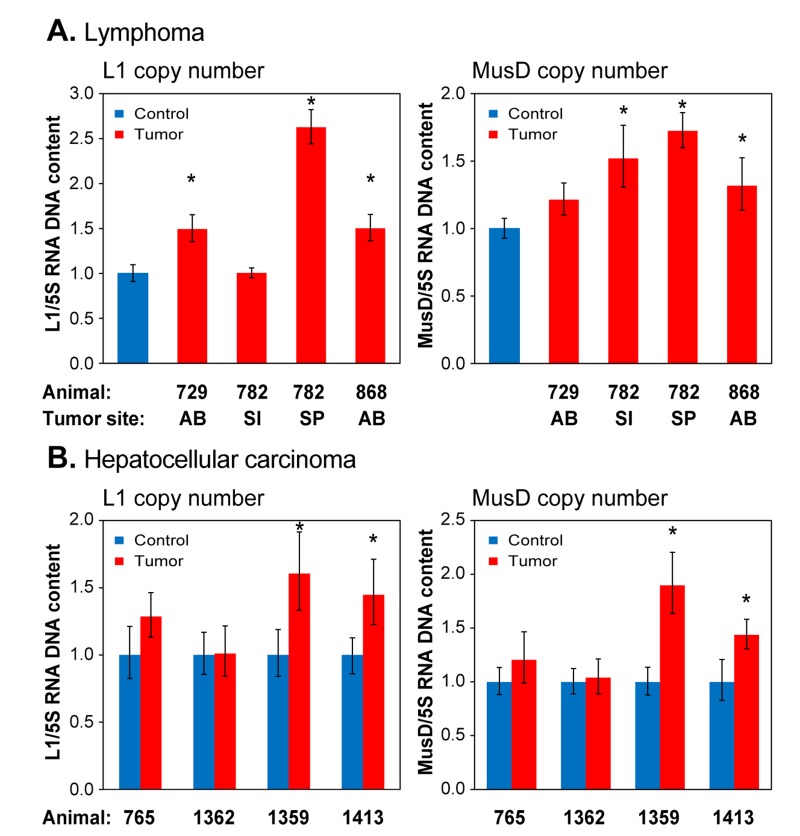
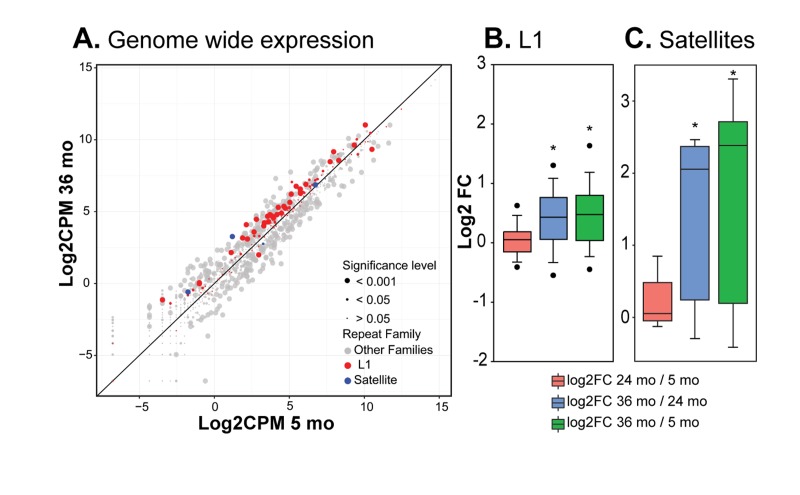
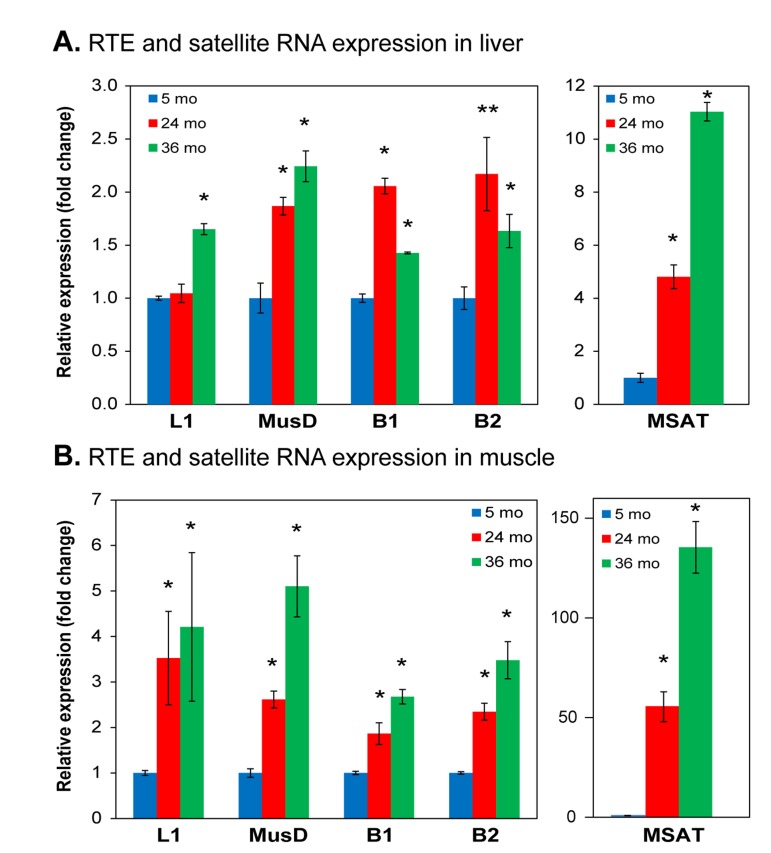
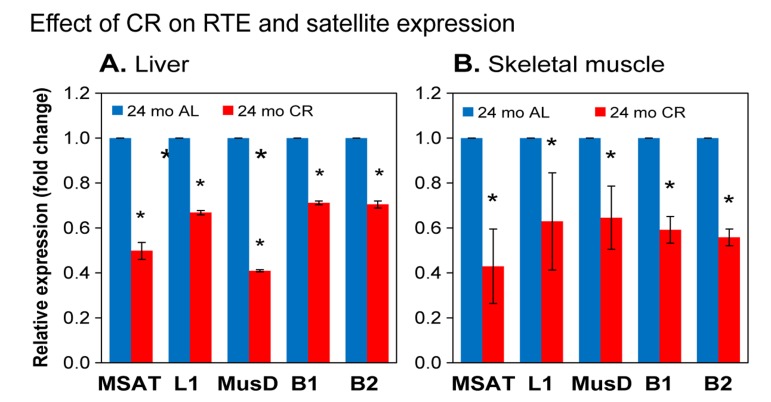
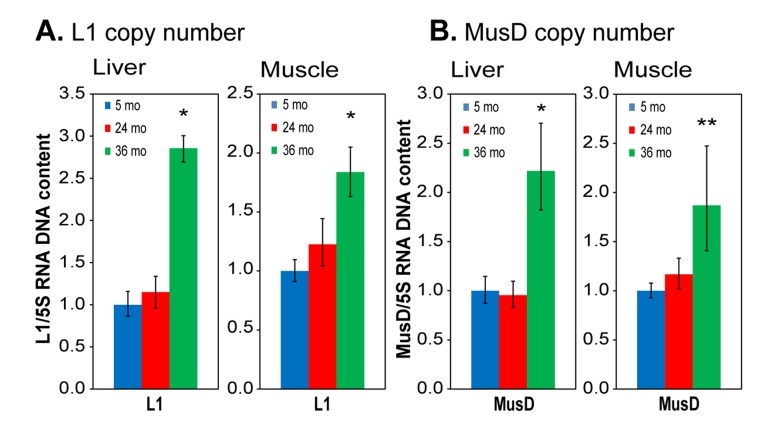
Transposable elements (TEs) were discovered by Barbara McClintock in maize and have since been found to be ubiquitous in all living organisms. Transposition is mutagenic and organisms have evolved mechanisms to repress the activity of their endogenous TEs. Transposition in somatic cells is very low, but recent evidence suggests that it may be derepressed in some cases, such as cancer development. We have found that during normal aging several families of retrotransposable elements (RTEs) start being transcribed in mouse tissues. In advanced age the expression culminates in active transposition. These processes are counteracted by calorie restriction (CR), an intervention that slows down aging. Retrotransposition is also activated in age-associated, naturally occurring cancers in the mouse. We suggest that somatic retrotransposition is a hitherto unappreciated aging process. Mobilization of RTEs is likely to be an important contributor to the progressive dysfunction of aging cells.
转座元件(TEs)由芭芭拉·麦克林托克在玉米中发现,此后被发现在所有生物中普遍存在。转座具有致突变性,生物体已经进化出抑制其内源性转座元件活性的机制。体细胞中的转座非常低,但最近的证据表明,在某些情况下,如癌症发展过程中,转座可能会被解除抑制。我们发现,在正常衰老过程中,几个逆转座元件(RTEs)家族开始在小鼠组织中被转录。在高龄时,这种表达最终导致活跃的转座。这些过程会被热量限制(CR)抵消,热量限制是一种减缓衰老的干预措施。在与年龄相关的小鼠自然发生的癌症中,逆转座也会被激活。我们认为,体细胞逆转座是一个迄今未被重视的衰老过程。RTEs的动员可能是衰老细胞渐进性功能障碍的一个重要因素。