Division of Rheumatology, Istituto Gaetano Pini, Department of Clinical Science & Community Health, University of Milan, 20122 Milan, Italy.
Dis Markers. 2013;35(6):727-34. doi: 10.1155/2013/726598. Epub 2013 Nov 13.
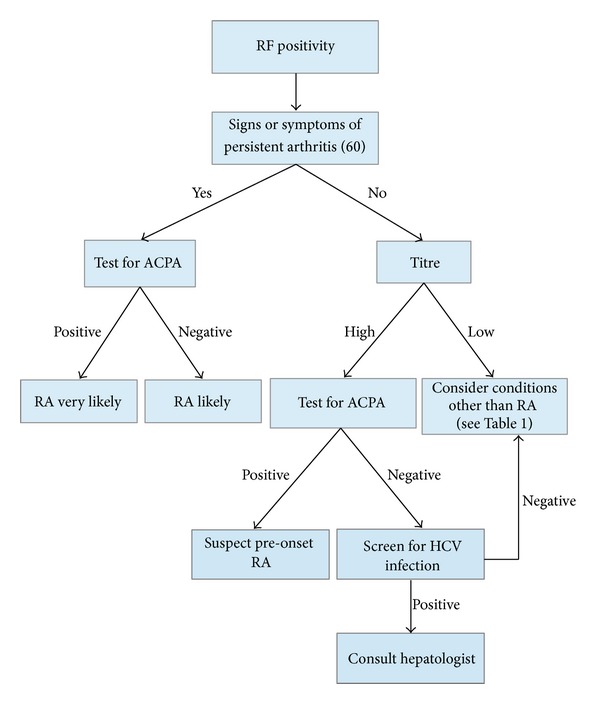
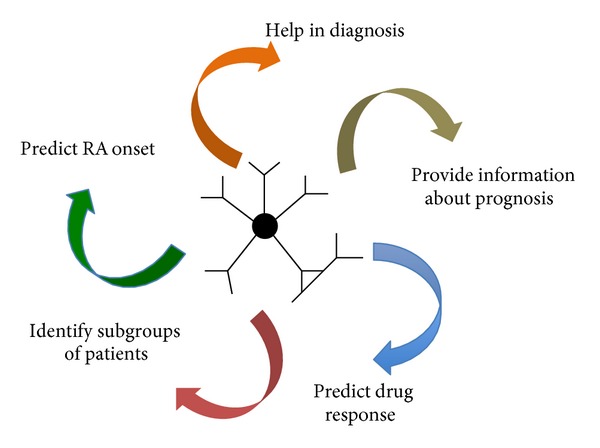
Rheumatoid factors are antibodies directed against the Fc region of immunoglobulin G. First detected in patients with rheumatoid arthritis 70 years ago, they can also be found in patients with other autoimmune and nonautoimmune conditions, as well as in healthy subjects. Rheumatoid factors form part of the workup for the differential diagnosis of arthropathies. In clinical practice, it is recommended to measure anti-cyclic citrullinated peptide antibodies and rheumatoid factors together because anti-cyclic citrullinated peptide antibodies alone are only moderately sensitive, and the combination of the two markers improves diagnostic accuracy, especially in the case of early rheumatoid arthritis. Furthermore, different rheumatoid factor isotypes alone or in combination can be helpful when managing rheumatoid arthritis patients, from the time of diagnosis until deciding on the choice of therapeutic strategy.
类风湿因子是针对免疫球蛋白 G 的 Fc 区域的抗体。70 年前在类风湿关节炎患者中首次发现,它们也存在于其他自身免疫性和非自身免疫性疾病患者以及健康受试者中。类风湿因子是关节病鉴别诊断的检查内容之一。在临床实践中,建议一起测量抗环瓜氨酸肽抗体和类风湿因子,因为单独的抗环瓜氨酸肽抗体的灵敏度适中,两种标志物的组合可提高诊断准确性,尤其是在早期类风湿关节炎的情况下。此外,类风湿因子的不同同种型单独或组合使用在管理类风湿关节炎患者时也很有帮助,从诊断到选择治疗策略。