Huang Yehong, Sramkoski R Michael, Jacobberger James W
Department of Molecular Biology and Microbiology, Case Western Reserve University, Cleveland, Ohio, United States of America.
PLoS One. 2013 Dec 4;8(12):e80861. doi: 10.1371/journal.pone.0080861. eCollection 2013.
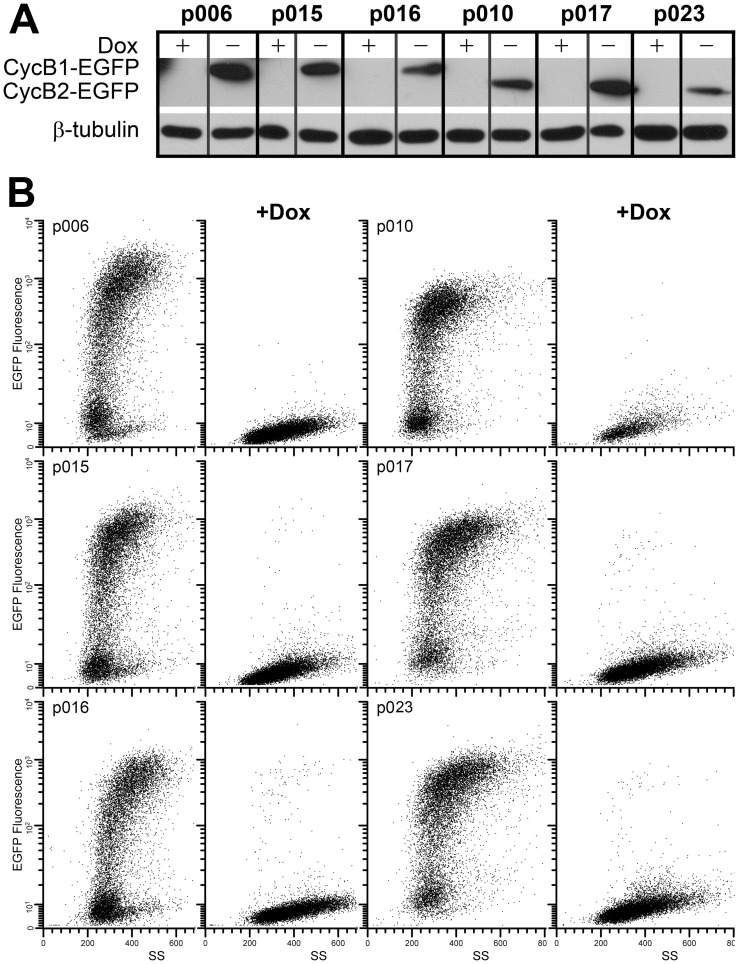
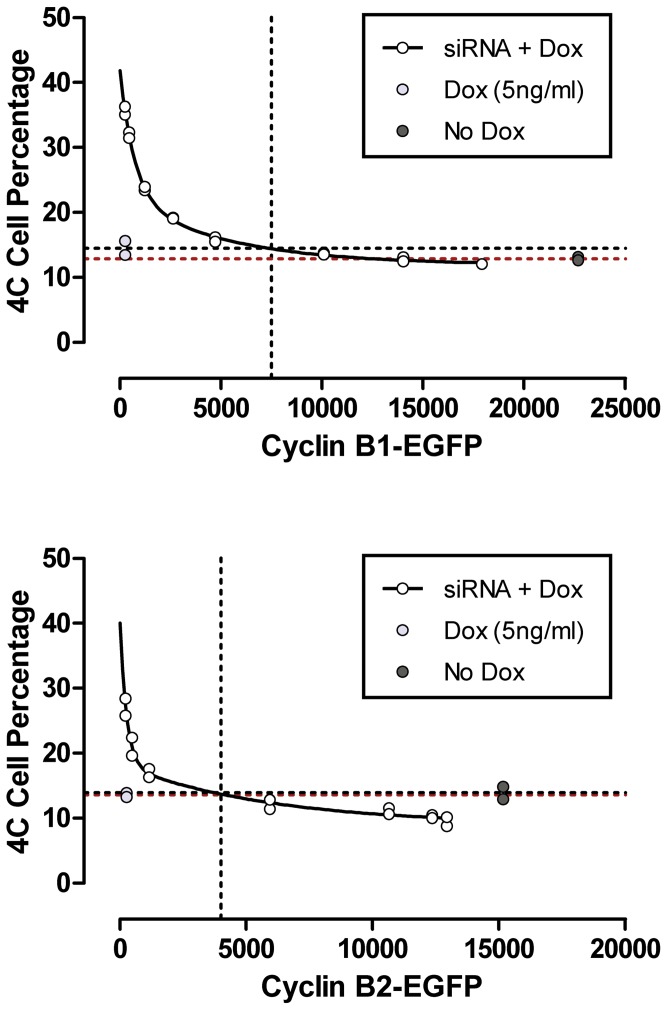
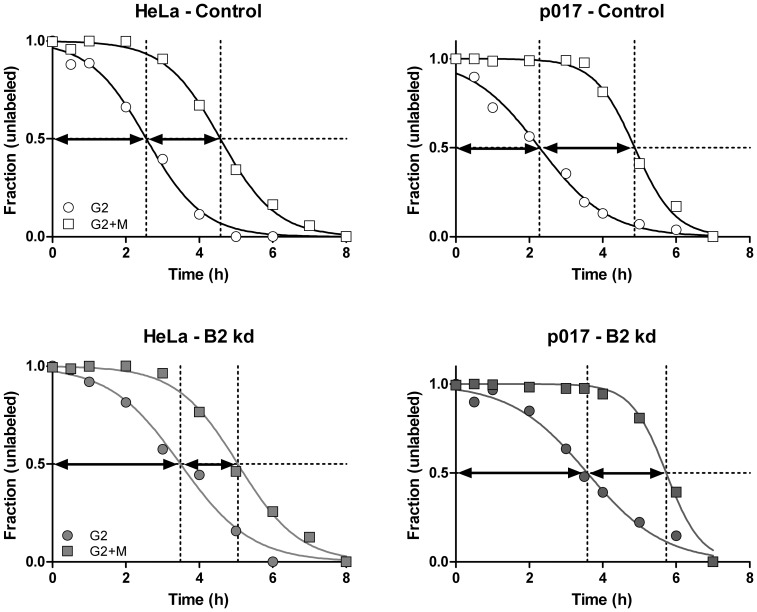
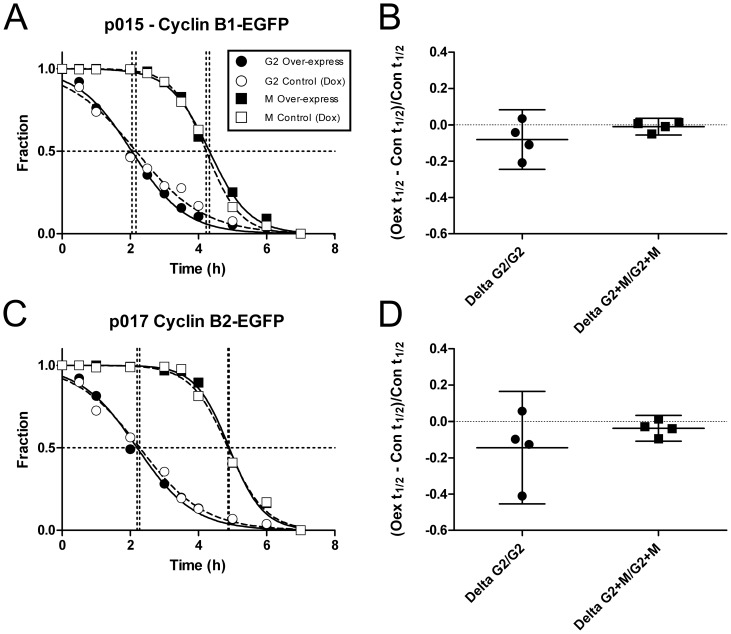
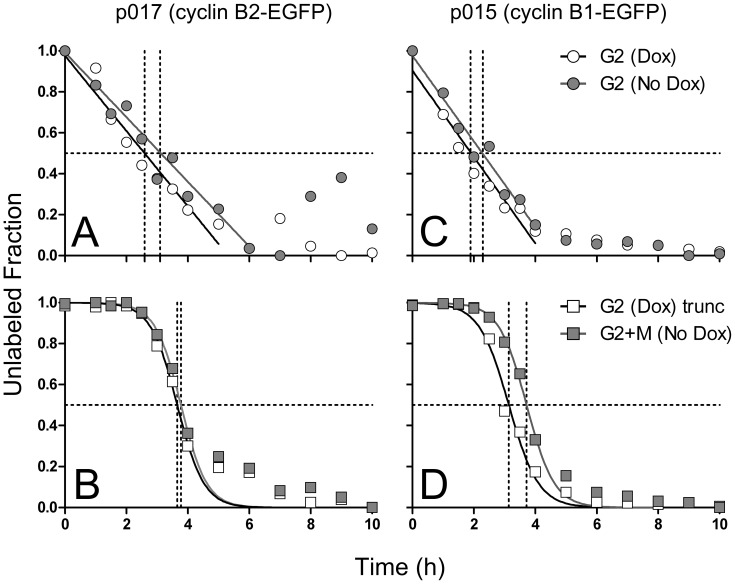
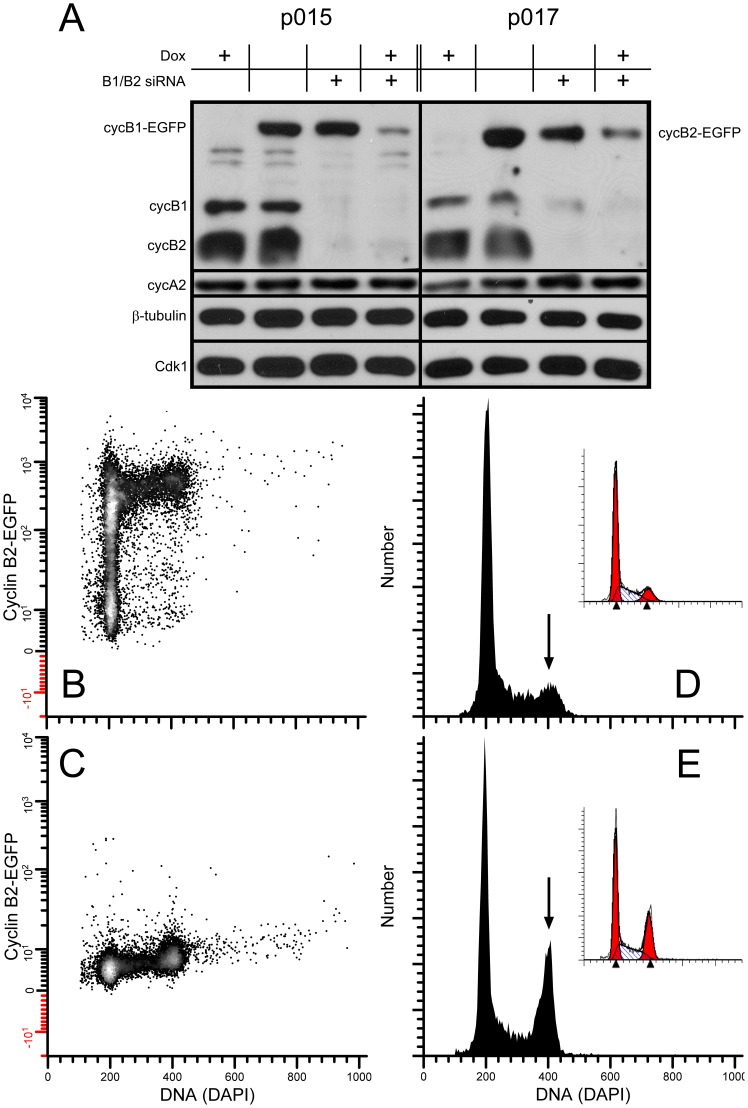
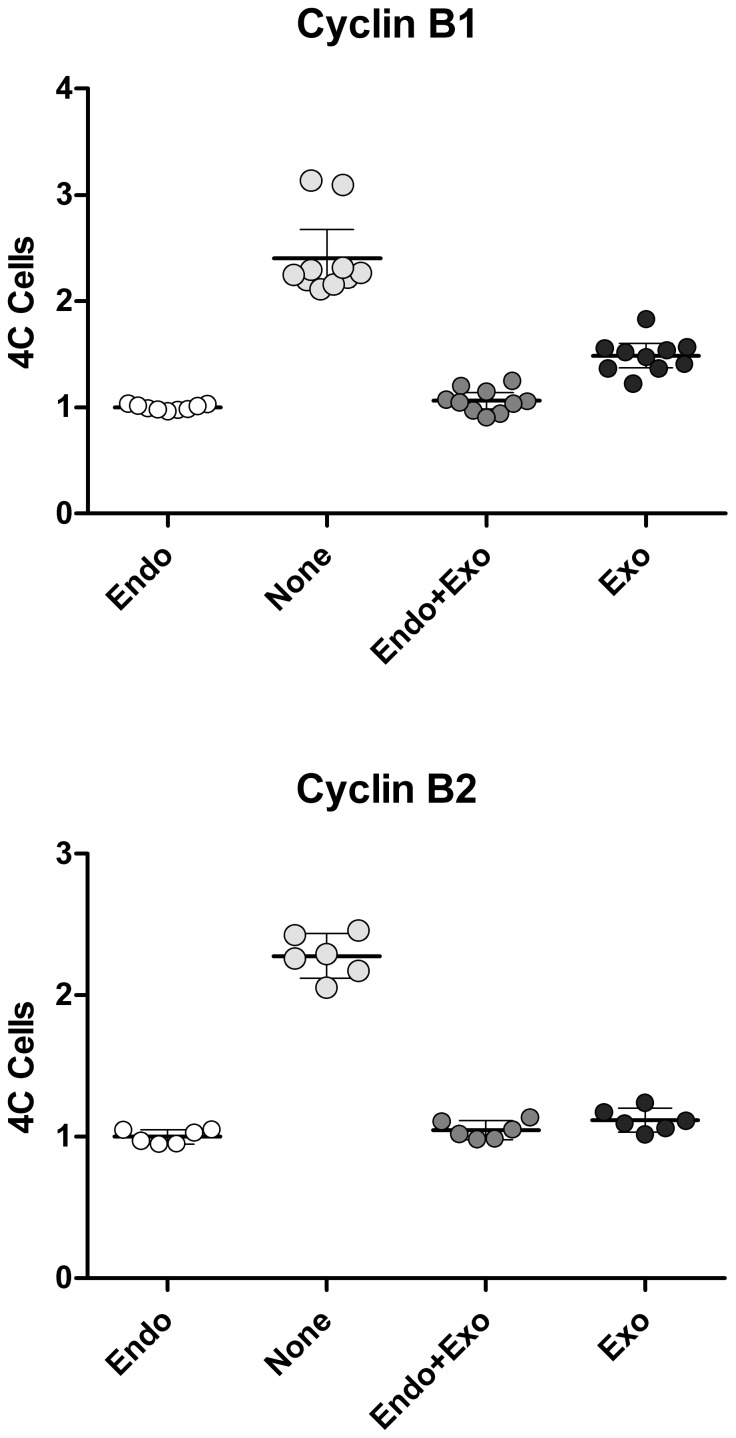
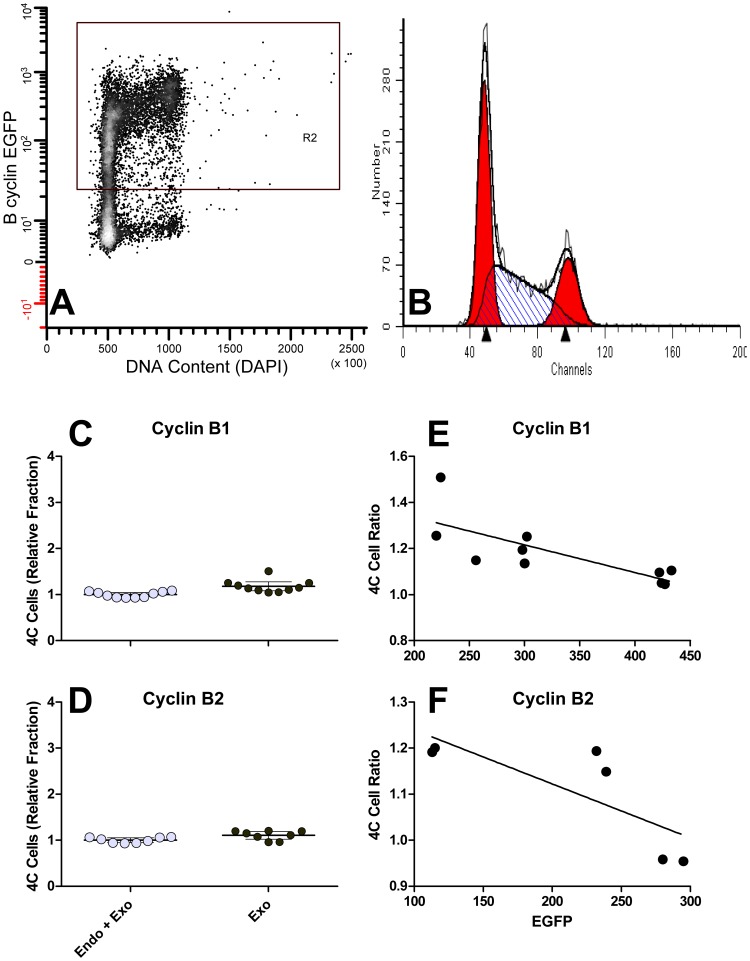
B cyclins regulate G2-M transition. Because human somatic cells continue to cycle after reduction of cyclin B1 (cycB1) or cyclin B2 (cycB2) by RNA interference (RNAi), and because cycB2 knockout mice are viable, the existence of two genes should be an optimization. To explore this idea, we generated HeLa BD™ Tet-Off cell lines with inducible cyclin B1- or B2-EGFP that were RNAi resistant. Cultures were treated with RNAi and/or doxycycline (Dox) and bromodeoxyuridine. We measured G2 and M transit times and 4C cell accumulation. In the absence of ectopic B cyclin expression, knockdown (kd) of either cyclin increased G2 transit. M transit was increased by cycB1 kd but decreased by cycB2 depletion. This novel difference was further supported by time-lapse microscopy. This suggests that cycB2 tunes mitotic timing, and we speculate that this is through regulation of a Golgi checkpoint. In the presence of endogenous cyclins, expression of active B cyclin-EGFPs did not affect G2 or M phase times. As previously shown, B cyclin co-depletion induced G2 arrest. Expression of either B cyclin-EGFP completely rescued knockdown of the respective endogenous cyclin in single kd experiments, and either cyclin-EGFP completely rescued endogenous cyclin co-depletion. Most of the rescue occurred at relatively low levels of exogenous cyclin expression. Therefore, cycB1 and cycB2 are interchangeable for ability to promote G2 and M transition in this experimental setting. Cyclin B1 is thought to be required for the mammalian somatic cell cycle, while cyclin B2 is thought to be dispensable. However, residual levels of cyclin B1 or cyclin B2 in double knockdown experiments are not sufficient to promote successful mitosis, yet residual levels are sufficient to promote mitosis in the presence of the dispensible cyclin B2. We discuss a simple model that would explain most data if cyclin B1 is necessary.
B族细胞周期蛋白调节G2期向M期的转换。由于通过RNA干扰(RNAi)降低细胞周期蛋白B1(cycB1)或细胞周期蛋白B2(cycB2)后,人类体细胞仍继续循环,并且由于cycB2基因敲除小鼠是可存活的,所以这两个基因的存在应该是一种优化。为了探究这一想法,我们构建了具有可诱导的、对RNAi有抗性的细胞周期蛋白B1-或B2-EGFP的HeLa BD™ Tet-Off细胞系。用RNAi和/或强力霉素(Dox)以及溴脱氧尿苷处理细胞培养物。我们测量了G2期和M期的转换时间以及4C细胞积累情况。在没有异位B族细胞周期蛋白表达的情况下,敲低(kd)任何一种细胞周期蛋白都会增加G2期转换时间。细胞周期蛋白B1敲低会增加M期转换时间,而细胞周期蛋白B2缺失则会减少M期转换时间。延时显微镜观察进一步支持了这一新颖的差异。这表明细胞周期蛋白B2调节有丝分裂时间,我们推测这是通过调节高尔基体检查点实现的。在内源性细胞周期蛋白存在的情况下,活性B族细胞周期蛋白-EGFP的表达不会影响G2期或M期时间。如先前所示,B族细胞周期蛋白共同敲低会诱导G2期停滞。在单敲低实验中,任何一种B族细胞周期蛋白-EGFP的表达都能完全挽救各自内源性细胞周期蛋白的敲低,并且任何一种细胞周期蛋白-EGFP都能完全挽救内源性细胞周期蛋白的共同敲低。大多数挽救发生在外源细胞周期蛋白表达水平相对较低时。因此,在这种实验条件下,细胞周期蛋白B1和B2在促进G2期和M期转换的能力上是可互换的。细胞周期蛋白B1被认为是哺乳动物体细胞周期所必需的,而细胞周期蛋白B2被认为是可有可无的。然而,在双重敲低实验中,细胞周期蛋白B1或细胞周期蛋白B2的残留水平不足以促进成功的有丝分裂,但在可有可无的细胞周期蛋白B2存在时,残留水平足以促进有丝分裂。我们讨论了一个简单的模型,如果细胞周期蛋白B1是必需的,该模型可以解释大多数数据。