Department of Biomedical and Molecular Sciences, Queen's University, Kingston, Ontario, Canada.
PLoS One. 2013 Dec 6;8(12):e81285. doi: 10.1371/journal.pone.0081285. eCollection 2013.
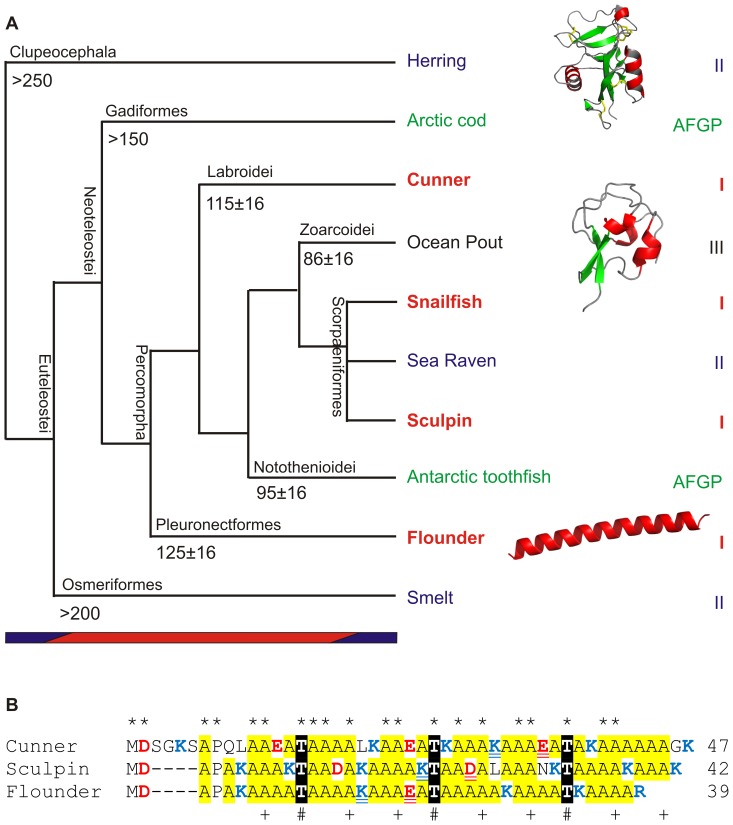
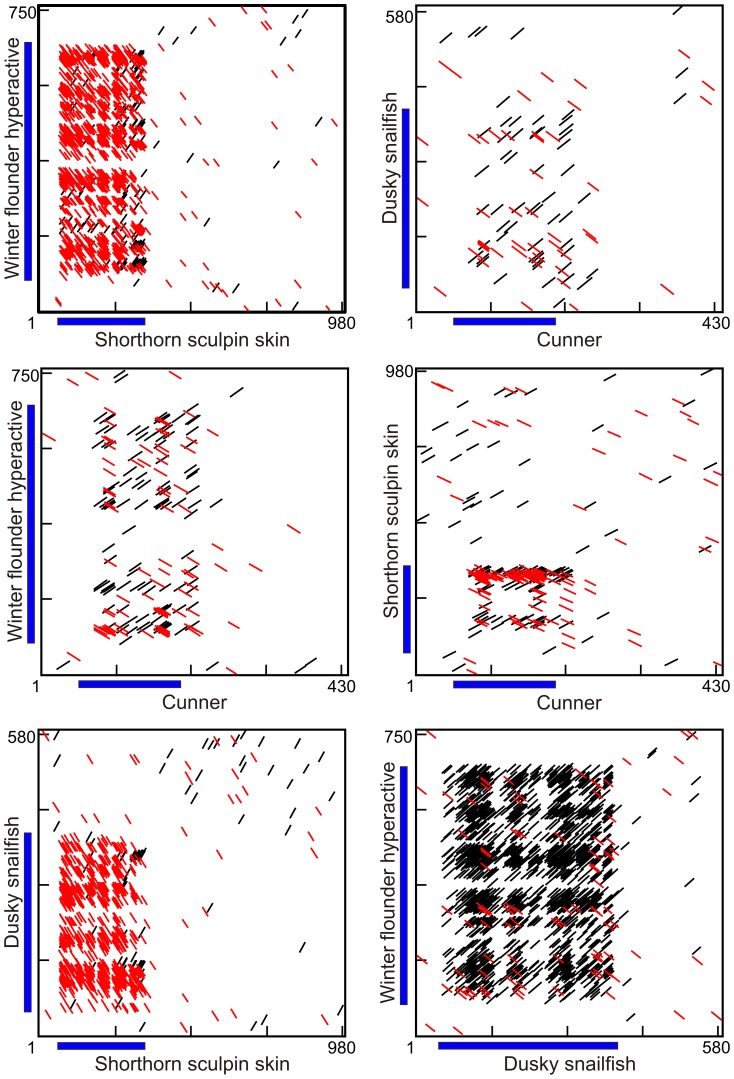
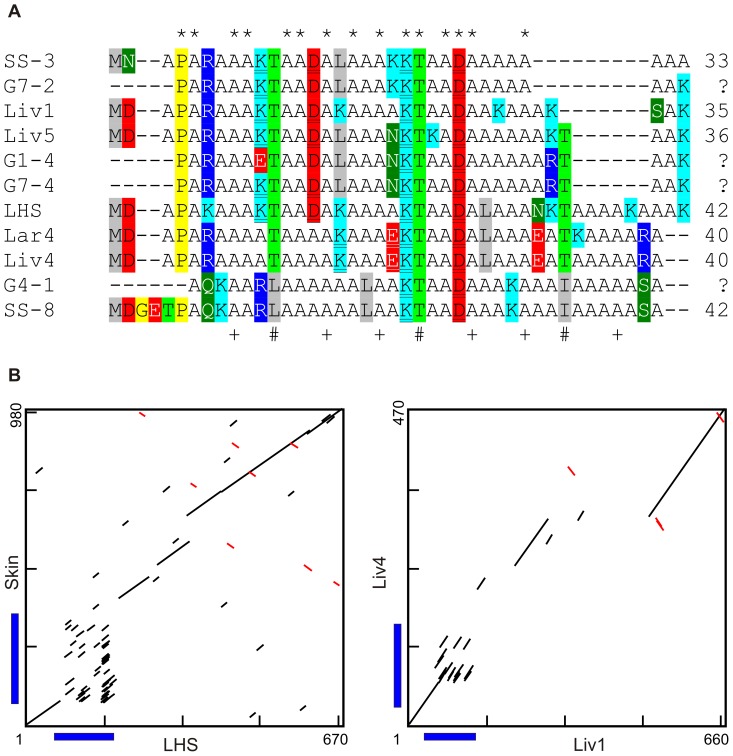
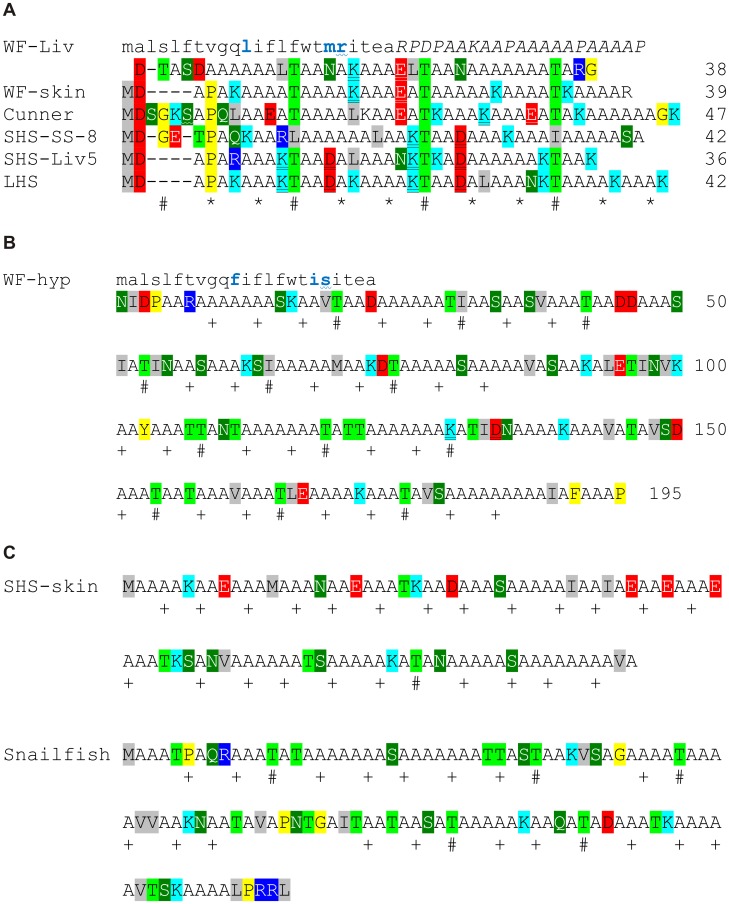
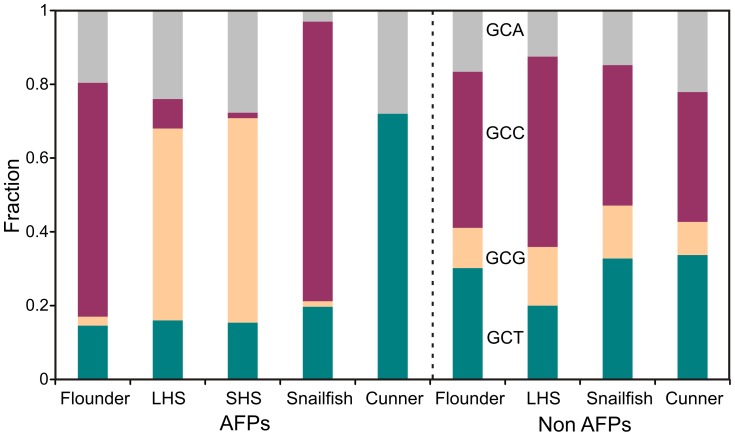
Alanine-rich α-helical (type I) antifreeze proteins (AFPs) are produced by a variety of fish species from three different orders to protect against freezing in icy seawater. Interspersed amongst and within these orders are fishes making AFPs that are completely different in both sequence and structure. The origin of this variety of types I, II, III and antifreeze glycoproteins (AFGPs) has been attributed to adaptation following sea-level glaciations that occurred after the divergence of most of the extant families of fish. The presence of similar types of AFPs in distantly related fishes has been ascribed to lateral gene transfer in the case of the structurally complex globular type II lectin-like AFPs and to convergent evolution for the AFGPs, which consist of a well-conserved tripeptide repeat. In this paper, we examine the genesis of the type I AFPs, which are intermediate in complexity. These predominantly α-helical peptides share many features, such as putative capping structures, Ala-richness and amphipathic character. We have added to the type I repertoire by cloning additional sequences from sculpin and have found that the similarities between the type I AFPs of the four distinct groups of fishes are not borne out at the nucleotide level. Both the non-coding sequences and the codon usage patterns are strikingly different. We propose that these AFPs arose via convergence from different progenitor helices with a weak affinity for ice and that their similarity is dictated by the propensity of specific amino acids to form helices and to align water on one side of the helix into an ice-like pattern.
富含丙氨酸的α-螺旋(I 型)抗冻蛋白(AFPs)由来自三个不同目的多种鱼类产生,以防止在冰冷海水中结冰。在这些目中穿插着鱼类,它们产生的 AFP 在序列和结构上完全不同。I 型、II 型、III 型和抗冻糖蛋白(AFGPs)的这种多样性的起源归因于海平面冰川作用后的适应,这种适应发生在大多数现存鱼类科的分化之后。在亲缘关系较远的鱼类中存在类似类型的 AFP,这归因于结构复杂的球状 II 型凝集素样 AFP 的横向基因转移,以及 AFGPs 的趋同进化,后者由一个保守的三肽重复组成。在本文中,我们研究了 I 型 AFP 的起源,I 型 AFP 的结构复杂程度中等。这些主要为α-螺旋的肽具有许多共同特征,如推测的帽结构、富含丙氨酸和两亲性。我们通过从海鲈中克隆额外的序列来增加 I 型 repertoire,并发现这四个不同鱼类群体的 I 型 AFP 之间的相似性在核苷酸水平上并不成立。非编码序列和密码子使用模式差异显著。我们提出,这些 AFP 是通过不同的祖先螺旋的趋同进化而来的,这些螺旋对冰的亲和力较弱,它们的相似性是由特定氨基酸形成螺旋和将水排列在螺旋一侧形成类似冰的模式的倾向决定的。