Department of Ocean Sciences, Memorial University of Newfoundland, St John's, Newfoundland, Canada.
Aquatic Research Cluster, CREAIT Network, Memorial University of Newfoundland, St. John's, Newfoundland, Canada.
PLoS One. 2020 Dec 15;15(12):e0243273. doi: 10.1371/journal.pone.0243273. eCollection 2020.
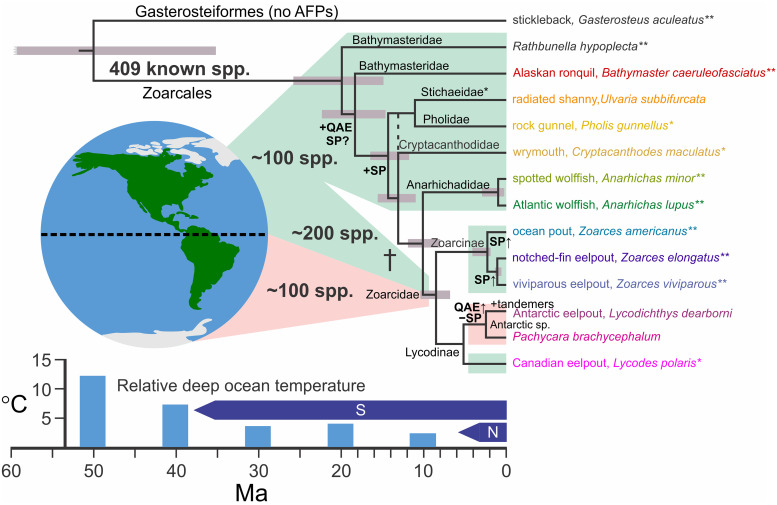
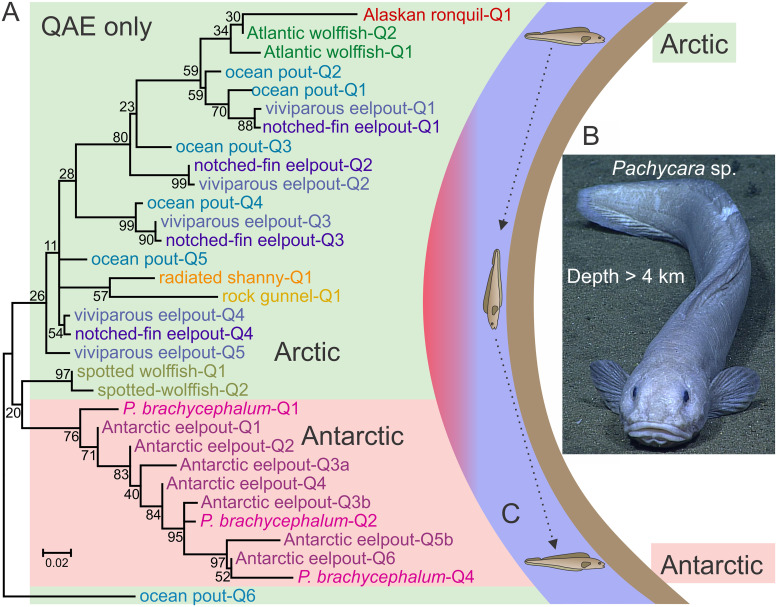
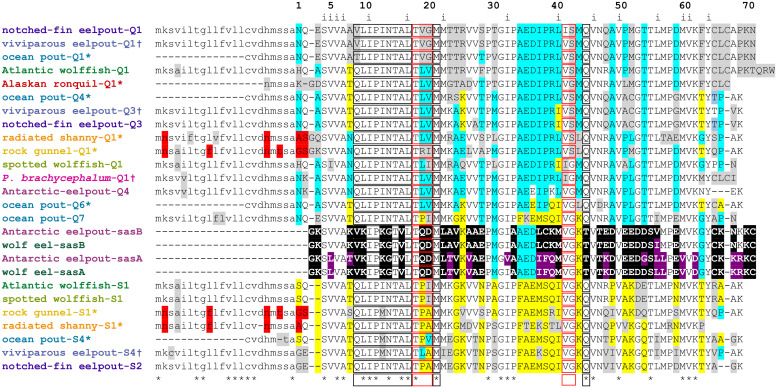
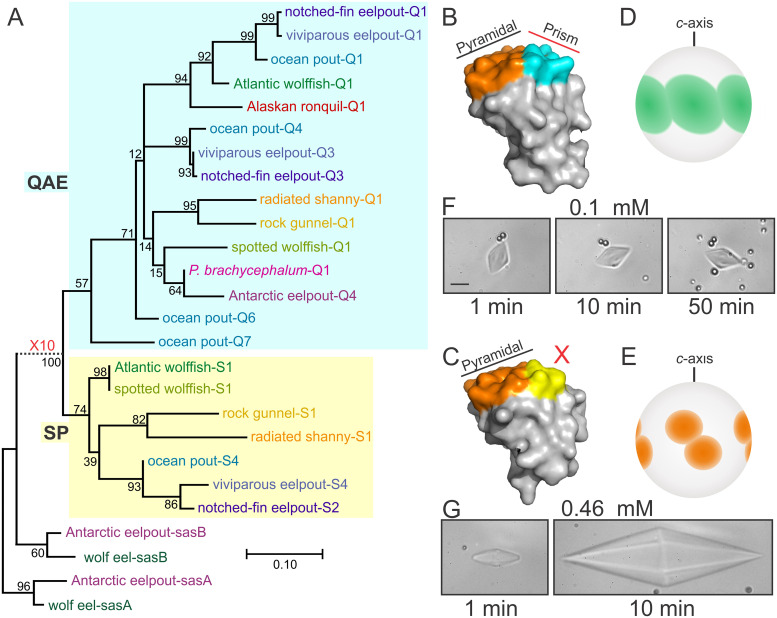
Antifreeze proteins inhibit ice growth and are crucial for the survival of supercooled fish living in icy seawater. Of the four antifreeze protein types found in fishes, the globular type III from eelpouts is the one restricted to a single infraorder (Zoarcales), which is the only clade know to have antifreeze protein-producing species at both poles. Our analysis of over 60 unique antifreeze protein gene sequences from several Zoarcales species indicates this gene family arose around 18 Ma ago, in the Northern Hemisphere, supporting recent data suggesting that the Arctic Seas were ice-laden earlier than originally thought. The Antarctic was subject to widespread glaciation over 30 Ma and the Notothenioid fishes that produce an unrelated antifreeze glycoprotein extensively exploited the adjoining seas. We show that species from one Zoarcales family only encroached on this niche in the last few Ma, entering an environment already dominated by ice-resistant fishes, long after the onset of glaciation. As eelpouts are one of the dominant benthic fish groups of the deep ocean, they likely migrated from the north to Antarctica via the cold depths, losing all but the fully active isoform gene along the way. In contrast, northern species have retained both the fully active (QAE) and partially active (SP) isoforms for at least 15 Ma, which suggests that the combination of isoforms is functionally advantageous.
抗冻蛋白抑制冰的生长,对生活在冰冷海水中的过冷却鱼类的生存至关重要。在鱼类中发现的四种抗冻蛋白类型中,来自海鳝的球形 III 型是唯一局限于一个亚目(Zoarcales)的抗冻蛋白,这是唯一已知在两极都有产生抗冻蛋白的物种的分支。我们对来自几个 Zoarcales 物种的 60 多个独特抗冻蛋白基因序列的分析表明,这个基因家族大约在 1800 万年前在北半球出现,支持了最近的数据,即北极海的冰载量比最初认为的更早。南极在 3000 万年前经历了广泛的冰川作用,而产生一种不相关的抗冻糖蛋白的 Notothenioid 鱼类广泛利用了毗邻的海域。我们表明,仅在过去的几百万年里,Zoarcales 家族的一个物种才进入这个小生境,进入了一个早已被抗冰鱼类主导的环境,而冰川作用的开始要早得多。由于海鳝是深海中占主导地位的底层鱼类之一,它们可能通过寒冷的深处从北方迁徙到南极洲,在此过程中失去了除完全活跃的同工型基因以外的所有基因。相比之下,北方物种至少在 1500 万年前保留了完全活跃(QAE)和部分活跃(SP)同工型,这表明同工型的组合在功能上是有利的。