• 文献检索
  • 文档翻译
  • 深度研究
  • 学术资讯
  • Suppr Zotero 插件Zotero 插件
  • 邀请有礼
  • 套餐&价格
  • 历史记录
应用&插件
Suppr Zotero 插件Zotero 插件浏览器插件Mac 客户端Windows 客户端微信小程序
定价
高级版会员购买积分包购买API积分包
服务
文献检索文档翻译深度研究API 文档MCP 服务
关于我们
关于 Suppr公司介绍联系我们用户协议隐私条款
关注我们

Suppr 超能文献

核心技术专利:CN118964589B侵权必究
粤ICP备2023148730 号-1Suppr @ 2026

文献检索

告别复杂PubMed语法,用中文像聊天一样搜索,搜遍4000万医学文献。AI智能推荐,让科研检索更轻松。

立即免费搜索

文件翻译

保留排版,准确专业,支持PDF/Word/PPT等文件格式,支持 12+语言互译。

免费翻译文档

深度研究

AI帮你快速写综述,25分钟生成高质量综述,智能提取关键信息,辅助科研写作。

立即免费体验

果蝇在半自然条件下觅食时依赖于学习。

Drosophila rely on learning while foraging under semi-natural conditions.

机构信息

Department of Ecology and Evolution, University of Lausanne Lausanne, Switzerland.

出版信息

Ecol Evol. 2013 Oct;3(12):4139-48. doi: 10.1002/ece3.783. Epub 2013 Sep 23.

DOI:10.1002/ece3.783
PMID:24324865
原文链接:https://pmc.ncbi.nlm.nih.gov/articles/PMC3853559/
Abstract

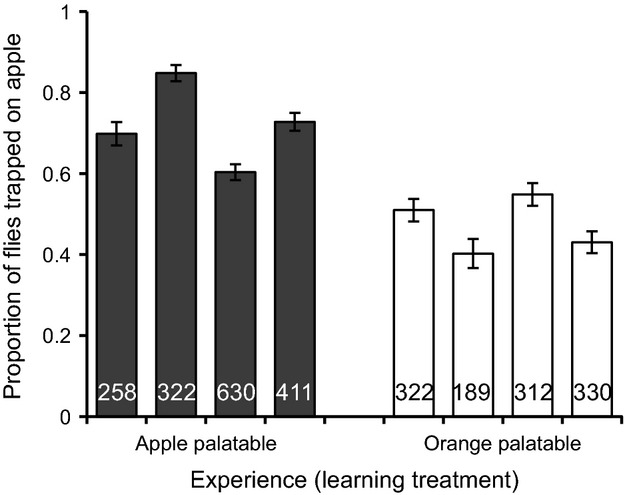
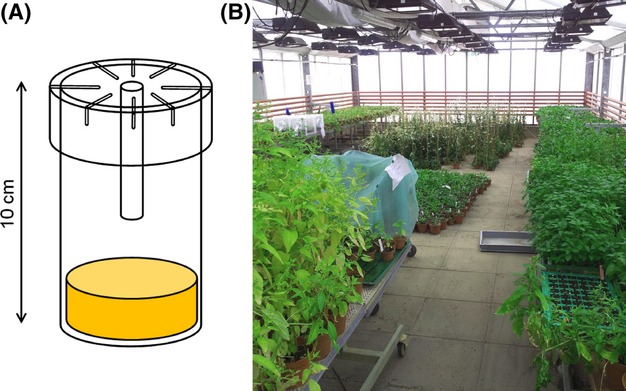
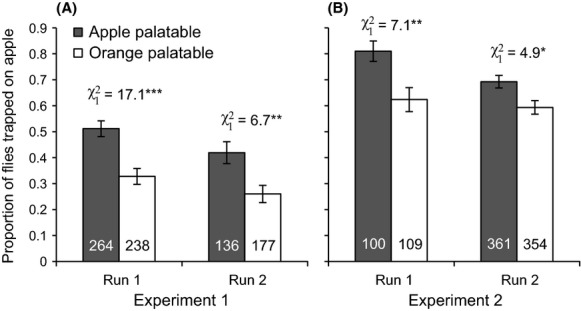
Learning is predicted to affect manifold ecological and evolutionary processes, but the extent to which animals rely on learning in nature remains poorly known, especially for short-lived non-social invertebrates. This is in particular the case for Drosophila, a favourite laboratory system to study molecular mechanisms of learning. Here we tested whether Drosophila melanogaster use learned information to choose food while free-flying in a large greenhouse emulating the natural environment. In a series of experiments flies were first given an opportunity to learn which of two food odours was associated with good versus unpalatable taste; subsequently, their preference for the two odours was assessed with olfactory traps set up in the greenhouse. Flies that had experienced palatable apple-flavoured food and unpalatable orange-flavoured food were more likely to be attracted to the odour of apple than flies with the opposite experience. This was true both when the flies first learned in the laboratory and were then released and recaptured in the greenhouse, and when the learning occurred under free-flying conditions in the greenhouse. Furthermore, flies retained the memory of their experience while exploring the greenhouse overnight in the absence of focal odours, pointing to the involvement of consolidated memory. These results support the notion that even small, short lived insects which are not central-place foragers make use of learned cues in their natural environments.

摘要

学习被预测会影响多种生态和进化过程,但动物在自然界中依赖学习的程度仍然知之甚少,特别是对于寿命短的非社会性无脊椎动物。这在果蝇中尤其如此,果蝇是研究学习分子机制的首选实验室系统。在这里,我们测试了黑腹果蝇在一个模拟自然环境的大型温室中自由飞行时,是否会利用所学信息来选择食物。在一系列实验中,首先让果蝇有机会学习两种食物气味中的哪一种与可口和不可口的味道有关;随后,在温室中设置嗅觉陷阱来评估它们对两种气味的偏好。与经历过可口的苹果味食物和不可口的橘子味食物的果蝇相比,经历过可口的苹果味食物的果蝇更有可能被苹果味所吸引。这不仅适用于果蝇在实验室中首次学习并随后在温室中释放和重新捕获的情况,也适用于在温室中自由飞行条件下进行学习的情况。此外,果蝇在没有焦点气味的情况下在温室中过夜探索时,仍然保留了对其经验的记忆,这表明记忆得到了巩固。这些结果支持了这样一种观点,即使是小型、短命的非中心觅食昆虫,也会在其自然环境中利用所学的线索。
https://cdn.ncbi.nlm.nih.gov/pmc/blobs/b56f/3853559/bc0aeeb33019/ece30003-4139-f4.jpg
https://cdn.ncbi.nlm.nih.gov/pmc/blobs/b56f/3853559/a0823b904765/ece30003-4139-f1.jpg
https://cdn.ncbi.nlm.nih.gov/pmc/blobs/b56f/3853559/928dc9f99915/ece30003-4139-f2.jpg
https://cdn.ncbi.nlm.nih.gov/pmc/blobs/b56f/3853559/f02eae993779/ece30003-4139-f3.jpg
https://cdn.ncbi.nlm.nih.gov/pmc/blobs/b56f/3853559/bc0aeeb33019/ece30003-4139-f4.jpg
https://cdn.ncbi.nlm.nih.gov/pmc/blobs/b56f/3853559/a0823b904765/ece30003-4139-f1.jpg
https://cdn.ncbi.nlm.nih.gov/pmc/blobs/b56f/3853559/928dc9f99915/ece30003-4139-f2.jpg
https://cdn.ncbi.nlm.nih.gov/pmc/blobs/b56f/3853559/f02eae993779/ece30003-4139-f3.jpg
https://cdn.ncbi.nlm.nih.gov/pmc/blobs/b56f/3853559/bc0aeeb33019/ece30003-4139-f4.jpg

相似文献

1
Drosophila rely on learning while foraging under semi-natural conditions.果蝇在半自然条件下觅食时依赖于学习。
Ecol Evol. 2013 Oct;3(12):4139-48. doi: 10.1002/ece3.783. Epub 2013 Sep 23.
2
Sleep contributes to preference for novel food odours in Drosophila melanogaster.睡眠有助于黑腹果蝇对新食物气味的偏好。
Sci Rep. 2021 Apr 30;11(1):9395. doi: 10.1038/s41598-021-88967-1.
3
Fruit flies learn to avoid odours associated with virulent infection.果蝇学会了避开与毒性感染相关的气味。
Biol Lett. 2014 Mar 5;10(3):20140048. doi: 10.1098/rsbl.2014.0048. Print 2014 Mar.
4
Adult fruit fly attraction to larvae biases experience and mediates social learning.成年果蝇对幼虫的吸引力会影响经历并介导社会学习。
J Exp Biol. 2014 Apr 1;217(Pt 7):1193-7. doi: 10.1242/jeb.097683. Epub 2013 Dec 5.
5
Natural polymorphism affecting learning and memory in Drosophila.影响果蝇学习与记忆的自然多态性。
Proc Natl Acad Sci U S A. 2007 Aug 7;104(32):13051-5. doi: 10.1073/pnas.0702923104. Epub 2007 Jul 19.
6
The effect of learning on experimental evolution of resource preference in Drosophila melanogaster.学习对黑腹果蝇资源偏好实验性进化的影响。
Evolution. 2004 Apr;58(4):757-67. doi: 10.1111/j.0014-3820.2004.tb00409.x.
7
Pupal and Adult Experience Affect Adult Response to Food Odour Components in the Flower-Visiting Butterfly .蛹期和成虫期经历影响访花蝴蝶成虫对食物气味成分的反应
Insects. 2024 Mar 27;15(4):231. doi: 10.3390/insects15040231.
8
Idiothetic Path Integration in the Fruit Fly Drosophila melanogaster.果蝇的内感受路径整合。
Curr Biol. 2017 Aug 7;27(15):2227-2238.e3. doi: 10.1016/j.cub.2017.06.026. Epub 2017 Jul 20.
9
The power of odour cues in shaping fine-scale search patterns of foraging mammalian herbivores.气味线索在塑造觅食性哺乳动物的精细搜索模式方面的作用。
Biol Lett. 2020 Jul;16(7):20200329. doi: 10.1098/rsbl.2020.0329. Epub 2020 Jul 15.
10
Niche-specific cognitive strategies: object memory interferes with spatial memory in the predatory bat Myotis nattereri.特定生态位的认知策略:食虫蝙蝠纳氏鼠耳蝠的物体记忆干扰空间记忆。
J Exp Biol. 2014 Sep 15;217(Pt 18):3293-300. doi: 10.1242/jeb.103549. Epub 2014 Jul 10.

引用本文的文献

1
A brain-wide form of presynaptic active zone plasticity orchestrates resilience to brain aging in Drosophila.一种全脑形式的突触前活性区可塑性调控了果蝇大脑衰老的恢复力。
PLoS Biol. 2022 Dec 5;20(12):e3001730. doi: 10.1371/journal.pbio.3001730. eCollection 2022 Dec.
2
Memory extinction and spontaneous recovery shaping parasitoid foraging behavior.记忆消退和自发恢复对寄生蜂觅食行为的塑造
Behav Ecol. 2021 Jun 30;32(5):952-960. doi: 10.1093/beheco/arab066. eCollection 2021 Sep-Oct.
3
Habitat complexity reduces parasitoid foraging efficiency, but does not prevent orientation towards learned host plant odours.

本文引用的文献

1
GENETIC AND ENVIRONMENTAL DETERMINANTS OF FOOD PREFERENCE IN DROSOPHILA TRIPUNCTATA.三斑果蝇食物偏好的遗传和环境决定因素
Evolution. 1985 Mar;39(2):362-369. doi: 10.1111/j.1558-5646.1985.tb05673.x.
2
Effects of starvation and experience on the response of Drosophila to alternative resources.饥饿和经验对果蝇对替代资源反应的影响。
Oecologia. 1988 Dec;77(4):497-505. doi: 10.1007/BF00377265.
3
To favor survival under food shortage, the brain disables costly memory.为了在食物短缺的情况下有利于生存,大脑会使昂贵的记忆能力丧失。
栖息地复杂性会降低寄生蜂的觅食效率,但不会阻止其朝向已习得的寄主植物气味定向。
Oecologia. 2015 Oct;179(2):353-61. doi: 10.1007/s00442-015-3346-y. Epub 2015 May 23.
4
Fruit flies learn to avoid odours associated with virulent infection.果蝇学会了避开与毒性感染相关的气味。
Biol Lett. 2014 Mar 5;10(3):20140048. doi: 10.1098/rsbl.2014.0048. Print 2014 Mar.
Science. 2013 Jan 25;339(6118):440-2. doi: 10.1126/science.1226018.
4
Omnia tempus habent: habitat-specific differences in olfactory learning and decision making in parasitic wasps.万物皆有时:寄生蜂在嗅觉学习和决策方面的栖息地特异性差异。
Anim Cogn. 2013 Mar;16(2):223-32. doi: 10.1007/s10071-012-0567-x. Epub 2012 Oct 12.
5
Unexpected features of Drosophila circadian behavioural rhythms under natural conditions.自然条件下果蝇昼夜节律行为的意外特征。
Nature. 2012 Apr 4;484(7394):371-5. doi: 10.1038/nature10991.
6
Learning predator promotes coexistence of prey species in host-parasitoid systems.学习型捕食者促进宿主-寄生系统中猎物物种的共存。
Proc Natl Acad Sci U S A. 2012 Mar 27;109(13):5116-20. doi: 10.1073/pnas.1115133109. Epub 2012 Mar 12.
7
Costs of memory: lessons from 'mini' brains.记忆的代价:来自“迷你”大脑的教训。
Proc Biol Sci. 2011 Mar 22;278(1707):923-9. doi: 10.1098/rspb.2010.2488. Epub 2010 Dec 22.
8
Use of spatial information and search strategies in a water maze analog in Drosophila melanogaster.在果蝇水迷宫模拟中使用空间信息和搜索策略。
PLoS One. 2010 Dec 3;5(12):e15231. doi: 10.1371/journal.pone.0015231.
9
Natural variation in learning rate and memory dynamics in parasitoid wasps: opportunities for converging ecology and neuroscience.寄生蜂学习率和记忆动态的自然变化:生态学和神经科学融合的机会。
Proc Biol Sci. 2011 Mar 22;278(1707):889-97. doi: 10.1098/rspb.2010.2199. Epub 2010 Nov 24.
10
Influence of learning on range expansion and adaptation to novel habitats.学习对范围扩展和适应新栖息地的影响。
J Evol Biol. 2009 Nov;22(11):2201-14. doi: 10.1111/j.1420-9101.2009.01836.x. Epub 2009 Oct 12.