Chi Eun Young, Viriyapak Boonlert, Kwack Hyun Sung, Lee Yoon Kyung, Kim Sang Il, Lee Keun Ho, Park Tae Churl
Department of Obstetrics and Gynecology, The Catholic University of Korea College of Medicine, Seoul, Korea.
Obstet Gynecol Sci. 2013 Mar;56(2):84-92. doi: 10.5468/OGS.2013.56.2.84. Epub 2013 Mar 12.
Autophagy plays a vital role in homeostasis by combining organelles and cellular proteins with lysosome under starvation conditions. In addition, autophagy provides tumor cells with a source of energy. Continued autophagy will induce cells death. Here we aim to see if autophagic induction has an effect on conventional chemotherapeutic agents.
Rapamycin, or mammalian target of rapamycin and paclitaxel, apoptosis-inducing agents were used autophagy in HeLa cervical cancer cells.
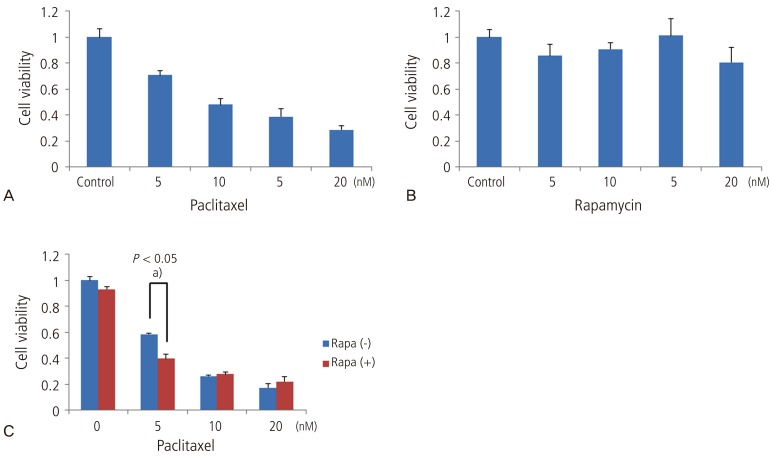
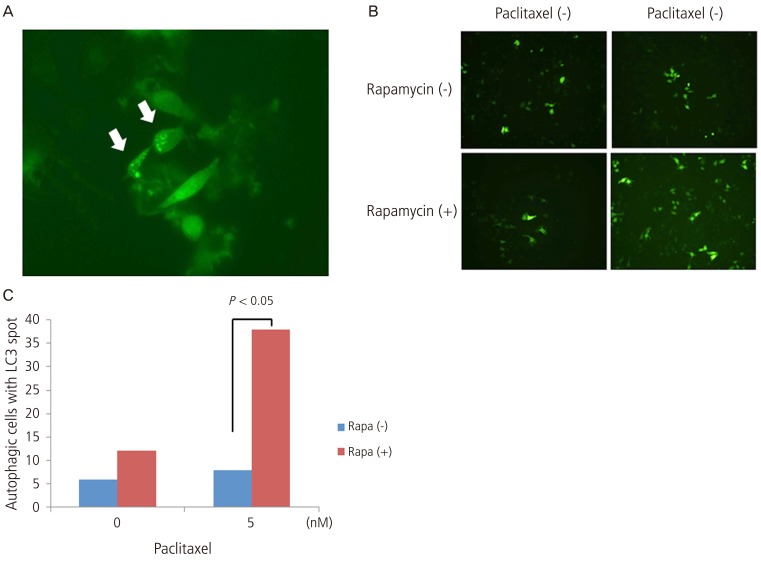
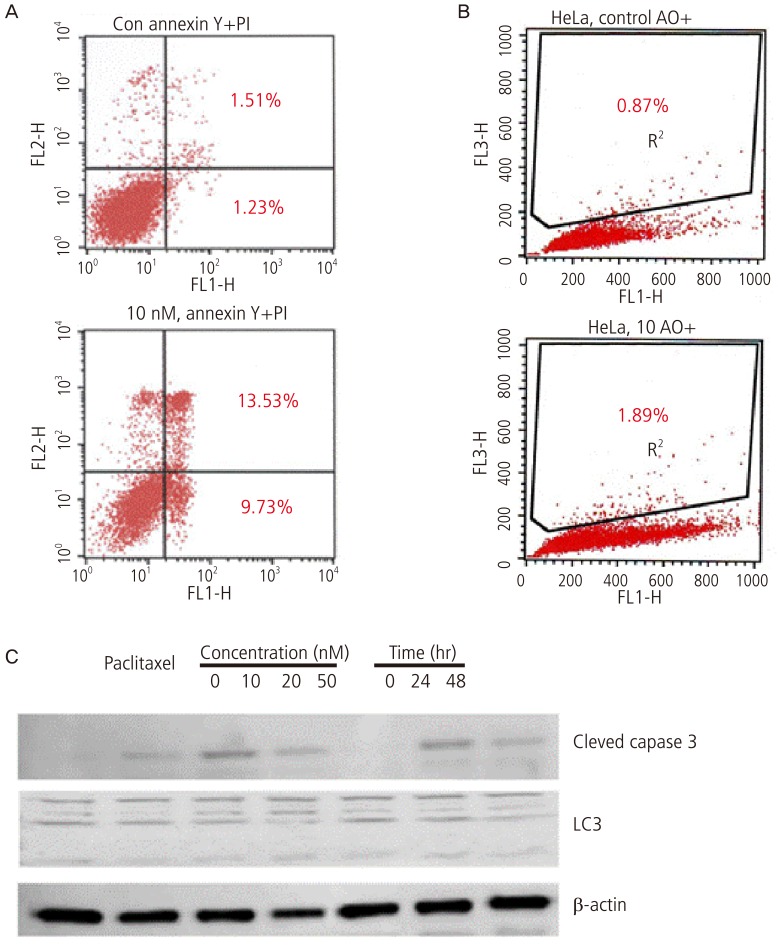
Growth inhibition of cells was not observed after the application of 0, 10, 20 nM of paclitaxel with or without rapamycin. Using a 5 nM concentration of paclitaxel, rapamycin administration inhibited cell growth significantly compared to no treatment. This implies the synergic antitumor effect of paclitaxel and rapamycin. Paclitaxel itself did not show any autophagic effect on cells but did show cell apoptosis by flow cytometry. Light chain 3, a microtubule-associated protein, which reflect autophagy, was increased with 5 nM of paclitaxel after pretreatment with 10 nM of rapamycin.
These findings suggest that the autophagic inducer, rapamycin, can potentiate autophagic cell death when added as an apoptosis-inducing chemotherapeutic agent. In conclusion, the control of autophagy may be a future target for chemotherapy.
在饥饿条件下,自噬通过将细胞器和细胞蛋白与溶酶体结合,在体内平衡中发挥至关重要的作用。此外,自噬为肿瘤细胞提供能量来源。持续的自噬会诱导细胞死亡。在此,我们旨在观察自噬诱导对传统化疗药物是否有影响。
使用雷帕霉素(即雷帕霉素的哺乳动物靶点)和紫杉醇(凋亡诱导剂)在人宫颈癌HeLa细胞中诱导自噬。
在使用0、10、20 nM紫杉醇(无论是否添加雷帕霉素)后,未观察到细胞生长受到抑制。使用5 nM浓度的紫杉醇时,与未处理相比,给予雷帕霉素显著抑制了细胞生长。这意味着紫杉醇和雷帕霉素具有协同抗肿瘤作用。紫杉醇本身对细胞未显示出任何自噬作用,但通过流式细胞术显示出细胞凋亡。在用10 nM雷帕霉素预处理后,5 nM紫杉醇处理使反映自噬的微管相关蛋白轻链3增加。
这些发现表明,自噬诱导剂雷帕霉素作为凋亡诱导化疗药物添加时,可增强自噬性细胞死亡。总之,自噬的调控可能是未来化疗的一个靶点。