Bersimbaev Rakhmetkazhy, Bulgakova Olga, Aripova Akmaral, Kussainova Assiya, Ilderbayev Oralbek
Department of General Biology and Genomics, Institute of Cell Biology and Biotechnology, L.N. Gumilyov Eurasian National University, Nur-Sultan 010008, Kazakhstan.
J Pers Med. 2021 Feb 3;11(2):97. doi: 10.3390/jpm11020097.
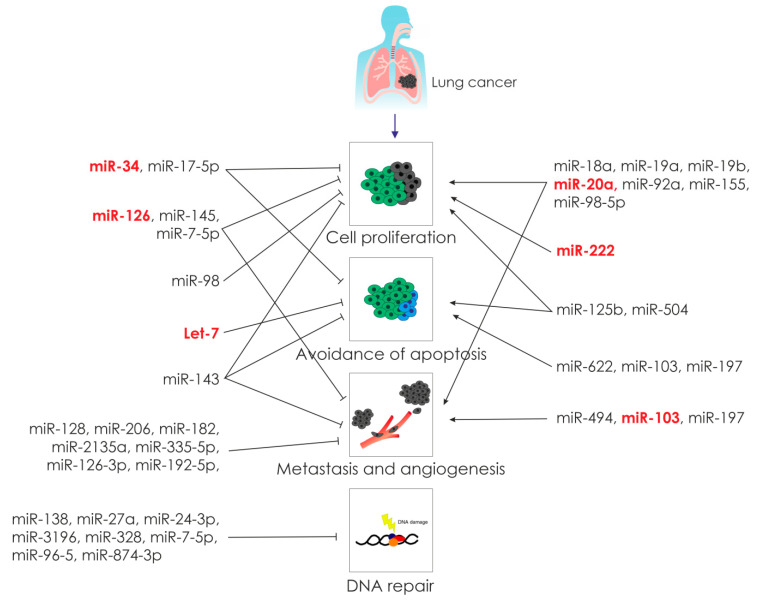
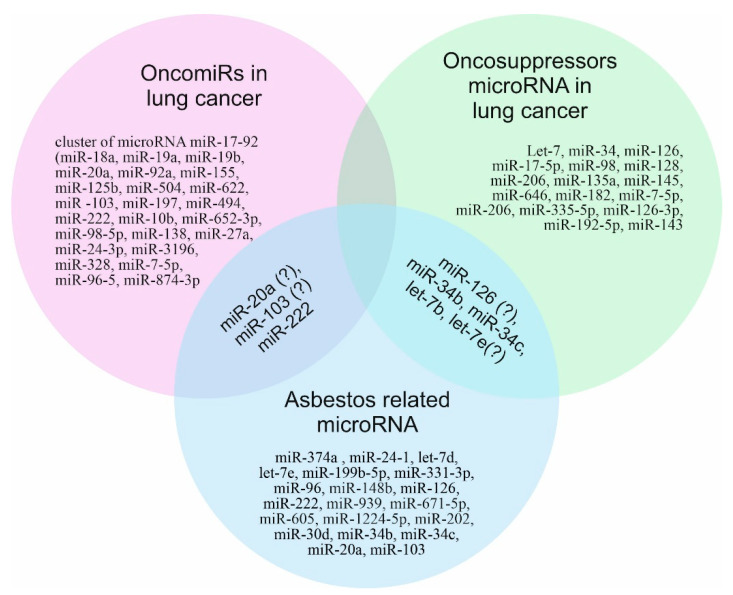
MicroRNAs are a class of small noncoding endogenous RNAs 19-25 nucleotides long, which play an important role in the post-transcriptional regulation of gene expression by targeting mRNA targets with subsequent repression of translation. MicroRNAs are involved in the pathogenesis of numerous diseases, including cancer. Lung cancer is the leading cause of cancer death in the world. Lung cancer is usually associated with tobacco smoking. However, about 25% of lung cancer cases occur in people who have never smoked. According to the International Agency for Research on Cancer, asbestos has been classified as one of the cancerogenic factors for lung cancer. The mechanism of malignant transformation under the influence of asbestos is associated with the genotoxic effect of reactive oxygen species, which initiate the processes of DNA damage in the cell. However, epigenetic mechanisms such as changes in the microRNA expression profile may also be implicated in the pathogenesis of asbestos-induced lung cancer. Numerous studies have shown that microRNAs can serve as a biomarker of the effects of various adverse environmental factors on the human body. This review examines the role of microRNAs, the expression profile of which changes upon exposure to asbestos, in key processes of carcinogenesis, such as proliferation, cell survival, metastasis, neo-angiogenesis, and immune response avoidance.
微小RNA是一类长度为19 - 25个核苷酸的小型非编码内源性RNA,它们通过靶向mRNA靶点并随后抑制翻译,在基因表达的转录后调控中发挥重要作用。微小RNA参与了包括癌症在内的多种疾病的发病机制。肺癌是全球癌症死亡的主要原因。肺癌通常与吸烟有关。然而,约25%的肺癌病例发生在从不吸烟的人群中。根据国际癌症研究机构的研究,石棉已被列为肺癌的致癌因素之一。石棉影响下的恶性转化机制与活性氧的基因毒性作用有关,活性氧会引发细胞内DNA损伤过程。然而,表观遗传机制,如微小RNA表达谱的变化,也可能与石棉诱导的肺癌发病机制有关。大量研究表明,微小RNA可作为各种不良环境因素对人体影响的生物标志物。本综述探讨了微小RNA在致癌关键过程(如增殖、细胞存活、转移、新生血管生成和免疫反应逃避)中的作用,其表达谱在接触石棉后会发生变化。