The Motherisk Program, Division of Clinical Pharmacology and Toxicology, Department of Pediatrics, The Hospital for Sick Children, University of Toronto, M5G 1X8 Ontario, Canada.
BMC Complement Altern Med. 2013 Dec 12;13:355. doi: 10.1186/1472-6882-13-355.
The use of complementary and alternative medicines (CAM) is growing in the general population. Herbal medicines are used in all countries of the world and are included in the top CAM therapies used.
A multinational study on how women treat disease and pregnancy-related health ailments was conducted between October 2011 and February 2012 in Europe, North and South America and Australia. In this study, the primary aim was to determine the prevalence of herbal medicine use in pregnancy and factors related to such use across participating countries and regions. The secondary aim was to investigate who recommended the use of herbal medication in pregnancy.
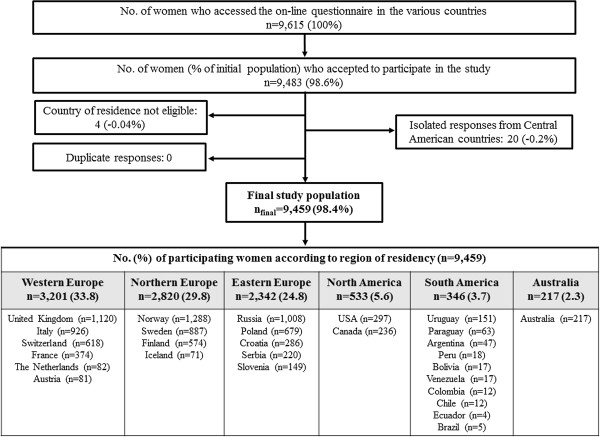
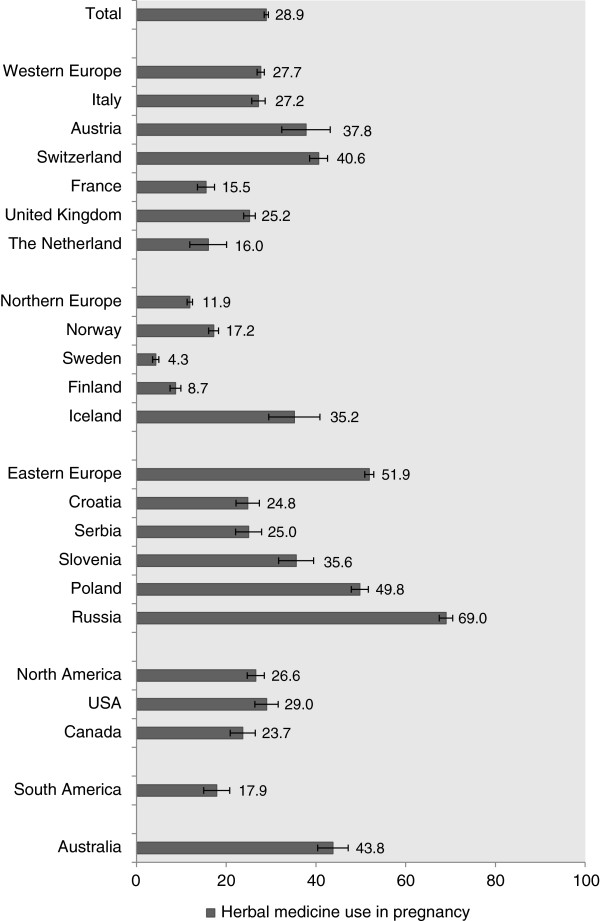
There were 9,459 women from 23 countries participating in the study. Of these, 28.9% reported the use of herbal medicines in pregnancy. Most herbal medicines were used for pregnancy-related health ailments such as cold and nausea. Ginger, cranberry, valerian and raspberry were the most commonly used herbs in pregnancy. The highest reported rate of herbal use medicines was in Russia (69%). Women from Eastern Europe (51.8%) and Australia (43.8%) were twice as likely to use an herbal medicine versus other regions. Women using herbal medicines were characteristically having their first child, non-smokers, using folic acid and consuming some alcohol in pregnancy. Also, women who were currently students and women with an education other than a high school degree were more likely to use herbal medicines than other women. Although 1 out of 5 women stated that a physician had recommended the herbal use, most women used herbal medicine in pregnancy on their own initiative.
In this multinational study herbal medicine use in pregnancy was high although there were distinct differences in the herbs and users of herbal medicines across regions. Most commonly the women self-medicated with herbal medicine to treat pregnancy-related health ailments. More knowledge regarding the efficacy and safety of herbal medicines in pregnancy is warranted.
在普通人群中,补充和替代医学(CAM)的使用正在增加。草药在世界上所有国家都有使用,并被列入使用最多的 CAM 疗法。
一项关于女性如何治疗疾病和与妊娠相关的健康问题的多国家研究于 2011 年 10 月至 2012 年 2 月在欧洲、北美和南美以及澳大利亚进行。本研究的主要目的是确定妊娠期间草药使用的流行率以及与参与国家和地区草药使用相关的因素。次要目的是调查谁在妊娠期间推荐使用草药药物。
共有来自 23 个国家的 9459 名女性参与了这项研究。其中,28.9%的人报告在妊娠期间使用草药。大多数草药用于治疗与妊娠相关的健康问题,如感冒和恶心。生姜、蔓越莓、缬草和覆盆子是妊娠期间最常用的草药。俄罗斯报告的草药使用率最高(69%)。东欧(51.8%)和澳大利亚(43.8%)的女性使用草药的可能性是其他地区的两倍。使用草药的女性具有以下特征:初产妇、不吸烟者、在妊娠期间服用叶酸和饮酒。此外,目前是学生的女性和受过高中以下教育的女性比其他女性更有可能使用草药。尽管有 1/5 的女性表示医生建议使用草药,但大多数女性在妊娠期间自行使用草药。
在这项多国家研究中,妊娠期间使用草药的情况很普遍,但不同地区的草药和使用者存在明显差异。大多数女性最常自行使用草药来治疗与妊娠相关的健康问题。需要更多关于草药在妊娠中的疗效和安全性的知识。