Division of Biology and Genetics, Department of Molecular and Translational Medicine, University of Brescia, Viale Europa n, 11, 25123 Brescia, Italy.
Mol Cancer. 2013 Dec 13;12:162. doi: 10.1186/1476-4598-12-162.
Hepatocellular carcinoma (HCC) is a challenging malignancy of global importance, it is the third most common cause of cancer-related mortality worldwide. In the last years the multikinase inhibitor sorafenib has been used for advanced HCC, but some patients do not benefit from this therapy; thus, novel therapeutic options based on molecular approaches are urgently needed. microRNAs are short non coding RNAs involved in several physiological and pathological conditions including HCC and increasing evidence describes miRs as good tools for the molecular targeted therapies in HCC. The purpose of this study was to identify novel approaches to sensitize the HCC cells to sorafenib by microRNAs targeting urokinase-type plasminogen activator (uPA).
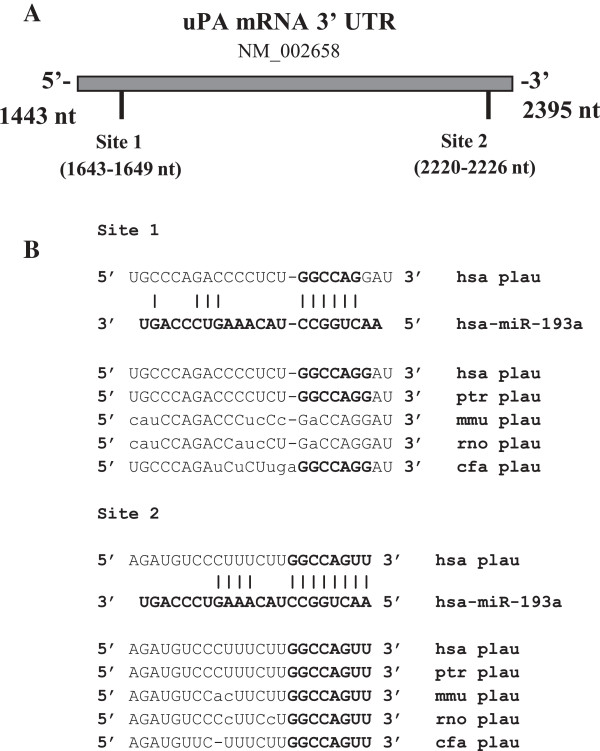
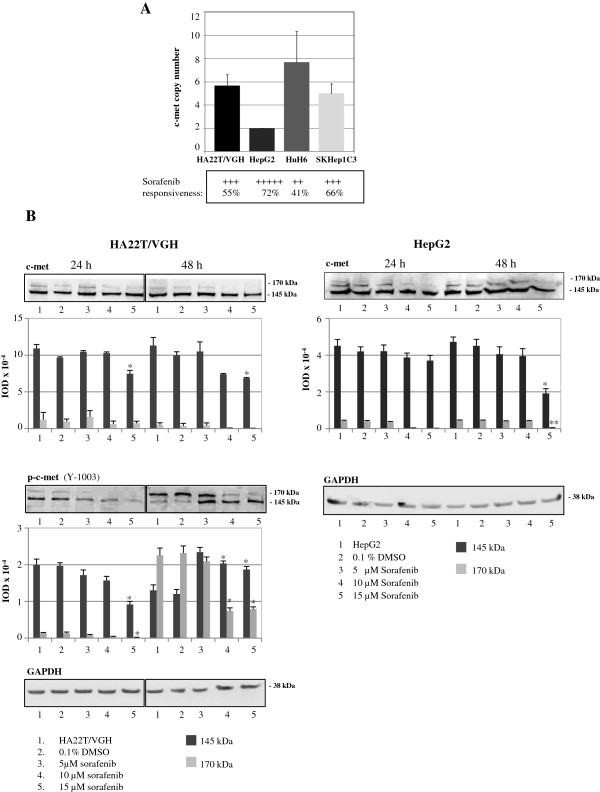
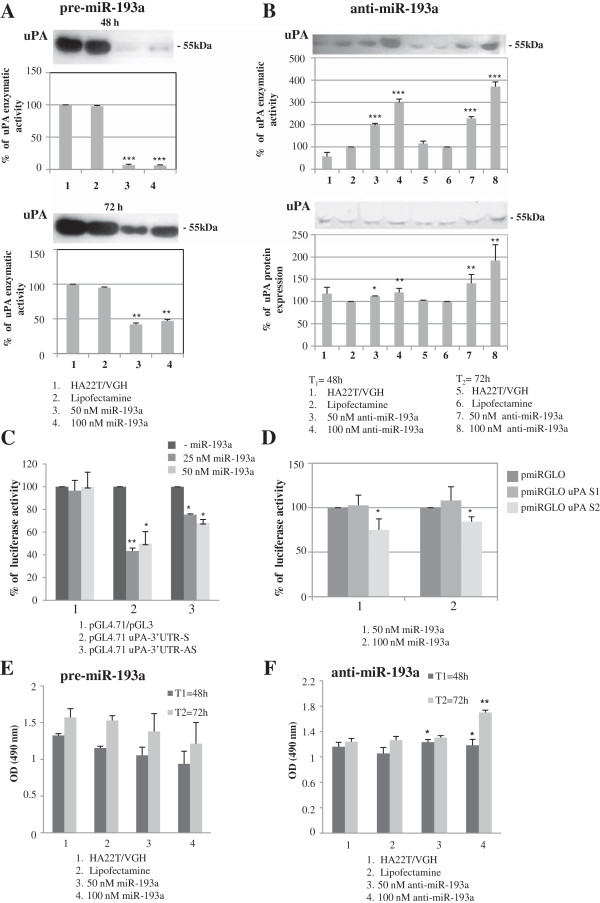
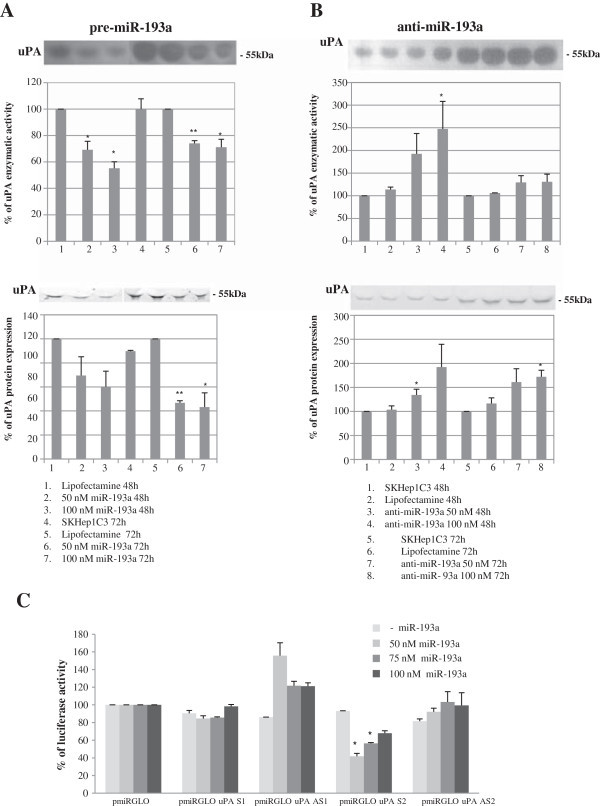
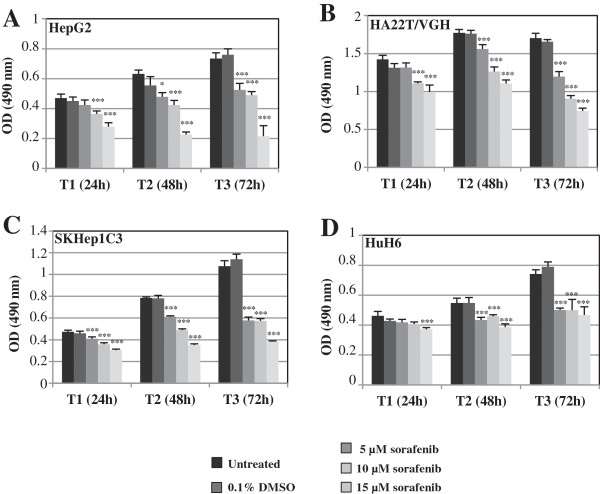
The miR-193a was validated as negative regulator of urokinase-type plasminogen activator (uPA) in 2 HCC undifferentiated cell lines by transient transfection of miR and anti-miR molecules. The molecular interaction between miR-193a and uPA mRNA target was verified by luciferase reporter assay. The miR-193a expression level was evaluated by stem-loop real time PCR in tumoral tissues from 39 HCC patients. The HCC cells were co-treated with sorafenib and miR-193a and the effects on cellular proliferation, apoptosis were tested. The effect of sorafenib on c-met expression levels was assessed by western blotting.
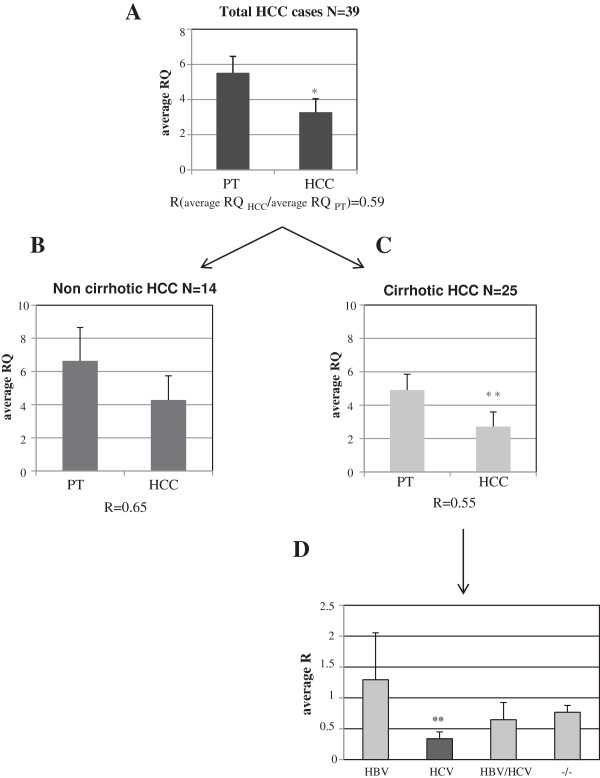
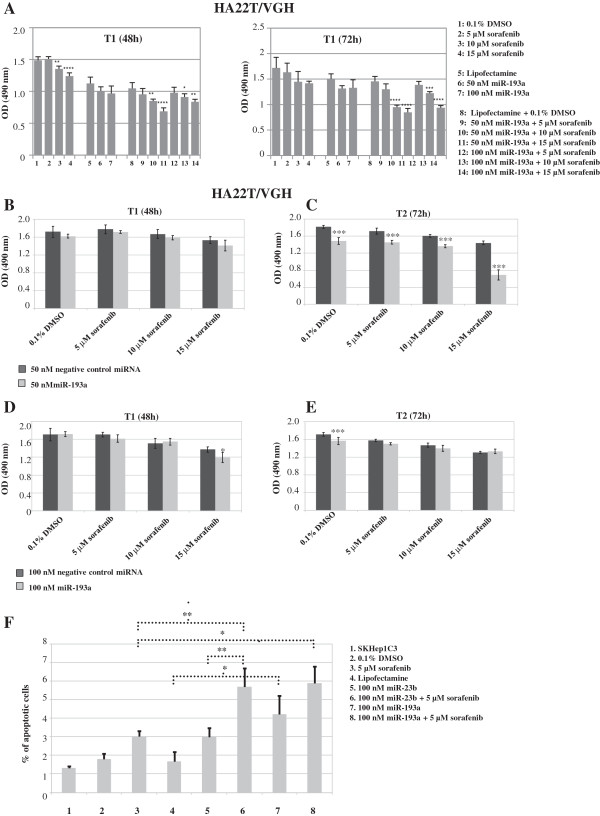
The miR-193a has resulted a negative regulator of uPA in both the HCC cell lines tested. The miR-193a expression has resulted dysregulated in tumoral tissues from 39 HCC patients. We found miR-193a down-regulation in HCC respect to peritumoral (PT) tissues and more in the cirrhotic HCCs than in non-cirrhotic ones. Transfection of HA22T/VGH HCC cells with miR-193a decreased proliferation and increased apoptosis, and combined treatment with miR-193a and sorafenib led to further proliferation inhibition.
Our results present new advances in the post-transcriptional miR-mediated mechanisms of uPA and they suggest a new strategy to impair the aggressive behavior of HCC cells. Our findings could be helpful to explore novel approaches for multi-target and multi-agent therapies of the HCC.
肝细胞癌(HCC)是一种具有全球重要意义的挑战性恶性肿瘤,是全球癌症相关死亡的第三大主要原因。在过去的几年中,多激酶抑制剂索拉非尼已被用于晚期 HCC,但并非所有患者均从该治疗中获益;因此,迫切需要基于分子方法的新治疗选择。miRNAs 是参与多种生理和病理状况(包括 HCC)的短非编码 RNA,越来越多的证据表明,miRs 是 HCC 分子靶向治疗的良好工具。本研究旨在通过针对尿激酶型纤溶酶原激活物(uPA)的 microRNAs 鉴定使 HCC 细胞对索拉非尼敏感的新方法。
通过瞬时转染 miR 和抗 miR 分子,验证 miR-193a 是 2 种未分化 HCC 细胞系中尿激酶型纤溶酶原激活物(uPA)的负调节剂。通过荧光素酶报告基因测定验证 miR-193a 与 uPA mRNA 靶标之间的分子相互作用。通过茎环实时 PCR 评估 39 例 HCC 患者肿瘤组织中的 miR-193a 表达水平。将 HCC 细胞与索拉非尼和 miR-193a 共同处理,检测对细胞增殖、凋亡的影响。通过 Western blot 评估索拉非尼对 c-met 表达水平的影响。
miR-193a 已成为两种所测试 HCC 细胞系中 uPA 的负调节剂。miR-193a 的表达在 39 例 HCC 患者的肿瘤组织中出现失调。我们发现 miR-193a 在 HCC 中的表达下调与肿瘤旁(PT)组织相比,在非肝硬化 HCC 中比肝硬化 HCC 中下调更为明显。HA22T/VGH HCC 细胞转染 miR-193a 可降低增殖并增加凋亡,联合使用 miR-193a 和索拉非尼可进一步抑制增殖。
我们的研究结果提供了 uPA 后转录 miR 介导机制的新进展,并提示了一种新的策略来削弱 HCC 细胞的侵袭性行为。我们的发现有助于探索 HCC 的多靶标和多药物治疗的新方法。