Khordadmehr Monireh, Shahbazi Roya, Baradaran Behzad, Sadreddini Sanam, Shanebandi Dariush, Hajiasgharzadeh Khalil
Department of Pathology, Faculty of Veterinary Medicine, University of Tabriz, 51665-1647, Tabriz, Iran.
Immunology Research Center, Tabriz University of Medical Sciences, 51666-14761, Tabriz, Iran.
Adv Pharm Bull. 2020 Sep;10(4):595-601. doi: 10.34172/apb.2020.071. Epub 2020 Aug 9.
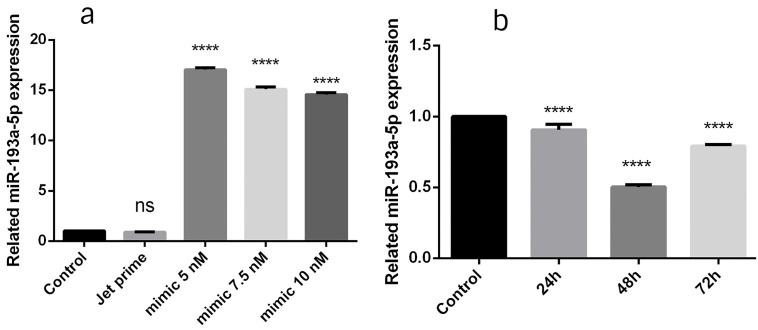
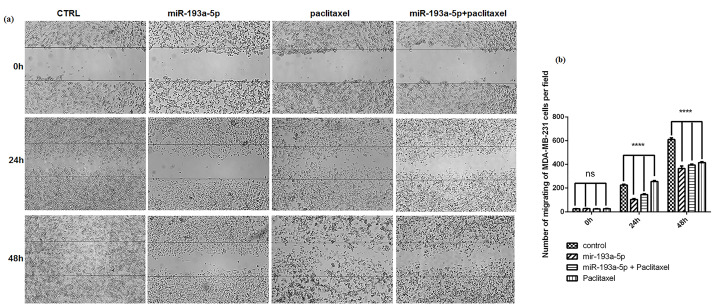
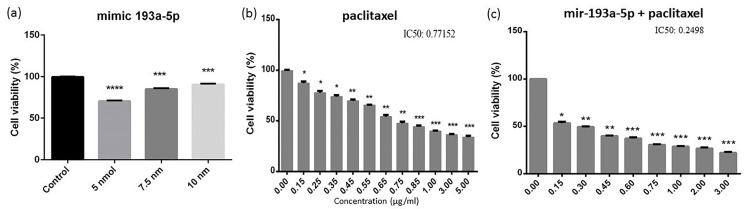
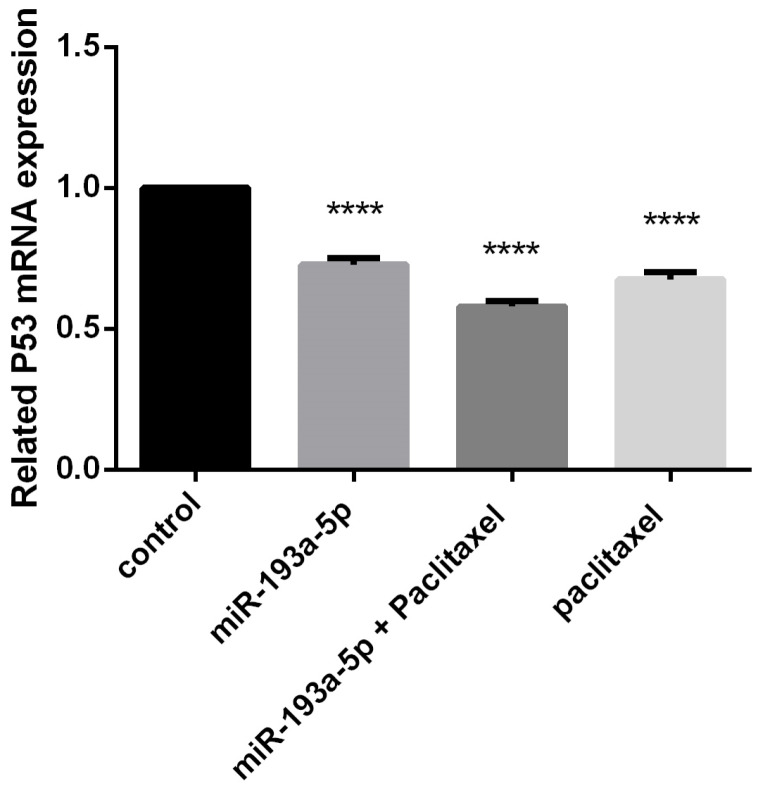
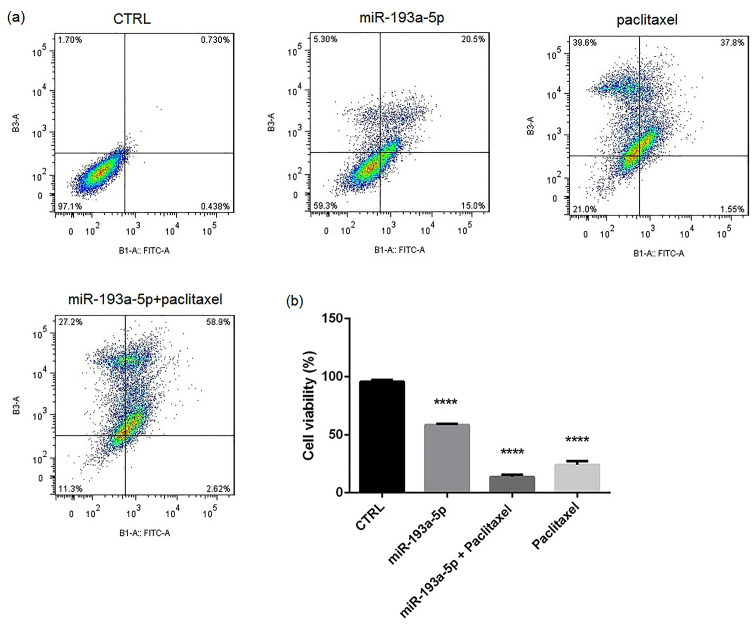
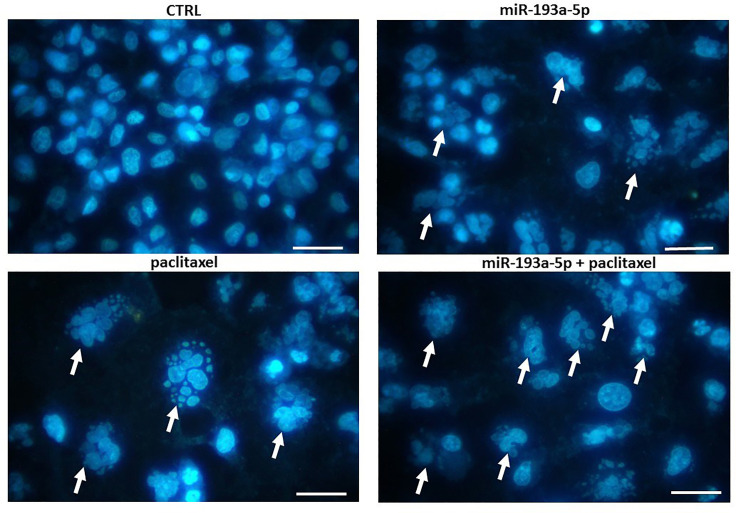
Recent evidence presented the important role of microRNAs in health and disease particularly in human cancers. Among those, miR-193 family contributes as a tumor suppressor in different benign and malignant cancers like breast cancer (BC) via interaction with specific targets. On the other hand, it was stated that miR-193 is able to modulate some targets in chemoresistant cancer cells. Therefore, the aim of this study was to evaluate the potential function of miR-193a-5p and paclitaxel in the apoptosis induction by targeting P53 in BC cells. At first, miR-193a-5p mimics were transfected to MDA-MB-231 BC cell line which indicated the lower expression level of miR-193a-5p. Subsequently, the transfected cells were treated with paclitaxel. Then, cell viability, apoptosis, and migration were evaluated by MTT, flow cytometry and DAPI staining, and scratch-wound motility assays, respectively. Moreover, the expression levels of P53 was evaluated by qRT-PCR. The expression level of miR-193a-5p was restored in MDA-MB-231 cells which profoundly inhibited the proliferation (<0.0001), induced apoptosis ( <0.0001) and harnessed migration ( <0.0001) in the BC cells and more effectiveness was observed in combination with paclitaxel. Interestingly, increased miR-193a-5p expression led to a reduction in P53 mRNA, offering that it can be a potential target of miR-193a. Taken together, it is concluded that the combination of miR-193a-5p restoration and paclitaxel could be potentially considered as an effective therapeutic strategy to get over chemoresistance during paclitaxel chemotherapy.
最近的证据表明,微小RNA在健康和疾病中,尤其是在人类癌症中发挥着重要作用。其中,miR-193家族通过与特定靶点相互作用,在不同的良性和恶性癌症(如乳腺癌)中作为肿瘤抑制因子发挥作用。另一方面,有研究表明miR-193能够调节化疗耐药癌细胞中的一些靶点。因此,本研究的目的是评估miR-193a-5p和紫杉醇通过靶向乳腺癌细胞中的P53诱导细胞凋亡的潜在功能。首先,将miR-193a-5p模拟物转染至miR-193a-5p表达水平较低的MDA-MB-231乳腺癌细胞系。随后,用紫杉醇处理转染后的细胞。然后,分别通过MTT法、流式细胞术和DAPI染色以及划痕伤口迁移试验评估细胞活力、凋亡和迁移情况。此外,通过qRT-PCR评估P53的表达水平。MDA-MB-231细胞中miR-193a-5p的表达水平得以恢复,这显著抑制了乳腺癌细胞的增殖(<0.0001)、诱导了细胞凋亡(<0.0001)并抑制了细胞迁移(<0.0001),与紫杉醇联合使用时效果更明显。有趣的是,miR-193a-5p表达的增加导致P53 mRNA水平降低,表明它可能是miR-193a的潜在靶点。综上所述,得出结论:恢复miR-193a-5p表达与紫杉醇联合使用可能被视为一种有效的治疗策略,以克服紫杉醇化疗期间的化疗耐药性。