Mehta Ishita S, Kulashreshtha Mugdha, Chakraborty Sandeep, Kolthur-Seetharam Ullas, Rao Basuthkar J
Genome Biol. 2013 Dec 13;14(12):R135. doi: 10.1186/gb-2013-14-12-r135.
Local higher-order chromatin structure, dynamics and composition of the DNA are known to determine double-strand break frequencies and the efficiency of repair. However, how DNA damage response affects the spatial organization of chromosome territories is still unexplored.
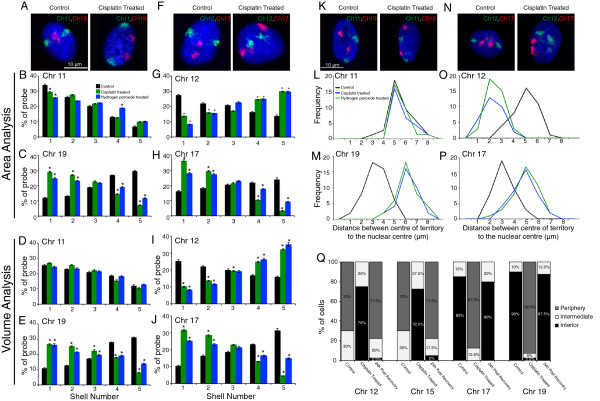
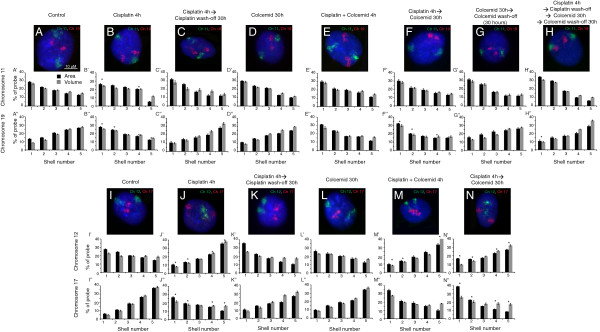
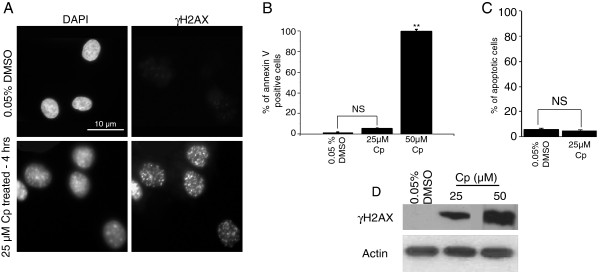
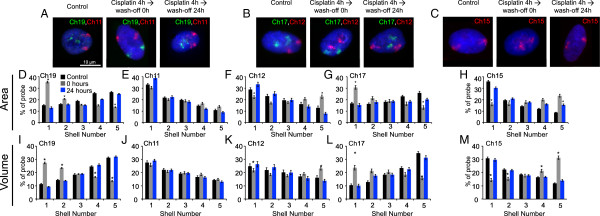
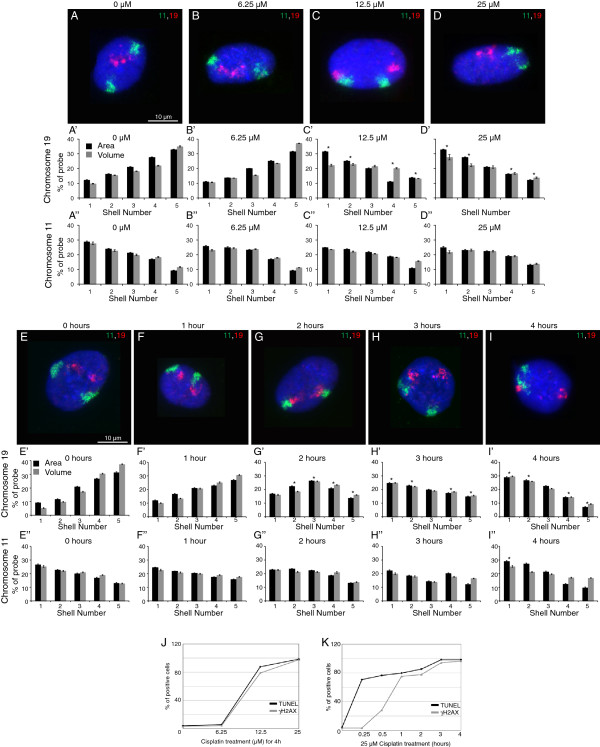
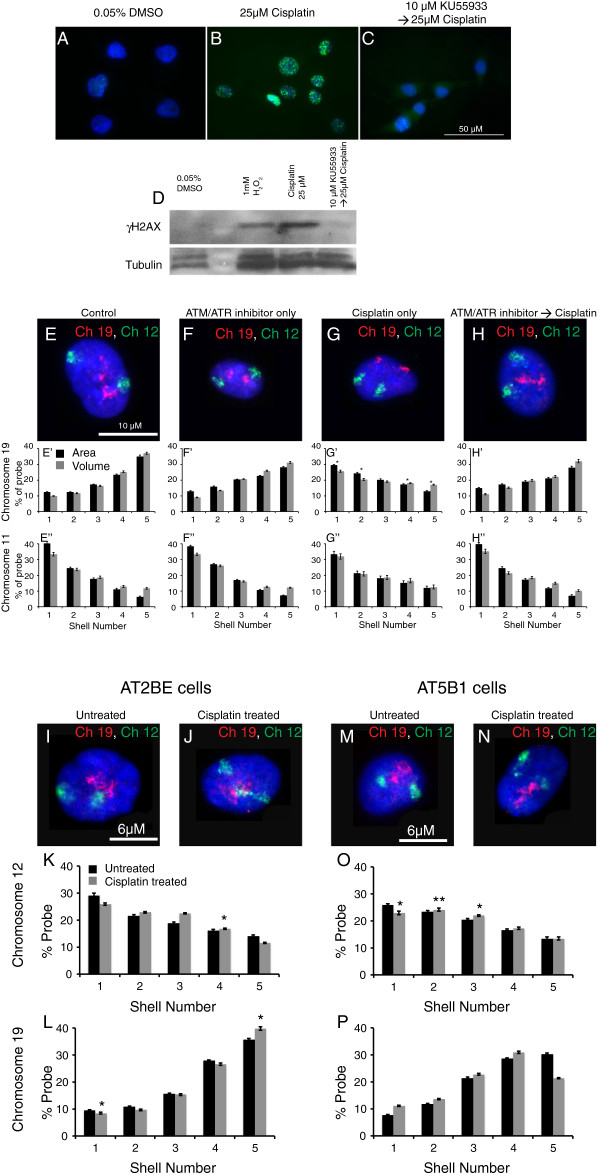
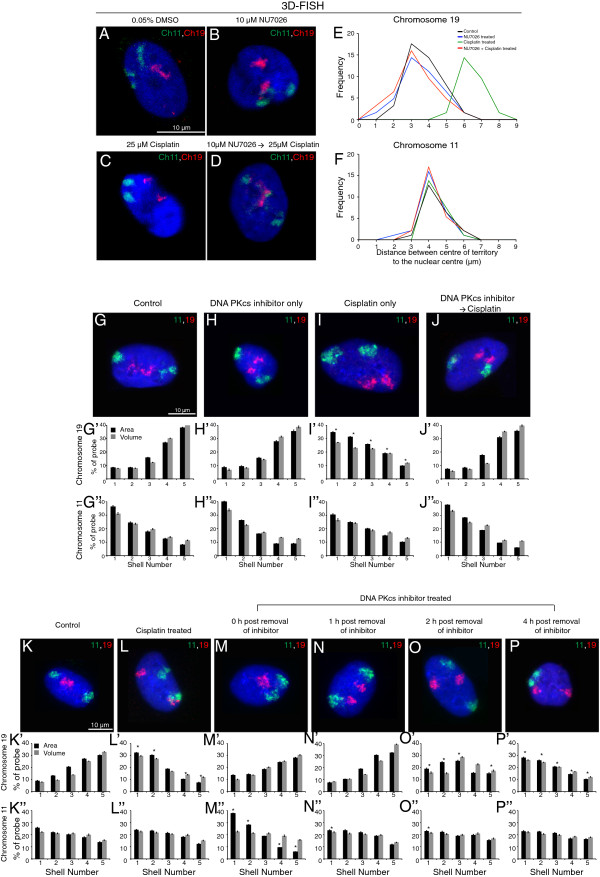
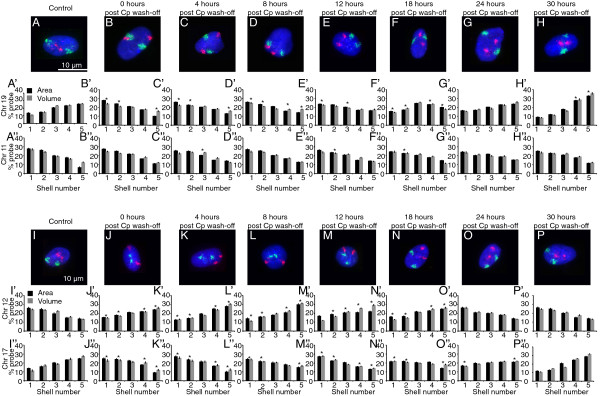
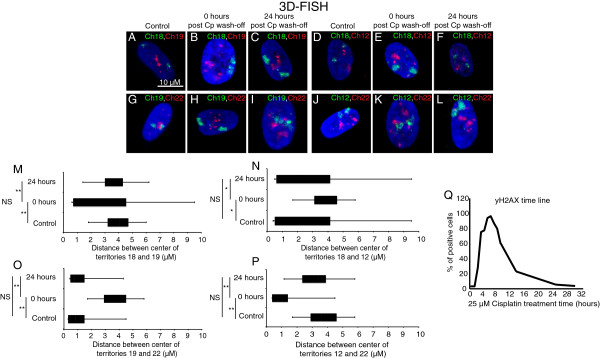
Our report investigates the effect of DNA damage on the spatial organization of chromosome territories within interphase nuclei of human cells. We show that DNA damage induces a large-scale spatial repositioning of chromosome territories that are relatively gene dense. This response is dose dependent, and involves territories moving from the nuclear interior to the periphery and vice versa. Furthermore, we have found that chromosome territory repositioning is contingent upon double-strand break recognition and damage sensing. Importantly, our results suggest that this is a reversible process where, following repair, chromosome territories re-occupy positions similar to those in undamaged control cells.
Thus, our report for the first time highlights DNA damage-dependent spatial reorganization of whole chromosomes, which might be an integral aspect of cellular damage response.
已知DNA的局部高阶染色质结构、动力学和组成决定双链断裂频率及修复效率。然而,DNA损伤反应如何影响染色体区域的空间组织仍未得到探索。
我们的报告研究了DNA损伤对人类细胞间期核内染色体区域空间组织的影响。我们发现DNA损伤会诱导相对基因密集的染色体区域进行大规模空间重新定位。这种反应是剂量依赖性的,涉及区域从核内部移至核周边,反之亦然。此外,我们发现染色体区域重新定位取决于双链断裂识别和损伤感应。重要的是,我们的结果表明这是一个可逆过程,修复后,染色体区域会重新占据与未受损对照细胞中相似的位置。
因此,我们的报告首次强调了全染色体的DNA损伤依赖性空间重组,这可能是细胞损伤反应的一个不可或缺的方面。