Department of Molecular Medicine and Medical Biotechnologies, University of Naples 'Federico II', Naples, Italy.
Department of Biology, University of Naples 'Federico II', Naples, Italy.
Cell Mol Life Sci. 2021 Nov;78(21-22):6745-6762. doi: 10.1007/s00018-021-03923-6. Epub 2021 Aug 31.
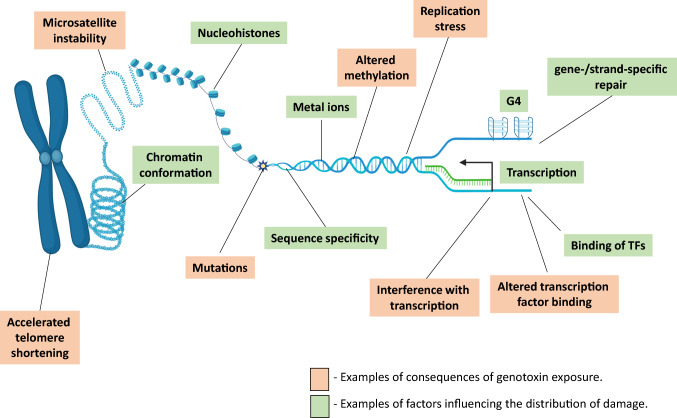
Exposures from the external and internal environments lead to the modification of genomic DNA, which is implicated in the cause of numerous diseases, including cancer, cardiovascular, pulmonary and neurodegenerative diseases, together with ageing. However, the precise mechanism(s) linking the presence of damage, to impact upon cellular function and pathogenesis, is far from clear. Genomic location of specific forms of damage is likely to be highly informative in understanding this process, as the impact of downstream events (e.g. mutation, microsatellite instability, altered methylation and gene expression) on cellular function will be positional-events at key locations will have the greatest impact. However, until recently, methods for assessing DNA damage determined the totality of damage in the genomic location, with no positional information. The technique of "mapping DNA adductomics" describes the molecular approaches that map a variety of forms of DNA damage, to specific locations across the nuclear and mitochondrial genomes. We propose that integrated comparison of this information with other genome-wide data, such as mutational hotspots for specific genotoxins, tumour-specific mutation patterns and chromatin organisation and transcriptional activity in non-cancerous lesions (such as nevi), pre-cancerous conditions (such as polyps) and tumours, will improve our understanding of how environmental toxins lead to cancer. Adopting an analogous approach for non-cancer diseases, including the development of genome-wide assays for other cellular outcomes of DNA damage, will improve our understanding of the role of DNA damage in pathogenesis more generally.
内外环境暴露会导致基因组 DNA 发生改变,这与许多疾病的发生有关,包括癌症、心血管疾病、肺部疾病和神经退行性疾病,以及衰老。然而,将损伤的存在与细胞功能和发病机制联系起来的确切机制尚不清楚。特定损伤形式的基因组位置很可能在理解这一过程中提供重要信息,因为下游事件(例如突变、微卫星不稳定性、甲基化改变和基因表达)对细胞功能的影响将是关键位置的位置事件,其影响最大。然而,直到最近,评估 DNA 损伤的方法才确定了基因组位置中损伤的总体情况,而没有位置信息。“DNA 加合物组学图谱绘制”技术描述了将各种形式的 DNA 损伤映射到核和线粒体基因组特定位置的分子方法。我们提出,将这些信息与其他全基因组数据(例如特定遗传毒物的突变热点、肿瘤特异性突变模式以及非癌性病变(如痣)、癌前病变(如息肉)和肿瘤中的染色质组织和转录活性)进行综合比较,将有助于我们了解环境毒素如何导致癌症。对于包括其他 DNA 损伤细胞后果的全基因组检测在内的非癌症疾病采用类似的方法,将有助于我们更全面地了解 DNA 损伤在发病机制中的作用。