Department of Ophthalmology, Liuhuaqiao Hospital, Guangzhou, PR China; Department of Ophthalmology, Schepens Eye Research Institute, Massachusetts Eye and Ear, Harvard Medical School, Boston, Mass.
Department of Ophthalmology, Schepens Eye Research Institute, Massachusetts Eye and Ear, Harvard Medical School, Boston, Mass; Department of Ophthalmology, Leiden University Medical Center, Leiden, Netherlands.
Transl Res. 2014 Apr;163(4):387-98. doi: 10.1016/j.trsl.2013.11.011. Epub 2013 Nov 22.
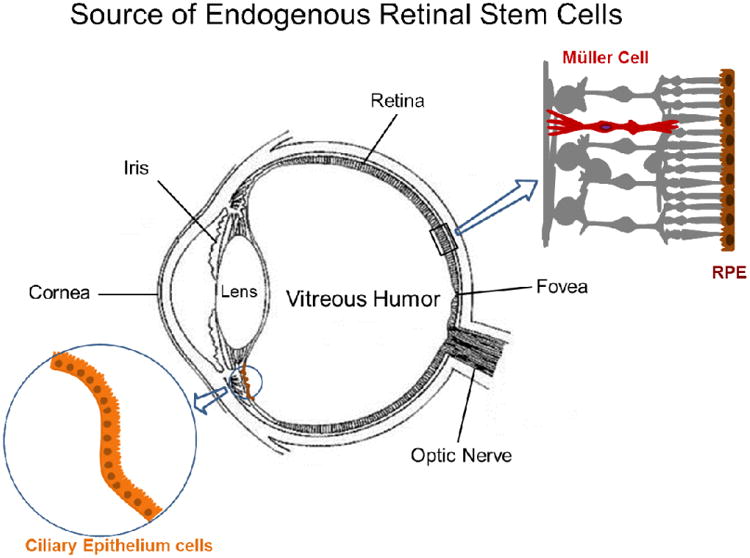
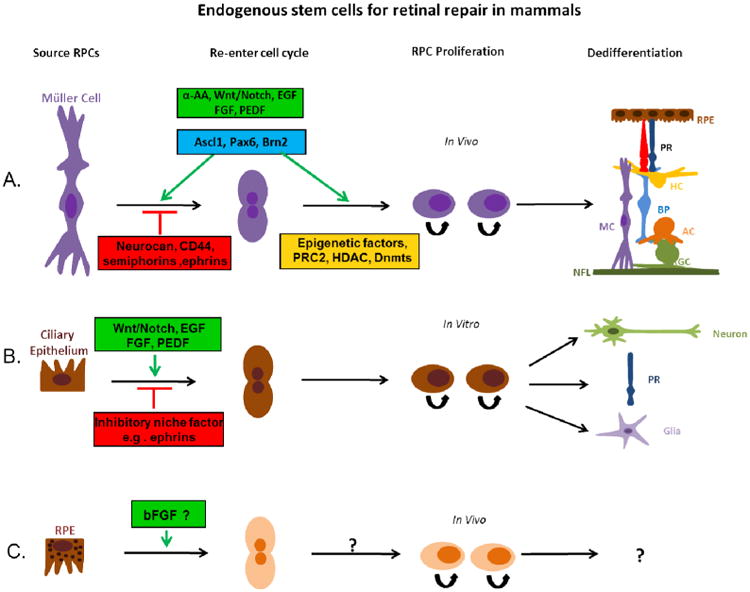
Irreversible vision loss is most often caused by the loss of function and subsequent death of retinal neurons, such as photoreceptor cells-the cells that initiate vision by capturing and transducing signals of light. One reason why retinal degenerative diseases are devastating is that, once retinal neurons are lost, they don't grow back. Stem cell-based cell replacement strategy for retinal degenerative diseases are leading the way in clinical trials of transplantation therapy, and the exciting findings in both human and animal models point to the possibility of restoring vision through a cell replacement regenerative approach. A less invasive method of retinal regeneration by mobilizing endogenous stem cells is, thus, highly desirable and promising for restoring vision. Although many obstacles remain to be overcome, the field of endogenous retinal repair is progressing at a rapid pace, with encouraging results in recent years.
不可逆的视力丧失通常是由视网膜神经元(如感光细胞——通过捕获和转换光信号来启动视觉的细胞)的功能丧失和随后的死亡引起的。视网膜退行性疾病具有破坏性的一个原因是,一旦视网膜神经元丢失,它们就不会再生长。基于干细胞的细胞替代策略是视网膜退行性疾病移植治疗临床试验的先导,人类和动物模型中的令人兴奋的发现表明,通过细胞替代再生方法恢复视力是有可能的。因此,通过动员内源性干细胞来实现视网膜再生的一种侵入性较小的方法,对于恢复视力是非常理想和有希望的。尽管仍然存在许多需要克服的障碍,但内源性视网膜修复领域正在快速发展,近年来取得了令人鼓舞的成果。