Vleugel Mathijs, Tromer Eelco, Omerzu Manja, Groenewold Vincent, Nijenhuis Wilco, Snel Berend, Kops Geert J P L
J Cell Biol. 2013 Dec 23;203(6):943-55. doi: 10.1083/jcb.201307016.
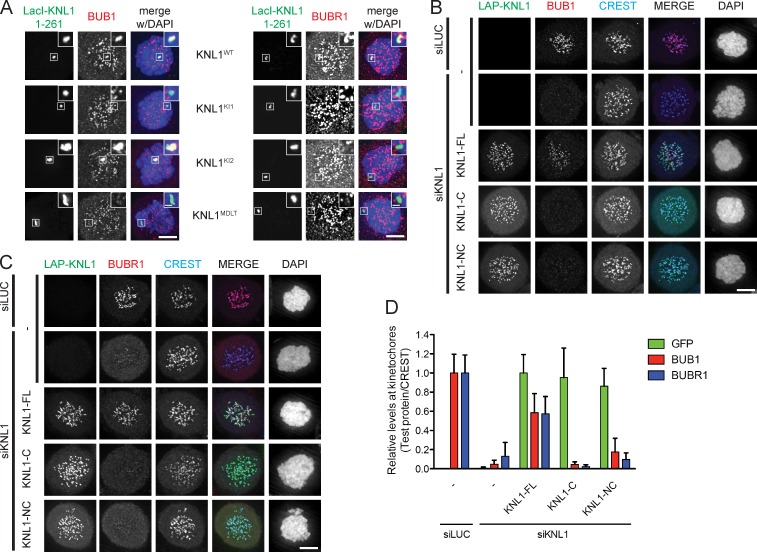
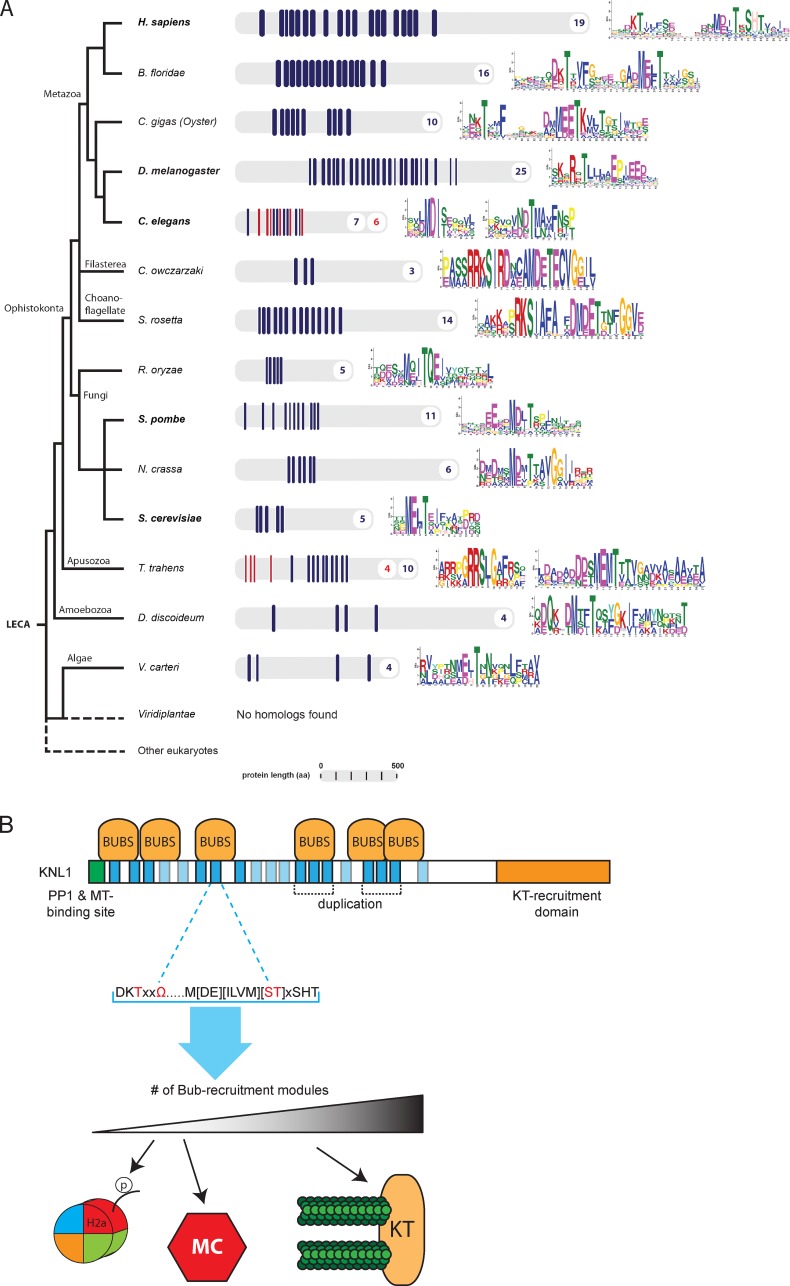
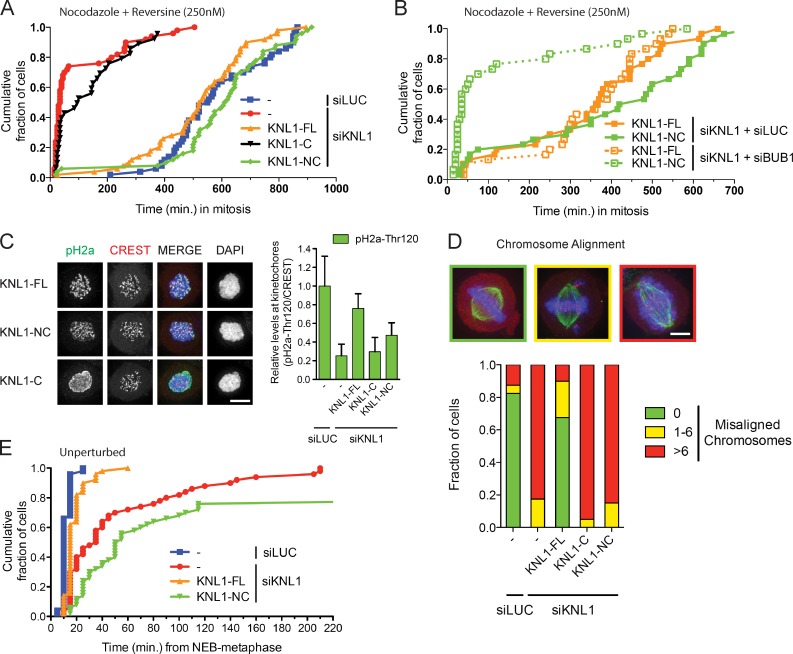
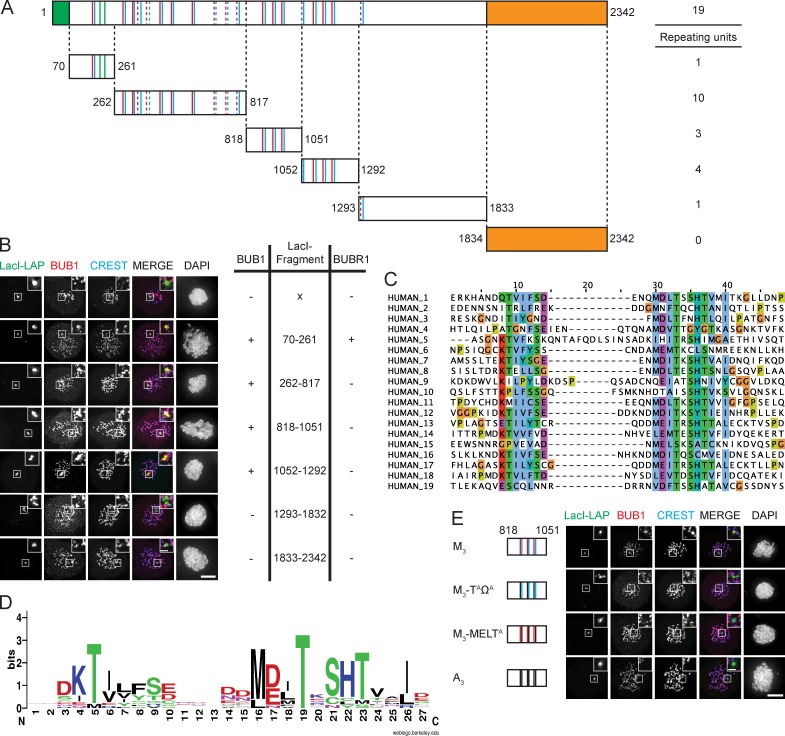
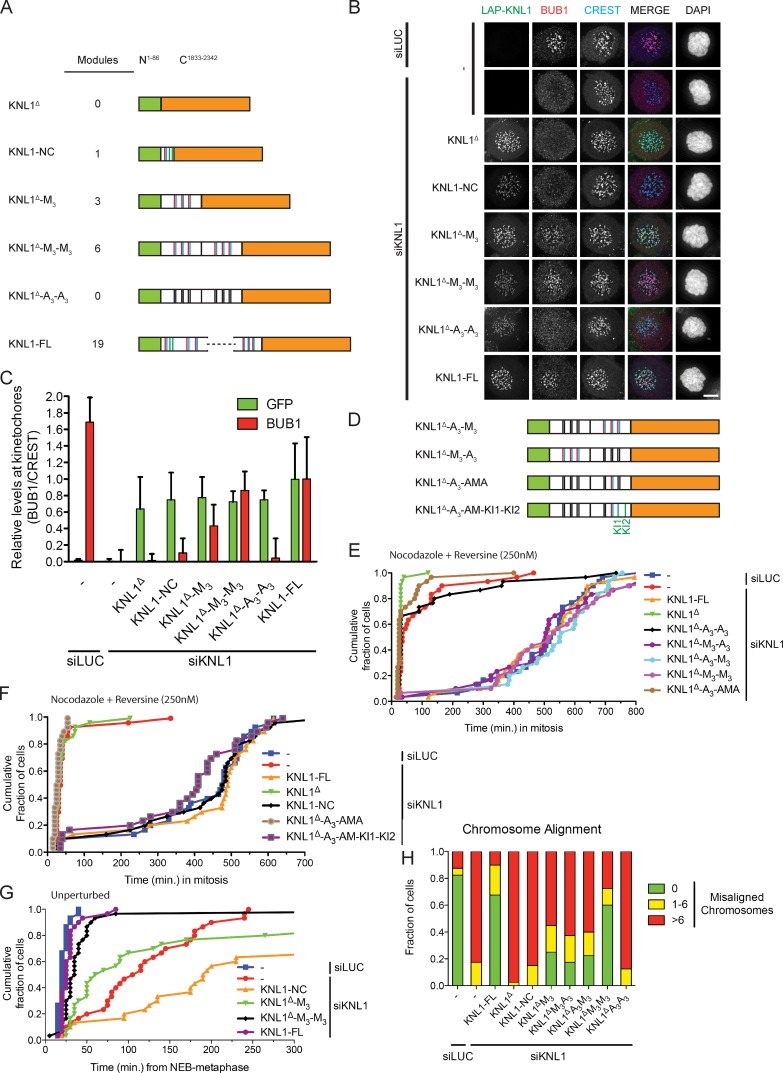
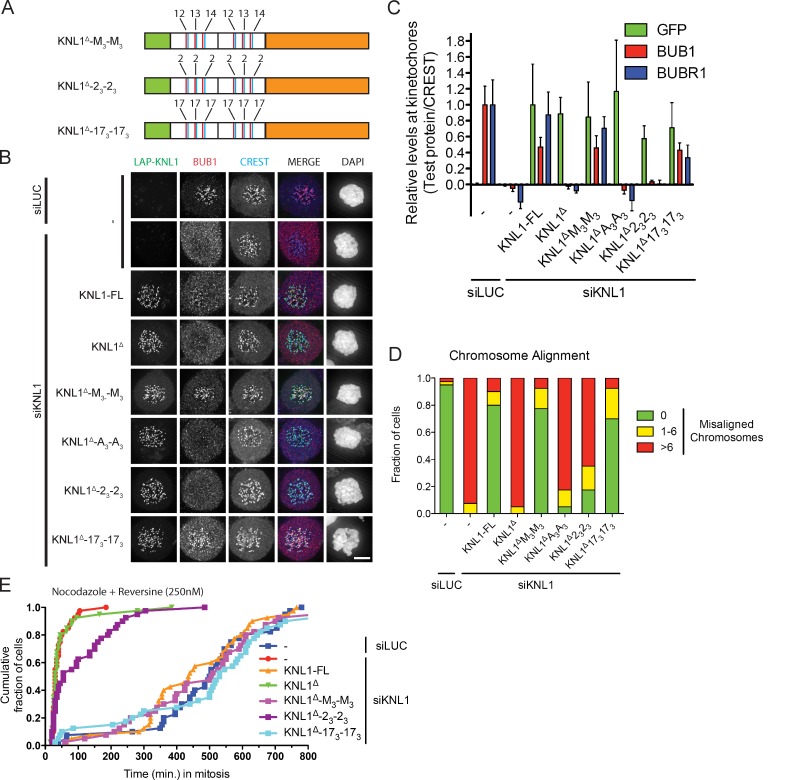
Fidelity of chromosome segregation relies on coordination of chromosome biorientation and the spindle checkpoint. Central to this is the kinetochore scaffold KNL1 that integrates the functions of various mitotic regulators including BUB1 and BUBR1. We show that KNL1 contains an extensive array of short linear sequence modules that encompass TxxΩ and MELT motifs and that can independently localize BUB1. Engineered KNL1 variants with few modules recruit low levels of BUB1 to kinetochores but support a robust checkpoint. Increasing numbers of modules concomitantly increase kinetochore BUB1 levels and progressively enhance efficiency of chromosome biorientation. Remarkably, normal KNL1 function is maintained by replacing all modules with a short array of naturally occurring or identical, artificially designed ones. A minimal array of generic BUB recruitment modules in KNL1 thus suffices for accurate chromosome segregation. Widespread divergence in the amount and sequence of these modules in KNL1 homologues may represent flexibility in adapting regulation of mitotic processes to altered requirements for chromosome segregation during evolution.
染色体分离的保真度依赖于染色体双定向与纺锤体检查点的协调。其中的核心是动粒支架蛋白KNL1,它整合了包括BUB1和BUBR1在内的各种有丝分裂调节因子的功能。我们发现,KNL1包含大量短线性序列模块,这些模块包含TxxΩ和MELT基序,并且能够独立地将BUB1定位到动粒上。带有少量模块的工程化KNL1变体将低水平的BUB1募集到动粒上,但能支持强大的检查点功能。模块数量的增加会相应提高动粒上BUB1的水平,并逐步提高染色体双定向的效率。值得注意的是,通过用一小串天然存在的或相同的人工设计的模块替换所有模块,KNL1的正常功能得以维持。因此,KNL1中一小串通用的BUB募集模块就足以实现准确的染色体分离。KNL1同源物中这些模块的数量和序列存在广泛差异,这可能代表了在进化过程中,有丝分裂过程的调节适应染色体分离变化需求的灵活性。