Wu Congying, Haynes Elizabeth M, Asokan Sreeja B, Simon Jeremy M, Sharpless Norman E, Baldwin Albert S, Davis Ian J, Johnson Gary L, Bear James E
J Cell Biol. 2013 Dec 23;203(6):907-16. doi: 10.1083/jcb.201306032.
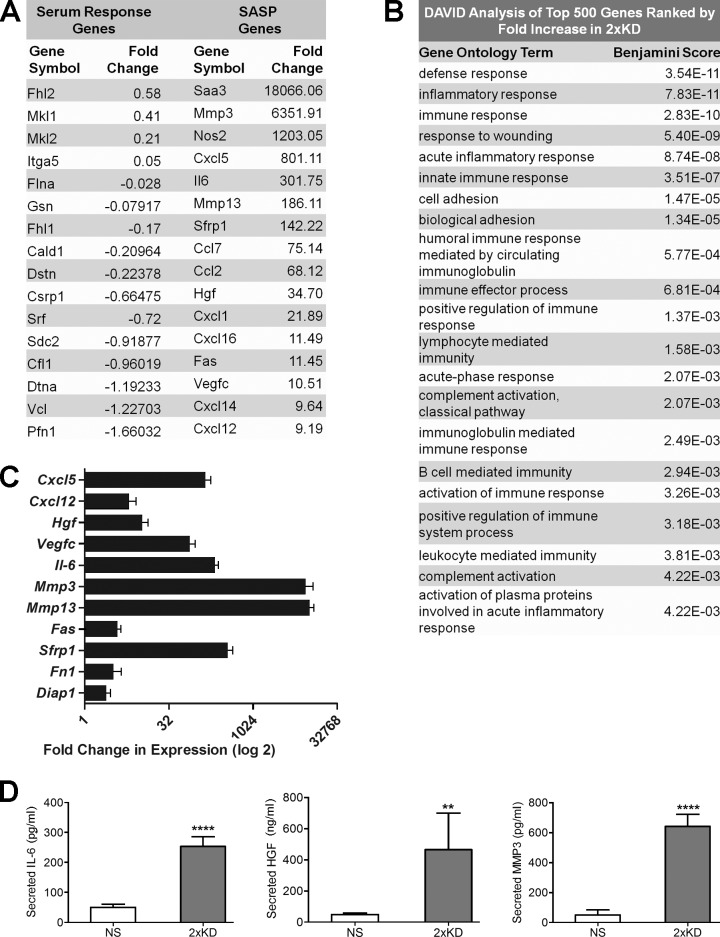
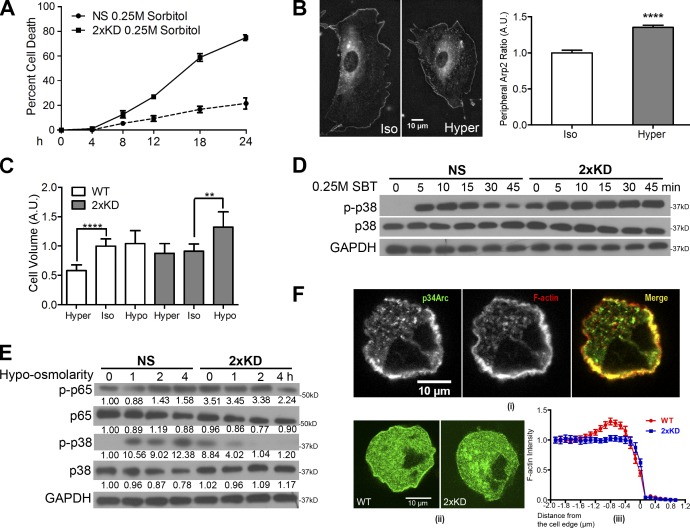
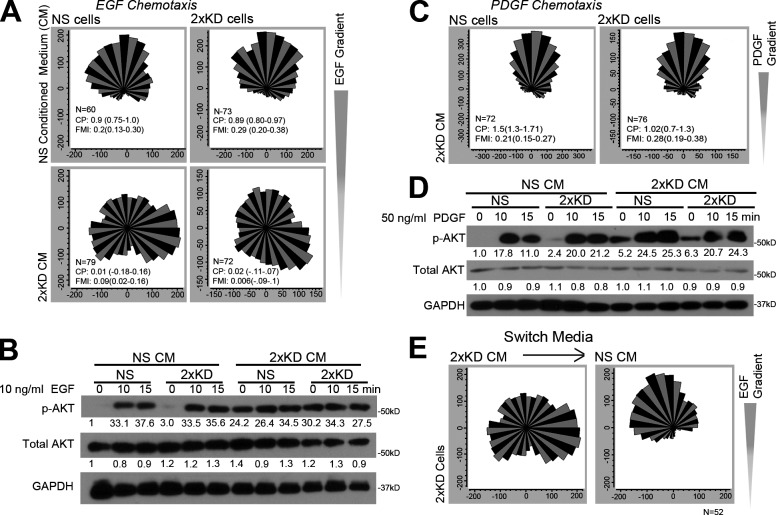
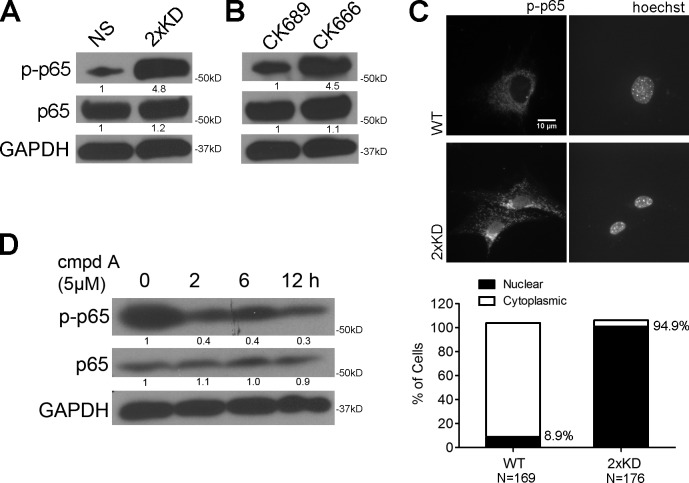
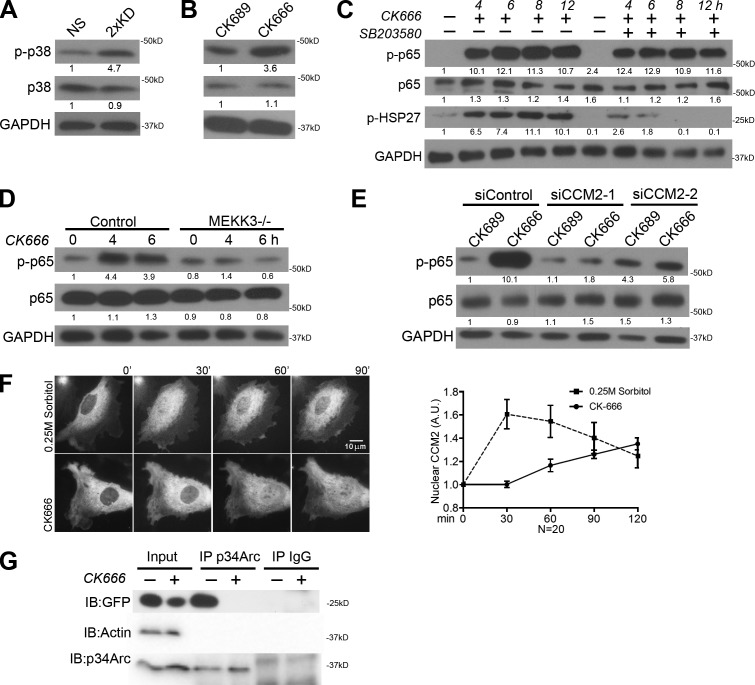
Arp2/3-branched actin is critical for cytoskeletal dynamics and cell migration. However, perturbations and diseases affecting this network have phenotypes that cannot be fully explained by cell-autonomous effects. In this paper, we report nonautonomous effects of Arp2/3 depletion. We show that, upon Arp2/3 depletion, the expression of numerous genes encoding secreted factors, including chemokines, growth factors, and matrix metalloproteases, was increased, a signature resembling the senescence-associated secretory phenotype. These factors affected epidermal growth factor chemotaxis in a nonautonomous way, resolving the recent contradictions about the role of Arp2/3 in chemotaxis. We demonstrate that these genes were activated by nuclear factor κB via a CCM2–MEKK3 pathway that has been implicated in hyperosmotic stress signaling. Consistent with this, Arp2/3-depleted cells showed misregulation of volume control and reduced actin in the submembranous cortex. The defects in osmotic signaling in the Arp2/3-depleted cells can be rescued by hypoosmotic treatment. Thus, perturbations of Arp2/3 have nonautonomous effects that should be considered when evaluating experimental manipulations and diseases affecting the Arp2/3-actin cytoskeleton.
Arp2/3 分支肌动蛋白对于细胞骨架动力学和细胞迁移至关重要。然而,影响该网络的扰动和疾病所表现出的表型,无法完全由细胞自主效应来解释。在本文中,我们报告了 Arp2/3 缺失的非自主效应。我们发现,在 Arp2/3 缺失后,众多编码分泌因子的基因表达增加,这些分泌因子包括趋化因子、生长因子和基质金属蛋白酶,这一特征类似于衰老相关分泌表型。这些因子以非自主方式影响表皮生长因子趋化性,解决了近期关于 Arp2/3 在趋化性中作用的矛盾。我们证明这些基因是由核因子κB 通过一条与高渗应激信号传导有关的 CCM2–MEKK3 途径激活的。与此一致的是,Arp2/3 缺失的细胞显示出体积控制失调,且膜下皮质中的肌动蛋白减少。Arp2/3 缺失细胞中的渗透信号缺陷可通过低渗处理得以挽救。因此,在评估影响 Arp2/3 - 肌动蛋白细胞骨架的实验操作和疾病时,应考虑 Arp2/3 扰动的非自主效应。