Division of Infectious Diseases, Department of Medicine, Los Angeles Biomedical Research Institute at Harbor-UCLA Medical Center, Torrance, California, USA.
mBio. 2013 Dec 17;4(6):e00542-13. doi: 10.1128/mBio.00542-13.
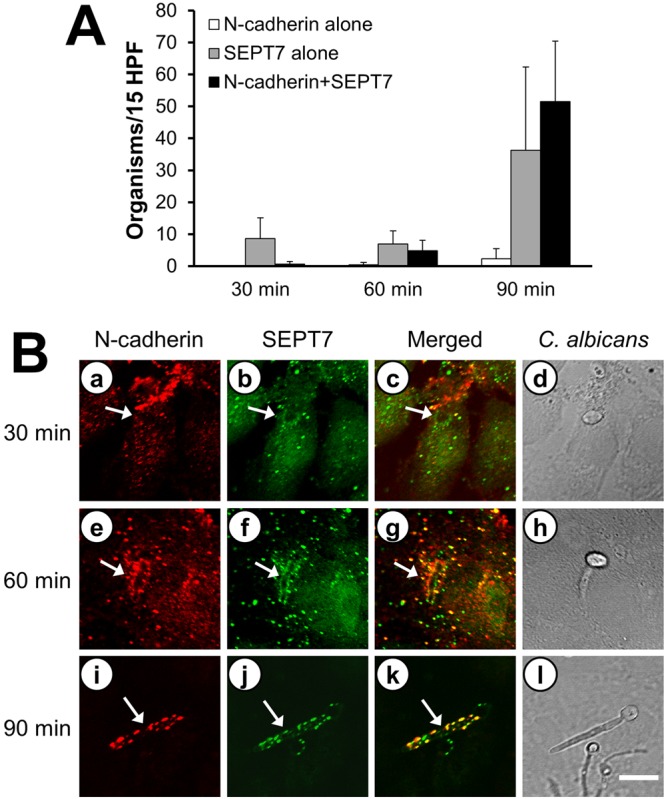
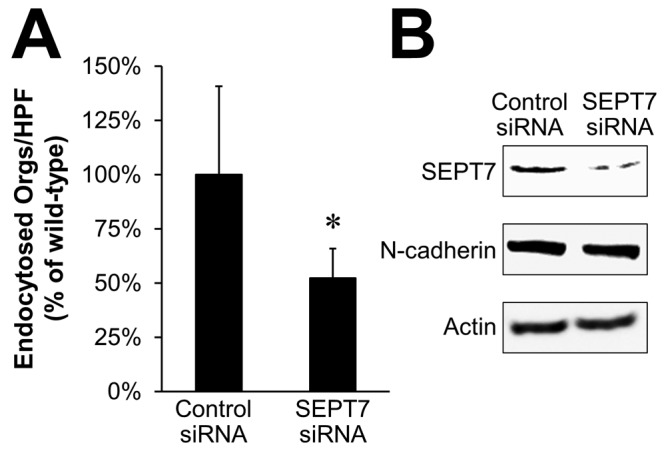
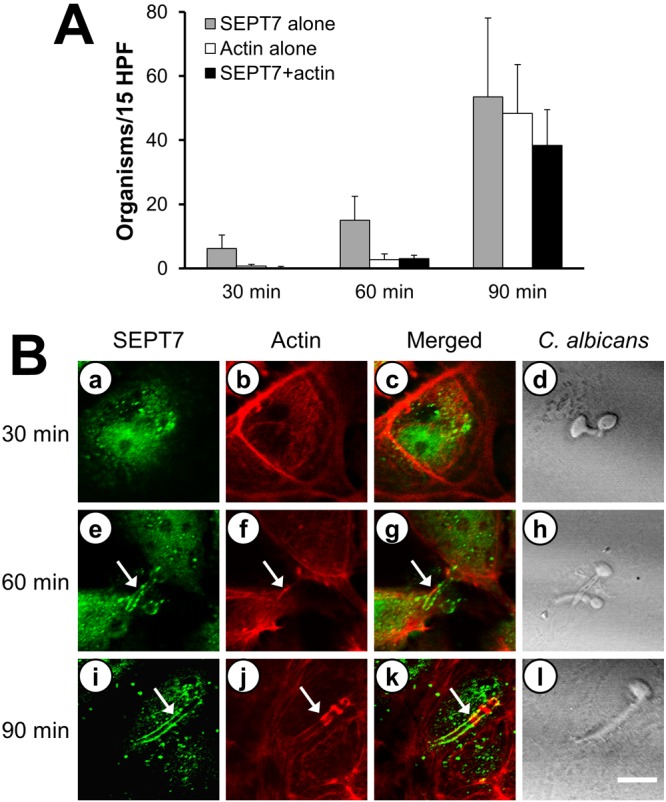
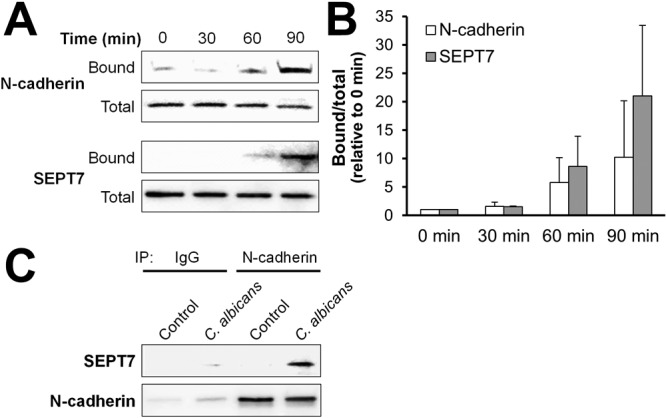
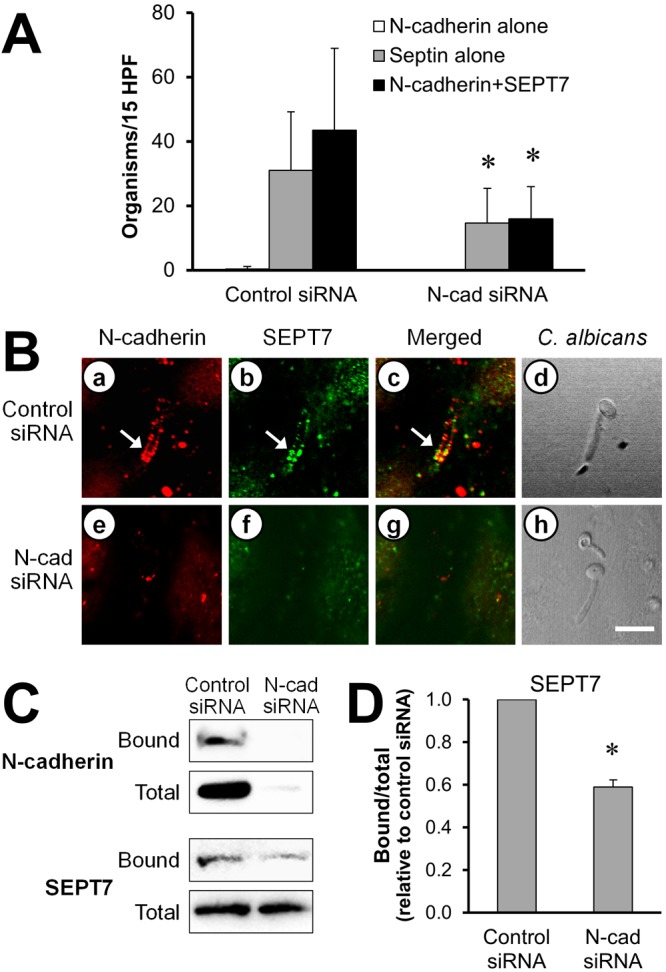
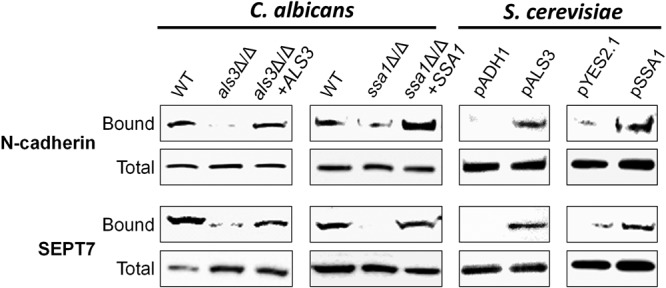
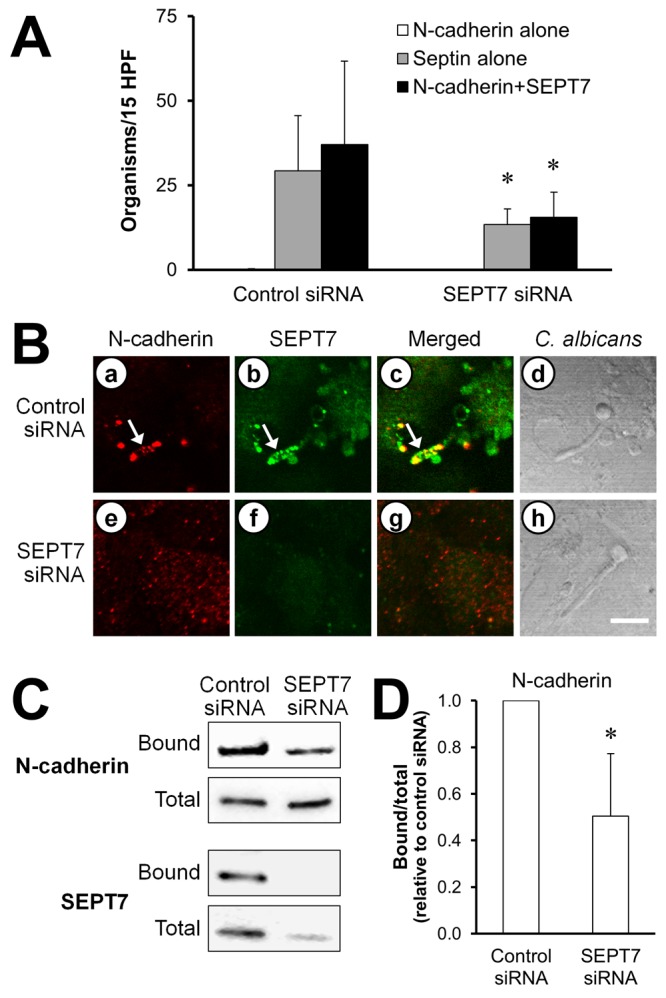
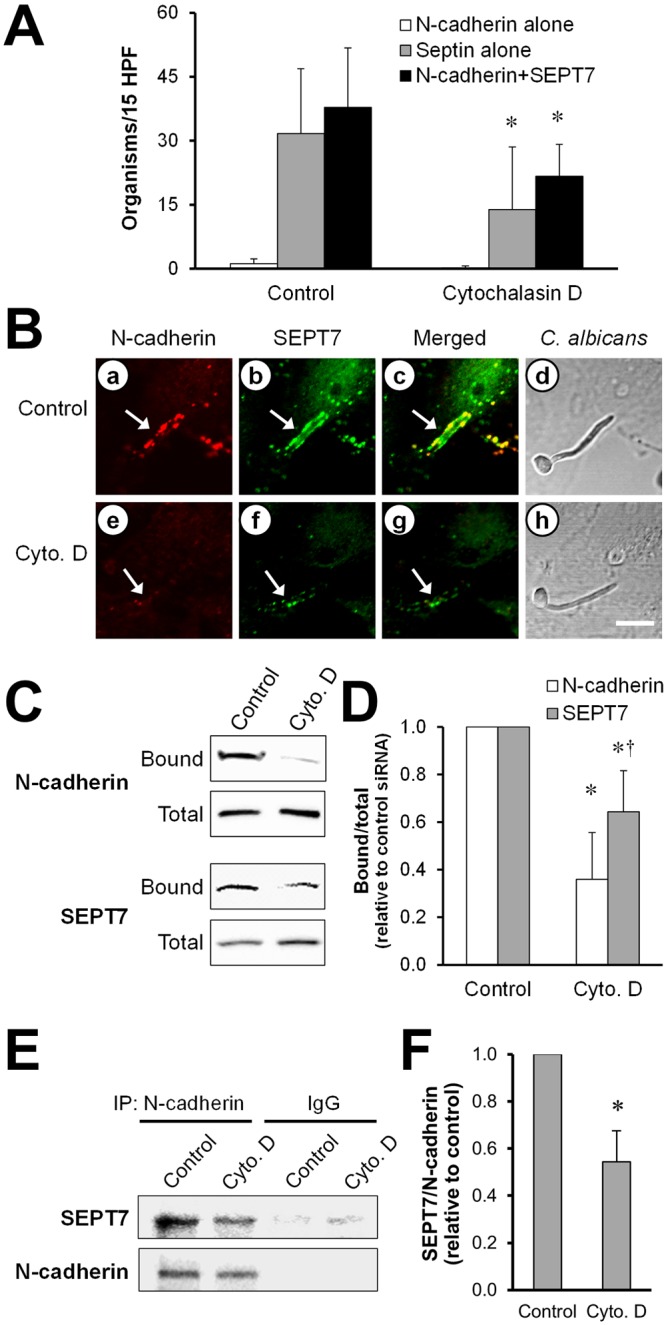
Candida albicans invades endothelial cells by binding to N-cadherin and other cell surface receptors. This binding induces rearrangement of endothelial cell actin microfilaments, which results in the formation of pseudopods that surround the organism and pull it into the endothelial cell. Here, we investigated the role of endothelial cell septin 7 (SEPT7) in the endocytosis of C. albicans hyphae. Using confocal microscopy, we determined that SEPT7 accumulated with N-cadherin and actin microfilaments around C. albicans as it was endocytosed by endothelial cells. Affinity purification studies indicated that a complex containing N-cadherin and SEPT7 was recruited by C. albicans and that formation of this complex around C. albicans was mediated by the fungal Als3 and Ssa1 invasins. Knockdown of N-cadherin by small interfering RNA (siRNA) reduced recruitment of SEPT7 to C. albicans, suggesting that N-cadherin functions as a link between SEPT7 and the fungus. Also, depolymerization of actin microfilaments with cytochalasin D decreased the association between SEPT7 and N-cadherin and inhibited recruitment of both SEPT7 and N-cadherin to C. albicans, indicating the necessity of an intact cytoskeleton in the functional interaction between SEPT7 and N-cadherin. Importantly, knockdown of SEPT7 decreased accumulation of N-cadherin around C. albicans in intact endothelial cells and reduced binding of N-cadherin to this organism, as revealed by the affinity purification assay. Furthermore, SEPT7 knockdown significantly inhibited the endocytosis of C. albicans. Therefore, in response to C. albicans infection, SEPT7 forms a complex with endothelial cell N-cadherin, is required for normal accumulation of N-cadherin around C. albicans hyphae, and is necessary for maximal endocytosis of the organism.
During hematogenously disseminated infection, Candida albicans invades the endothelial cell lining of the blood vessels to invade the deep tissues. C. albicans can invade endothelial cells by inducing its own endocytosis, which is triggered when the C. albicans Als3 and Ssa1 invasins bind to N-cadherin on the endothelial cell surface. How this binding induces endocytosis is incompletely understood. Septins are intracellular GTP-binding proteins that influence the function and localization of cell surface proteins. We found that C. albicans Als3 and Ssa1 bind to a complex containing N-cadherin and septin 7, which in turn interacts with endothelial cell microfilaments, thereby inducing endocytosis of the organism. The key role of septin 7 in governing receptor-mediated endocytosis is likely relevant to host cell invasion by other microbial pathogens, in addition to C. albicans.
白色念珠菌通过与 N-钙粘蛋白和其他细胞表面受体结合来侵袭内皮细胞。这种结合诱导内皮细胞肌动蛋白微丝的重排,导致形成伪足,包围生物体并将其拉入内皮细胞。在这里,我们研究了内皮细胞 septin 7(SEPT7)在白色念珠菌菌丝内吞中的作用。通过共聚焦显微镜,我们确定 SEPT7 在白色念珠菌被内皮细胞内吞时与 N-钙粘蛋白和肌动蛋白微丝一起聚集。亲和纯化研究表明,一种包含 N-钙粘蛋白和 SEPT7 的复合物被白色念珠菌募集,并且该复合物在白色念珠菌周围的形成是由真菌 Als3 和 Ssa1 入侵素介导的。用小干扰 RNA(siRNA)敲低 N-钙粘蛋白会减少 SEPT7 向白色念珠菌的募集,表明 N-钙粘蛋白作为 SEPT7 和真菌之间的联系发挥作用。此外,用细胞松弛素 D 解聚肌动蛋白微丝会减少 SEPT7 与 N-钙粘蛋白之间的关联,并抑制 SEPT7 和 N-钙粘蛋白两者向白色念珠菌的募集,表明在 SEPT7 和 N-钙粘蛋白之间的功能相互作用中完整的细胞骨架是必需的。重要的是,SEPT7 的敲低减少了完整内皮细胞中白色念珠菌周围 N-钙粘蛋白的积累,并降低了 N-钙粘蛋白与该生物体的结合,这如亲和纯化测定所揭示的那样。此外,SEPT7 的敲低显著抑制了白色念珠菌的内吞作用。因此,在白色念珠菌感染时,SEPT7 与内皮细胞 N-钙粘蛋白形成复合物,对于白色念珠菌菌丝周围 N-钙粘蛋白的正常积累是必需的,并且对于生物体的最大内吞作用也是必需的。
在血源性播散性感染期间,白色念珠菌侵袭血管内皮细胞衬里以侵袭深部组织。白色念珠菌可以通过诱导自身内吞作用来侵袭内皮细胞,这是由白色念珠菌 Als3 和 Ssa1 入侵素与内皮细胞表面上的 N-钙粘蛋白结合触发的。这种结合如何诱导内吞作用尚不完全清楚。桩蛋白是细胞内的 GTP 结合蛋白,影响细胞表面蛋白的功能和定位。我们发现,白色念珠菌 Als3 和 Ssa1 结合到含有 N-钙粘蛋白和 septin 7 的复合物上,后者反过来与内皮细胞微丝相互作用,从而诱导生物体的内吞作用。桩蛋白 7 在调节受体介导的内吞作用中的关键作用可能与其他微生物病原体(除白色念珠菌外)对宿主细胞的侵袭有关。