Sciamanna Ilaria, Gualtieri Alberto, Cossetti Cristina, Osimo Emanuele Felice, Ferracin Manuela, Macchia Gianfranco, Aricò Eleonora, Prosseda Gianni, Vitullo Patrizia, Misteli Tom, Spadafora Corrado
Istituto Superiore di Sanità, Viale Regina Elena 299, Rome, Italy.
Oncotarget. 2013 Dec;4(12):2271-87. doi: 10.18632/oncotarget.1403.
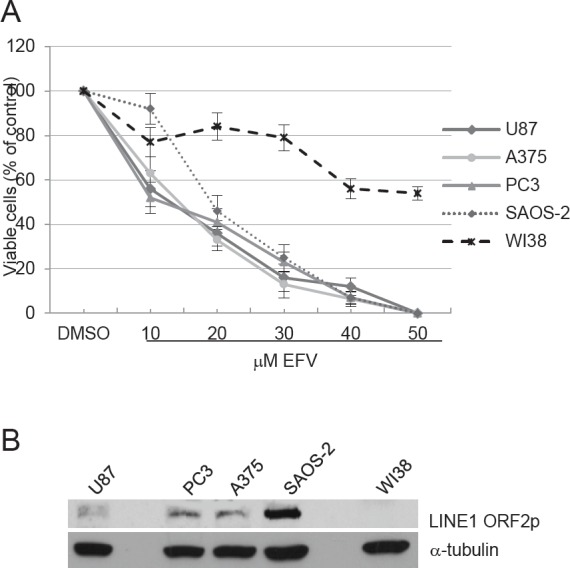
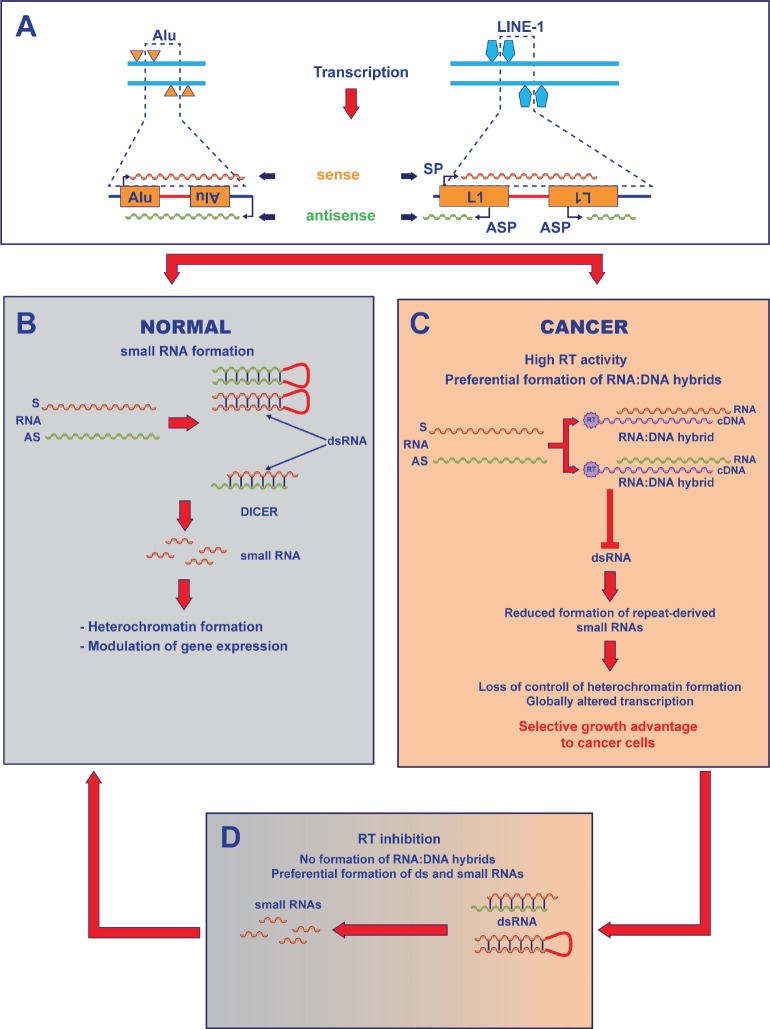
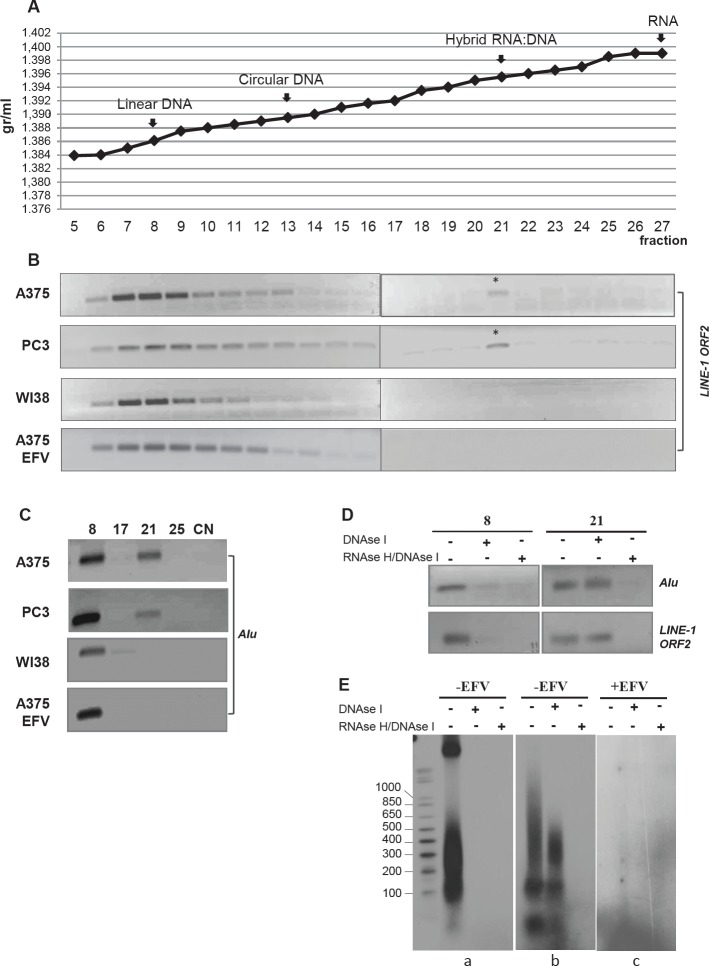
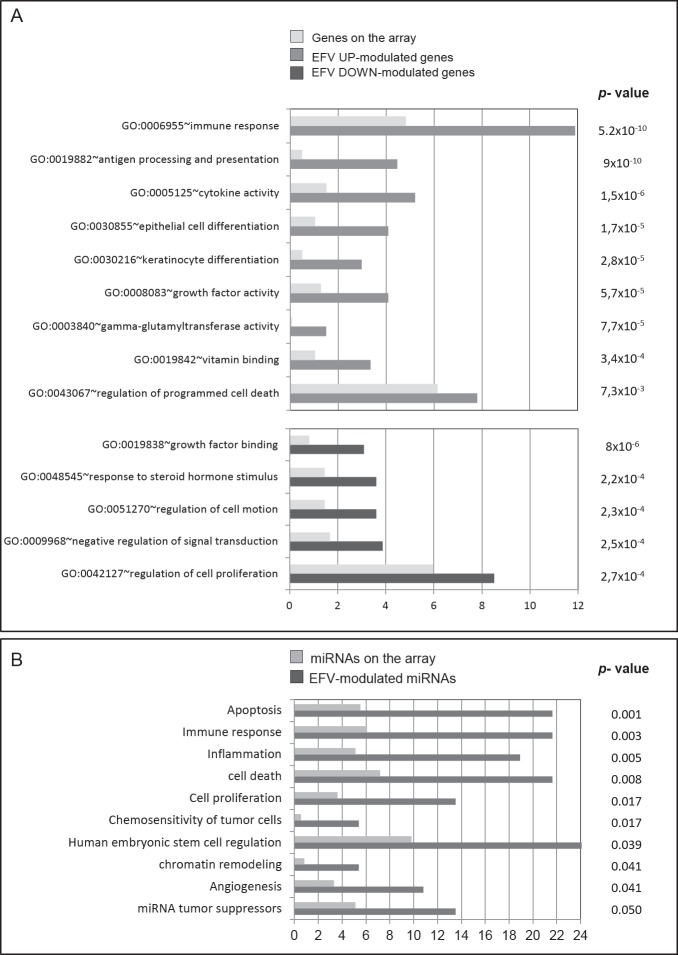
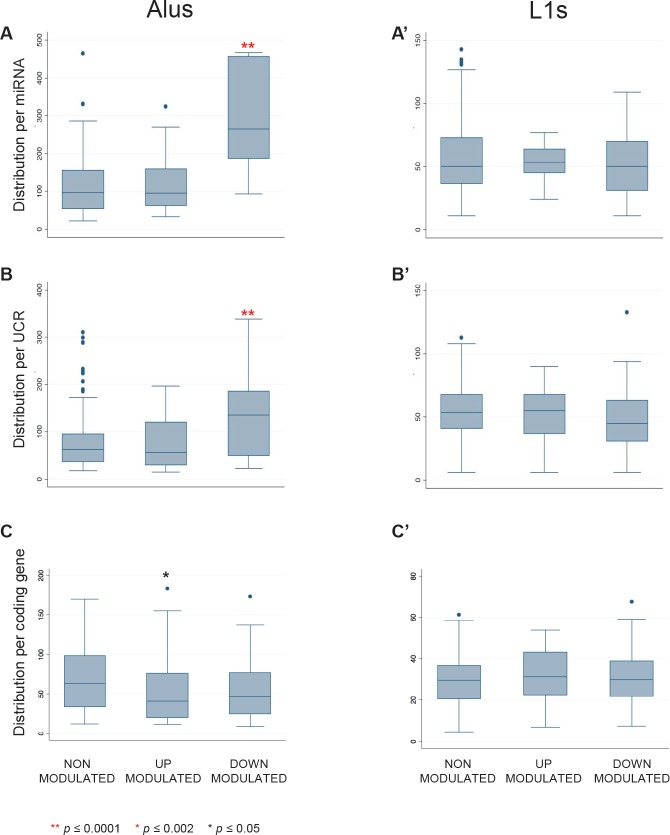
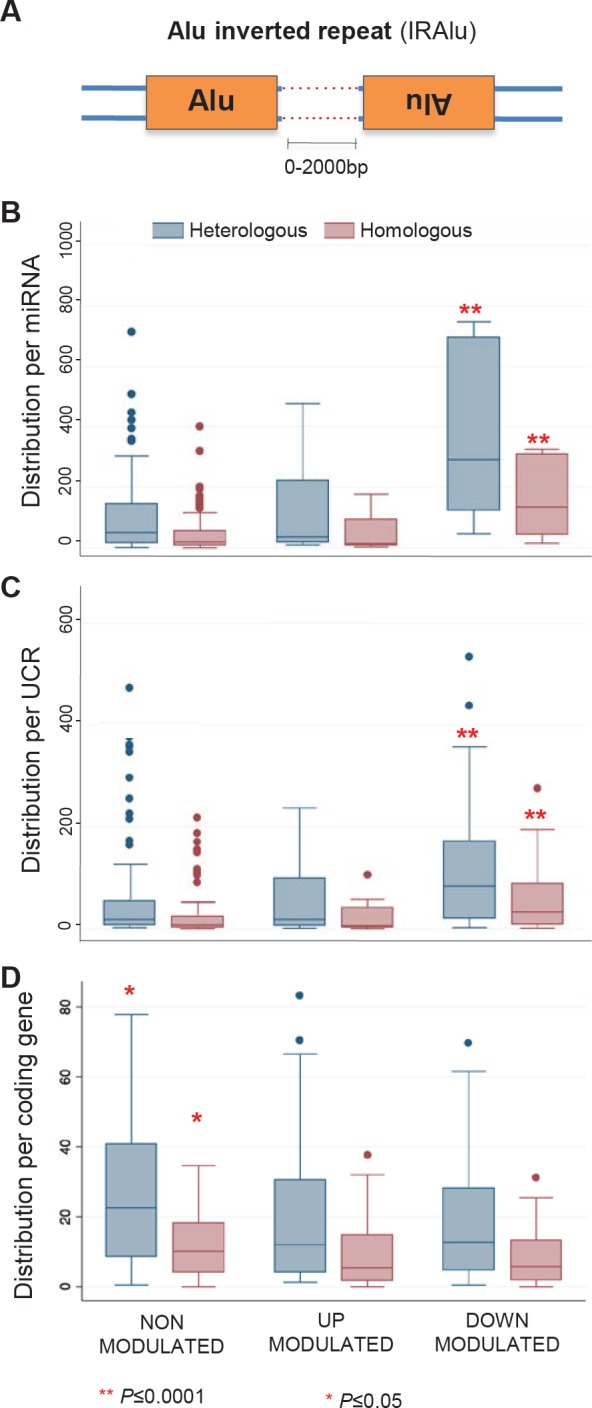
LINE-1 elements make up the most abundant retrotransposon family in the human genome. Full-length LINE-1 elements encode a reverse transcriptase (RT) activity required for their own retrotranpsosition as well as that of non-autonomous Alu elements. LINE-1 are poorly expressed in normal cells and abundantly in cancer cells. Decreasing RT activity in cancer cells, by either LINE-1-specific RNA interference, or by RT inhibitory drugs, was previously found to reduce proliferation and promote differentiation and to antagonize tumor growth in animal models. Here we have investigated how RT exerts these global regulatory functions. We report that the RT inhibitor efavirenz (EFV) selectively downregulates proliferation of transformed cell lines, while exerting only mild effects on non-transformed cells; this differential sensitivity matches a differential RT abundance, which is high in the former and undetectable in the latter. Using CsCl density gradients, we selectively identify Alu and LINE-1 containing DNA:RNA hybrid molecules in cancer but not in normal cells. Remarkably, hybrid molecules fail to form in tumor cells treated with EFV under the same conditions that repress proliferation and induce the reprogramming of expression profiles of coding genes, microRNAs (miRNAs) and ultraconserved regions (UCRs). The RT-sensitive miRNAs and UCRs are significantly associated with Alu sequences. The results suggest that LINE-1-encoded RT governs the balance between single-stranded and double-stranded RNA production. In cancer cells the abundant RT reverse-transcribes retroelement-derived mRNAs forming RNA:DNA hybrids. We propose that this impairs the formation of double-stranded RNAs and the ensuing production of small regulatory RNAs, with a direct impact on gene expression. RT inhibition restores the 'normal' small RNA profile and the regulatory networks that depend on them. Thus, the retrotransposon-encoded RT drives a previously unrecognized mechanism crucial to the transformed state in tumor cells.
LINE-1元件构成了人类基因组中最丰富的逆转座子家族。全长LINE-1元件编码自身逆转座以及非自主Alu元件逆转座所需的逆转录酶(RT)活性。LINE-1在正常细胞中表达水平低,而在癌细胞中大量表达。先前发现,通过LINE-1特异性RNA干扰或RT抑制药物降低癌细胞中的RT活性,可减少增殖、促进分化并在动物模型中对抗肿瘤生长。在此,我们研究了RT如何发挥这些全局调节功能。我们报告称,RT抑制剂依法韦仑(EFV)选择性地下调转化细胞系的增殖,而对未转化细胞仅产生轻微影响;这种差异敏感性与RT丰度差异相匹配,前者RT丰度高,后者则检测不到。利用氯化铯密度梯度,我们在癌细胞中而非正常细胞中选择性地鉴定出含有Alu和LINE-1的DNA:RNA杂交分子。值得注意的是,在相同条件下,用EFV处理的肿瘤细胞中未能形成杂交分子,这些条件可抑制增殖并诱导编码基因、微小RNA(miRNA)和超保守区域(UCR)的表达谱重编程。对RT敏感的miRNA和UCR与Alu序列显著相关。结果表明,LINE-1编码的RT控制着单链和双链RNA产生之间的平衡。在癌细胞中,丰富的RT将逆转座元件衍生的mRNA逆转录形成RNA:DNA杂交体。我们提出,这会损害双链RNA的形成以及随之产生的小调节RNA,从而直接影响基因表达。RT抑制可恢复“正常”的小RNA谱以及依赖它们的调节网络。因此,逆转座子编码的RT驱动了一种先前未被认识的、对肿瘤细胞转化状态至关重要的机制。