Sciamanna Ilaria, Gualtieri Alberto, Piazza Pier Francesco, Spadafora Corrado
Oncotarget. 2014 Sep 30;5(18):8039-51. doi: 10.18632/oncotarget.2504.
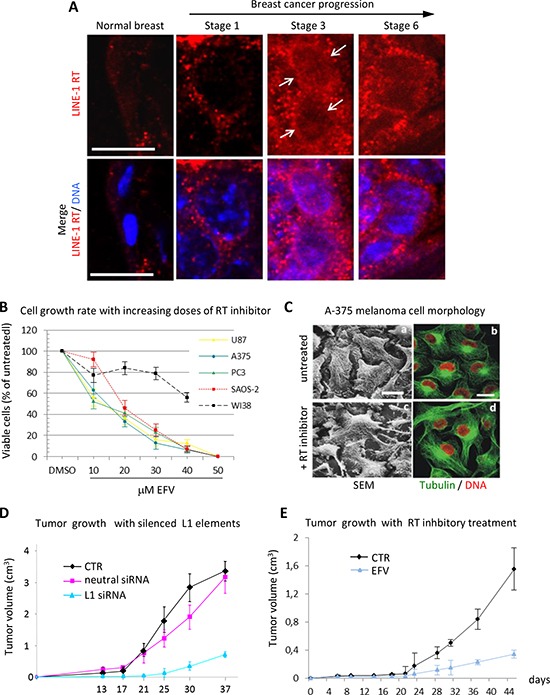
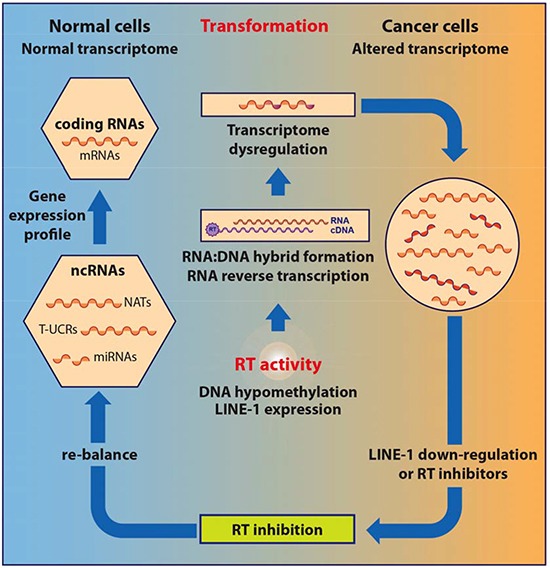
LINE-1 retrotransposons encode the reverse transcriptase (RT) enzyme, required for their own mobility, the expression of which is inhibited in differentiated tissues while being active in tumors. Experimental evidence indicate that the inhibition of LINE-1-derived RT restores differentiation in cancer cells, inhibits tumor progression and yields globally reprogrammed transcription profiles. Newly emerging data suggest that LINE-1-encoded RT modulates the biogenesis of miRNAs, by governing the balance between the production of regulatory double-stranded RNAs and RNA:DNA hybrid molecules, with a direct impact on global gene expression. Abnormally high RT activity unbalances the transcriptome in cancer cells, while RT inhibition restores "normal" miRNA profiles and their regulatory networks. This RT-dependent mechanism can target the myriad of transcripts - both coding and non-coding, sense and antisense - in eukaryotic transcriptomes, with a profound impact on cell fates. LINE-1-encoded RT emerges therefore as a key regulator of a previously unrecognized mechanism in tumorigenesis.
LINE-1逆转座子编码自身移动所需的逆转录酶(RT),该酶在分化组织中表达受到抑制,而在肿瘤中则具有活性。实验证据表明,抑制源自LINE-1的RT可恢复癌细胞的分化,抑制肿瘤进展,并产生全局重编程的转录谱。新出现的数据表明,LINE-1编码的RT通过控制调节性双链RNA和RNA:DNA杂交分子产生之间的平衡来调节miRNA的生物合成,直接影响全局基因表达。异常高的RT活性会使癌细胞中的转录组失衡,而RT抑制可恢复“正常”的miRNA谱及其调控网络。这种依赖RT的机制可以靶向真核转录组中的无数转录本——包括编码和非编码、正义和反义转录本——对细胞命运产生深远影响。因此,LINE-1编码的RT成为肿瘤发生中一种先前未被认识的机制的关键调节因子。