Department of Cell Biology and Anatomy, Hotchkiss Brain Institute, University of Calgary Calgary, Canada.
Department of Physiology and Pharmacology, Hotchkiss Brain Institute, University of Calgary Calgary, Canada.
Front Cell Neurosci. 2013 Nov 27;7:230. doi: 10.3389/fncel.2013.00230.
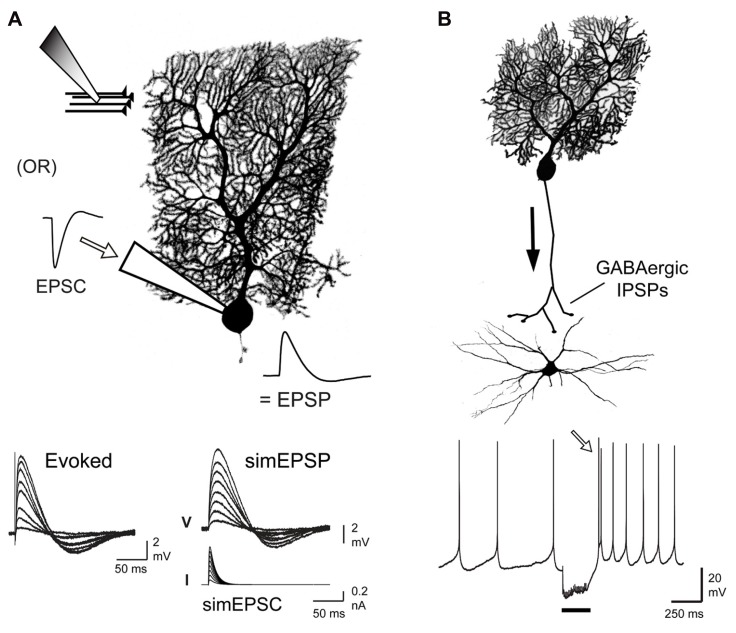
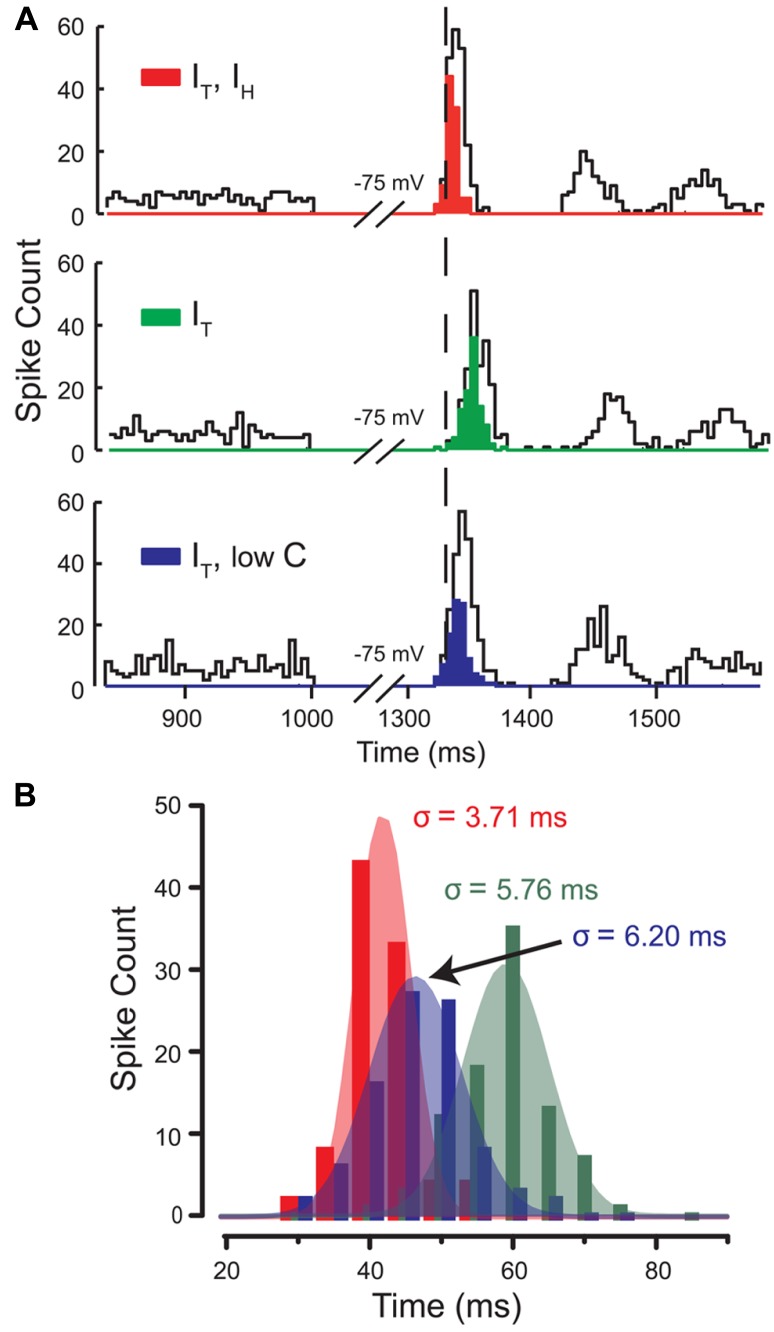
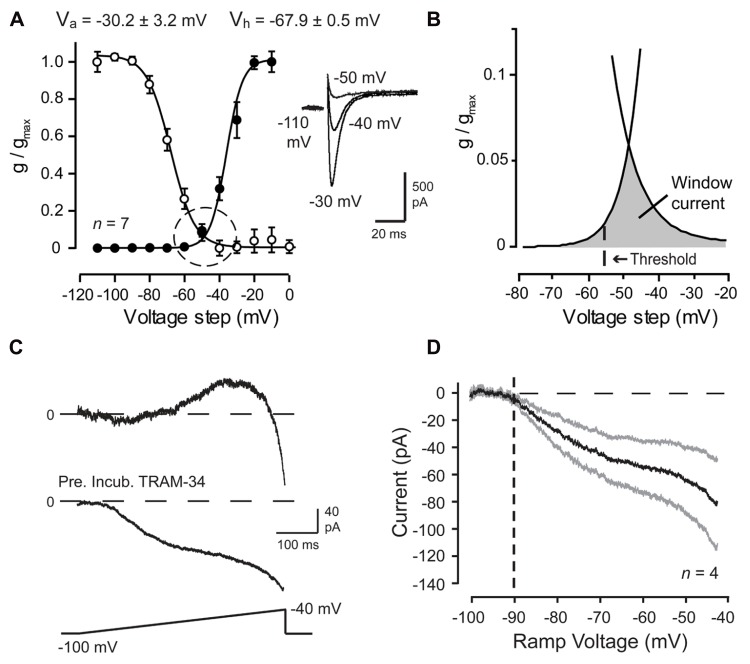
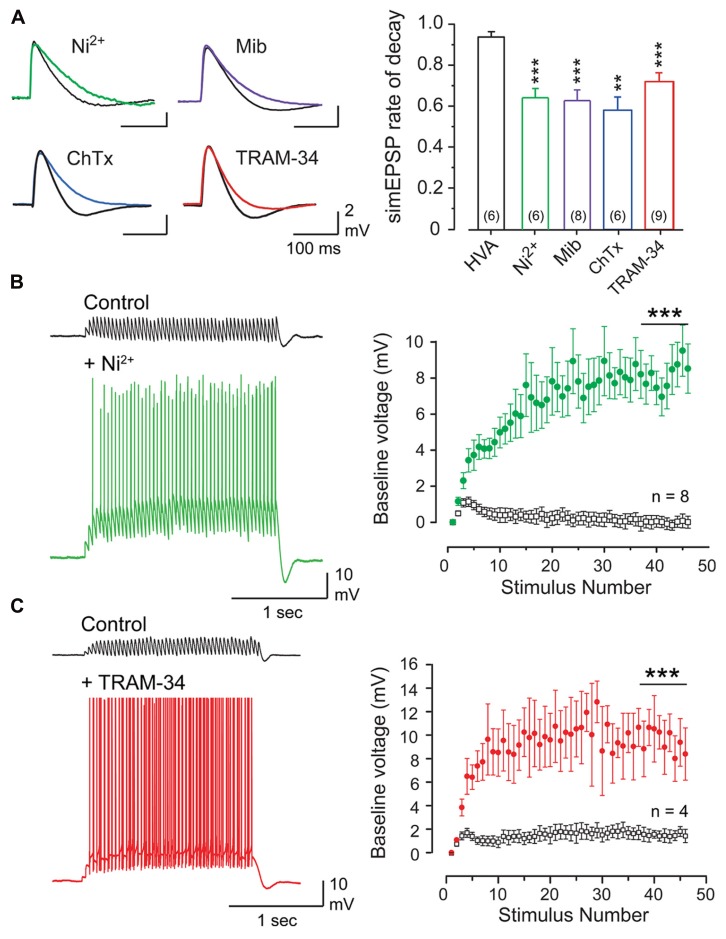
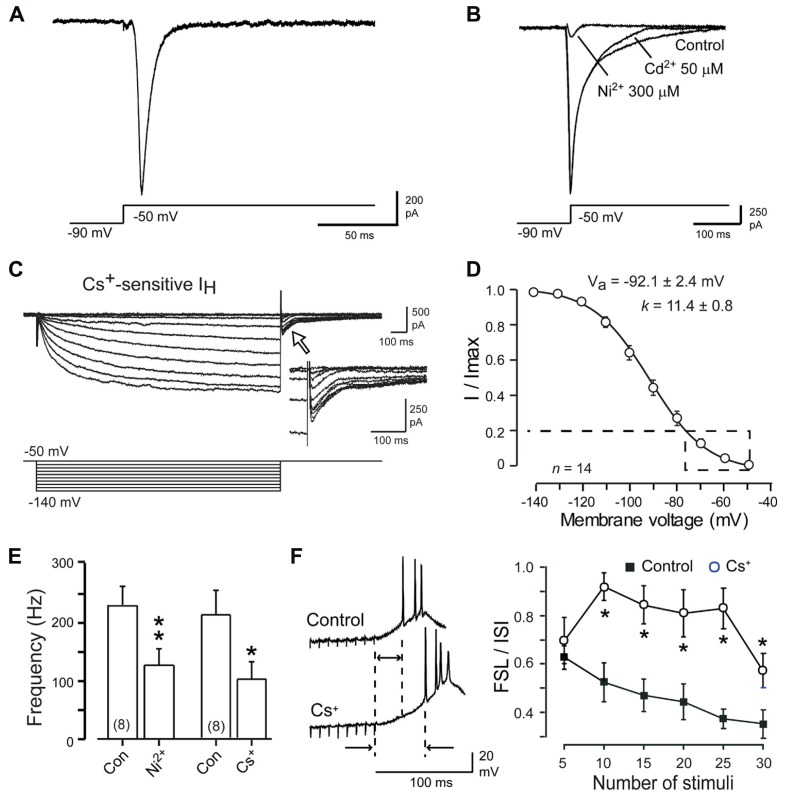
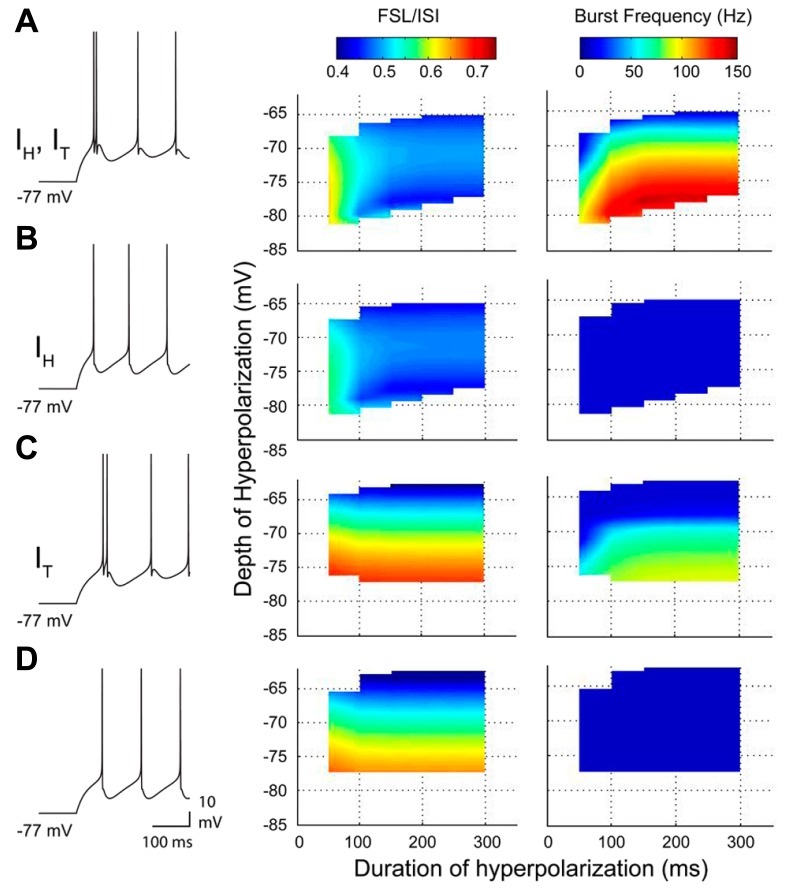
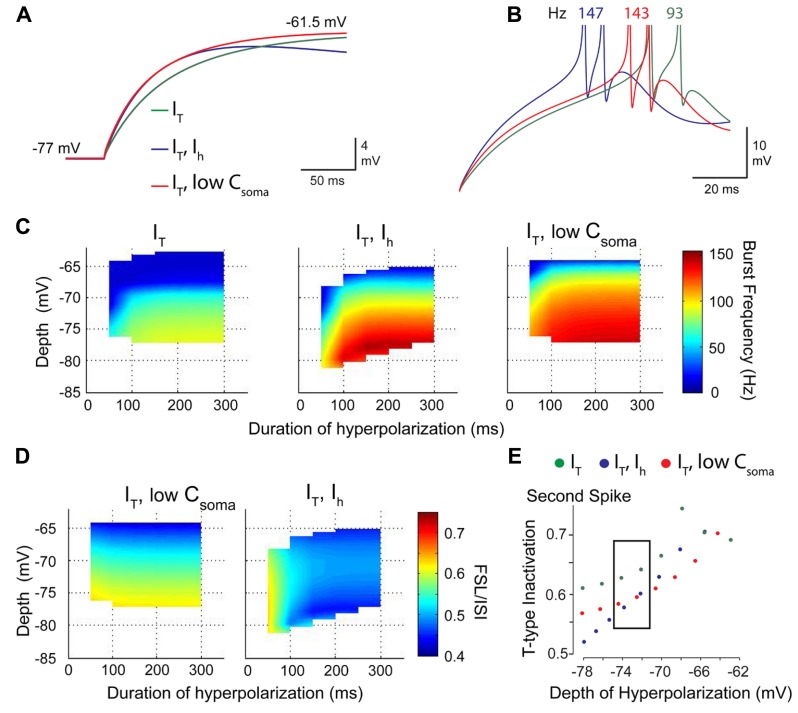
T-type calcium channels of the Cav3 family are unique among voltage-gated calcium channels due to their low activation voltage, rapid inactivation, and small single channel conductance. These special properties allow Cav3 calcium channels to regulate neuronal processing in the subthreshold voltage range. Here, we review two different subthreshold ion channel interactions involving Cav3 channels and explore the ability of these interactions to expand the functional roles of Cav3 channels. In cerebellar Purkinje cells, Cav3 and intermediate conductance calcium-activated potassium (IKCa) channels form a novel complex which creates a low voltage-activated, transient outward current capable of suppressing temporal summation of excitatory postsynaptic potentials (EPSPs). In large diameter neurons of the deep cerebellar nuclei, Cav3-mediated calcium current (I T) and hyperpolarization-activated cation current (I H) are activated during trains of inhibitory postsynaptic potentials. These currents have distinct, and yet synergistic, roles in the subthreshold domain with I T generating a rebound burst and I H controlling first spike latency and rebound spike precision. However, by shortening the membrane time constant the membrane returns towards resting value at a faster rate, allowing I H to increase the efficacy of I T and increase the range of burst frequencies that can be generated. The net effect of Cav3 channels thus depends on the channels with which they are paired. When expressed in a complex with a KCa channel, Cav3 channels reduce excitability when processing excitatory inputs. If functionally coupled with an HCN channel, the depolarizing effect of Cav3 channels is accentuated, allowing for efficient inversion of inhibitory inputs to generate a rebound burst output. Therefore, signal processing relies not only on the activity of individual subtypes of channels but also on complex interactions between ion channels whether based on a physical complex or by indirect effects on membrane properties.
T 型钙通道属于 Cav3 家族,因其激活电压低、快速失活以及单通道电导小而有别于其他电压门控钙通道。这些特殊性质使 Cav3 钙通道能够在阈下电压范围内调节神经元的处理。在此,我们综述了两种涉及 Cav3 通道的不同阈下离子通道相互作用,并探讨了这些相互作用扩展 Cav3 通道功能作用的能力。在小脑浦肯野细胞中,Cav3 和中间电导钙激活钾 (IKCa) 通道形成一个新型复合物,产生一种能够抑制兴奋性突触后电位 (EPSP) 时间总和的低电压激活、瞬间外向电流。在小脑深部核团的大直径神经元中,Cav3 介导的钙电流 (I T) 和超极化激活阳离子电流 (I H) 在抑制性突触后电位的串刺激期间被激活。这些电流在阈下域中具有独特但协同的作用,I T 产生反弹爆发,I H 控制第一峰潜伏期和反弹峰精度。然而,通过缩短膜时间常数,膜以更快的速度返回到静止值,使 I H 增加 I T 的效力并增加可以产生的爆发频率范围。因此,Cav3 通道的净效应取决于与其配对的通道。当与 KCa 通道表达在复合物中时,Cav3 通道在处理兴奋性输入时降低兴奋性。如果与 HCN 通道功能性偶联,则 Cav3 通道的去极化作用会增强,从而有效地反转抑制性输入以产生反弹爆发输出。因此,信号处理不仅依赖于单个通道亚型的活性,还依赖于离子通道之间的复杂相互作用,无论是基于物理复合物还是通过对膜性质的间接影响。