Tsutajima Jyoji, Kunitake Takato, Wakazono Yoshihiko, Takamiya Kogo
Department of Neuroscience, University of Miyazaki, Faculty of Medicine, Miyazaki, Japan.
PLoS One. 2013 Dec 16;8(12):e83129. doi: 10.1371/journal.pone.0083129. eCollection 2013.
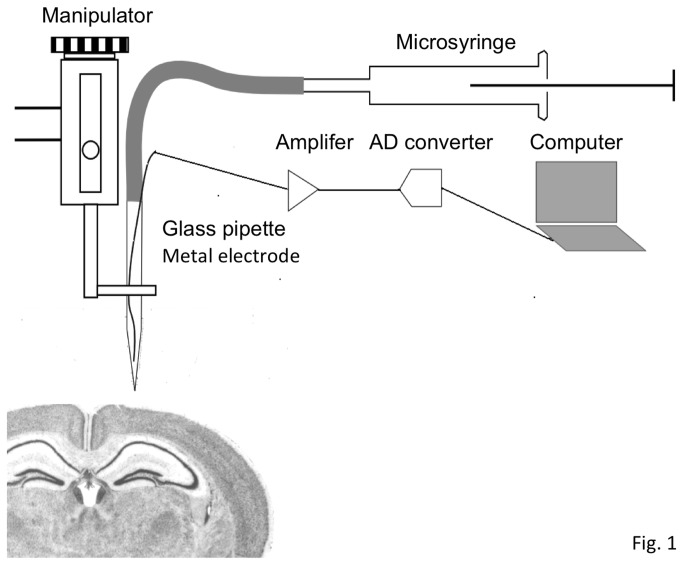
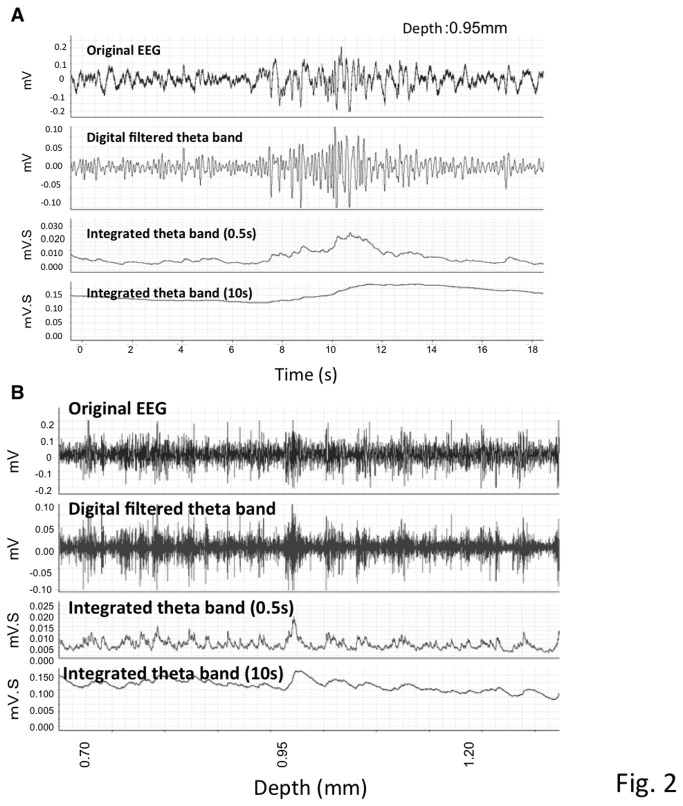
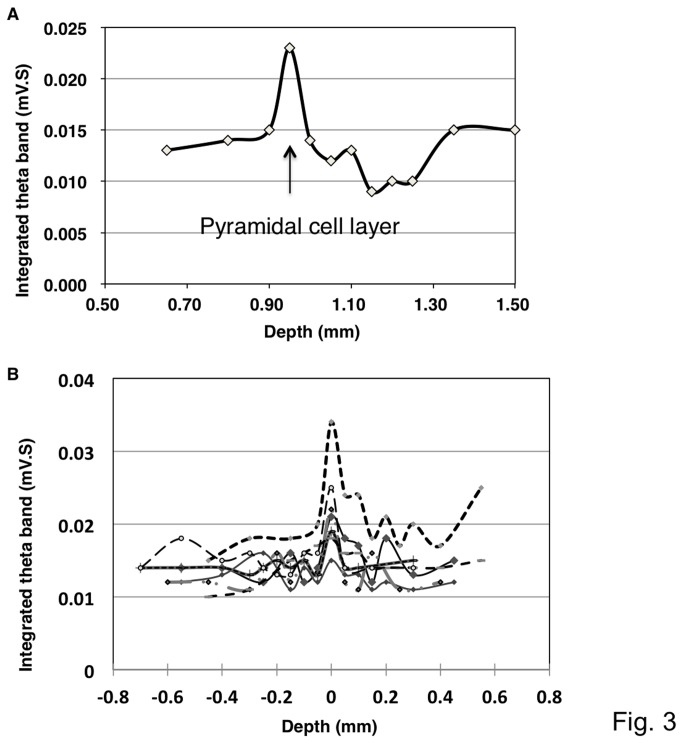
Methods of cell biology and electrophysiology using dissociated primary cultured neurons allow in vitro study of molecular functions; however, analysis of intact neuronal circuitry is often preferable. To investigate exogenous genes, viral vectors are most commonly injected using a pipette that is inserted from the top of the cortex. Although there are few reports that describe the success rate of injection in detail, it is sometimes difficult to locate the pipette tip accurately within the CA1 pyramidal cell layer because the pyramidal layer is only 0.1 mm thick. In the present study, we have developed a system to inject viral vectors accurately into the mouse hippocampal CA1 pyramidal cell layer using a stereotaxic injection system with simultaneous electrophysiological monitoring of theta oscillation. The pipette tip was positioned reliably based on integrated values of the theta oscillation in the hippocampal CA1 pyramidal cell layer. This approach allows accurate injection of solutions and provides an efficient method of gene transfer using viral vectors into the hippocampus, which can be a useful tool for studies involving the molecular mechanisms of neuronal functions.
使用原代培养的解离神经元的细胞生物学和电生理学方法能够在体外研究分子功能;然而,对完整神经回路进行分析通常更可取。为了研究外源基因,最常用的方法是用移液管从皮质顶部插入来注射病毒载体。尽管很少有报告详细描述注射成功率,但有时很难将移液管尖端精确地定位在CA1锥体细胞层内,因为锥体细胞层只有0.1毫米厚。在本研究中,我们开发了一种系统,利用立体定位注射系统并同时对θ振荡进行电生理监测,将病毒载体精确地注射到小鼠海马CA1锥体细胞层。基于海马CA1锥体细胞层中θ振荡的积分值,移液管尖端能够可靠地定位。这种方法能够精确注射溶液,并提供了一种使用病毒载体将基因高效导入海马体的方法,这对于涉及神经元功能分子机制的研究可能是一种有用的工具。