Division of Pediatric Neurology, Department of Pediatrics, Weill Cornell Medical College, New York, New York, United States of America ; Brain and Mind Institute, Weill Cornell Medical College, New York, New York, United States of America.
Department of Psychiatry, University of Iowa, Iowa City, Iowa, United States of America.
PLoS One. 2013 Dec 17;8(12):e84165. doi: 10.1371/journal.pone.0084165. eCollection 2013.
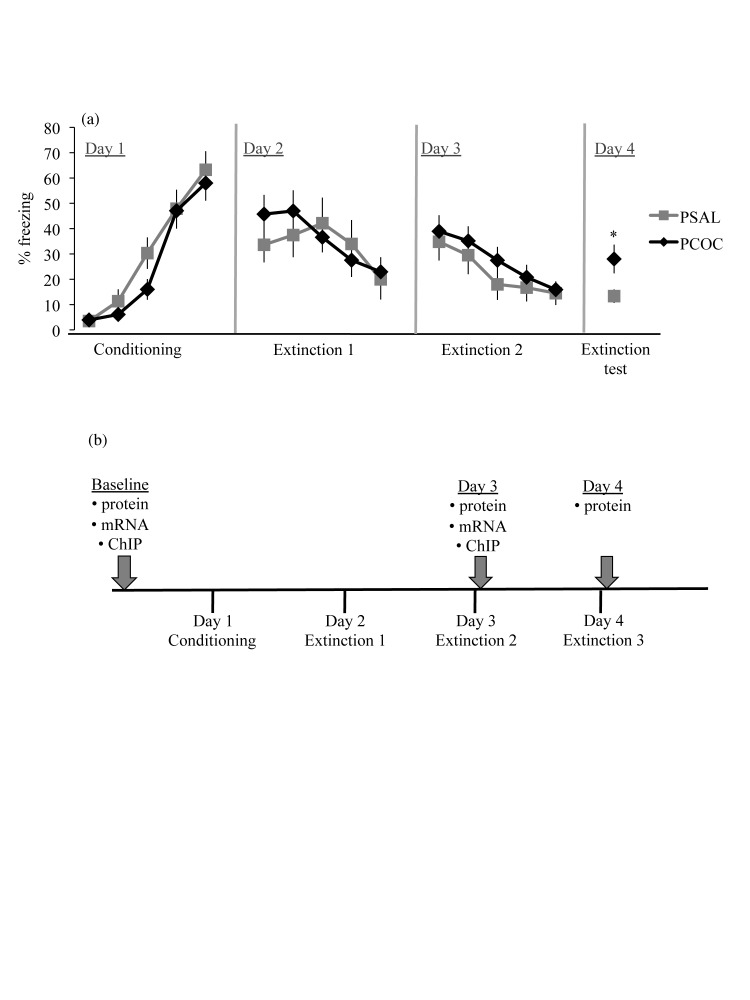
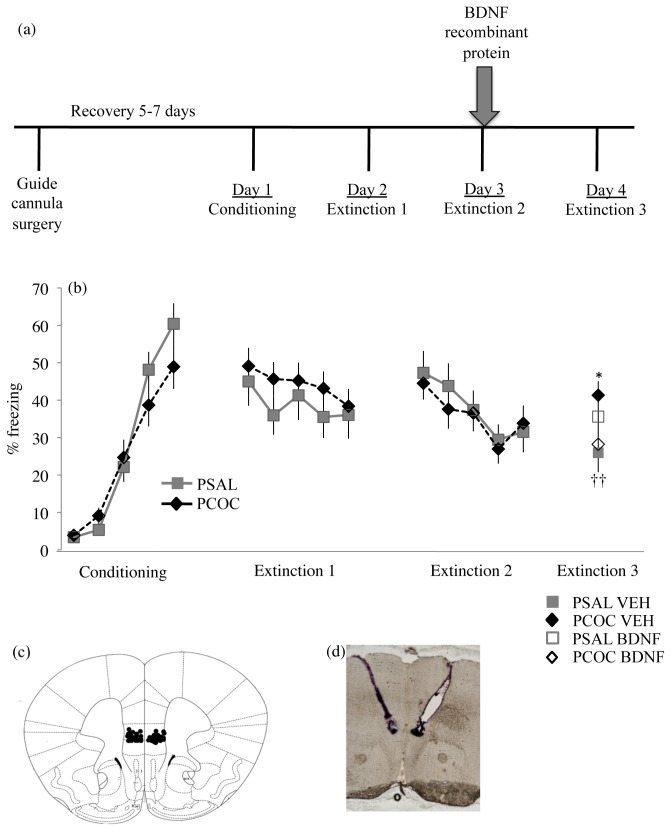
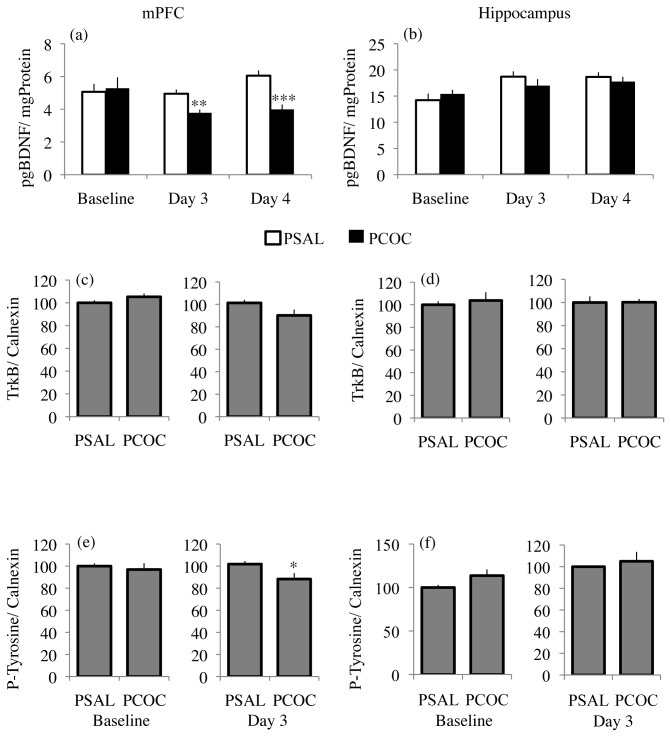
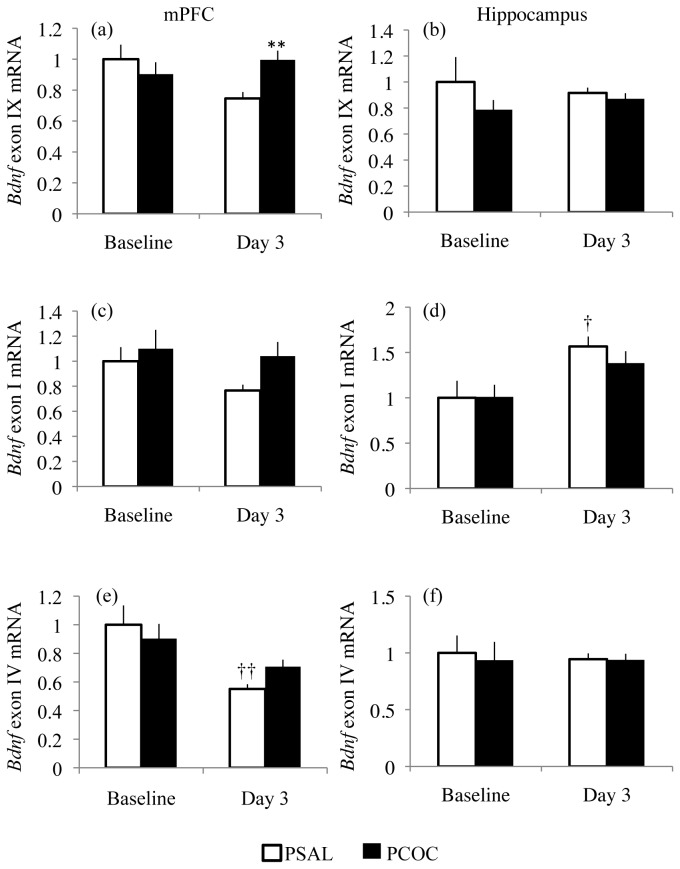
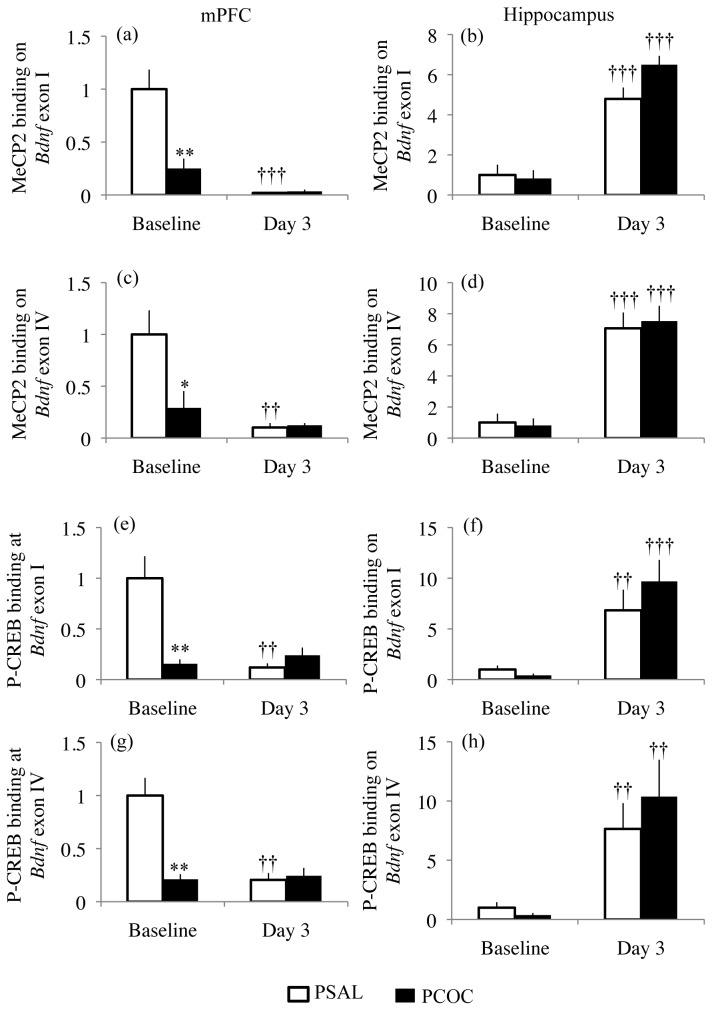
Prenatal cocaine exposure has been shown to alter cognitive processes of exposed individuals, presumed to be a result of long-lasting molecular alterations in the brain. In adult prenatal cocaine exposed (PCOC) mice we have identified a deficit in recall of fear extinction, a behavior that is dependent on the medial prefrontal cortex (mPFC) and the hippocampus. While we observed no change in the constitutive expression of brain derived neurotrophic factor (BDNF) protein and mRNA in the mPFC and hippocampus of adult PCOC mice, we observed blunted BDNF signaling in the mPFC of adult PCOC mice after fear extinction compared to the control animals. Specifically, during the consolidation phase of the extinction memory, we observed a decrease in BDNF protein and it's phospho-TrkB receptor expression. Interestingly, at this same time point there was a significant increase in total Bdnf mRNA levels in the mPFC of PCOC mice as compared with controls. In the Bdnf gene, we identified decreased constitutive binding of the transcription factors, MeCP2 and P-CREB at the promoters of Bdnf exons I and IV in the mPFC of PCOC mice, that unlike control mice remained unchanged when measured during the behavior. Finally, bilateral infusion of recombinant BDNF protein into the infralimbic subdivision of the mPFC during the consolidation phase of the extinction memory rescued the behavioral deficit in PCOC mice. In conclusion, these findings extend our knowledge of the neurobiologic impact of prenatal cocaine exposure on the mPFC of mice, which may lead to improved clinical recognition and treatment of exposed individuals.
产前可卡因暴露已被证明会改变暴露个体的认知过程,据推测这是大脑中持久的分子改变的结果。在成年产前可卡因暴露(PCOC)小鼠中,我们发现它们在恐惧消退的回忆中存在缺陷,这种行为依赖于内侧前额叶皮层(mPFC)和海马体。虽然我们没有观察到成年 PCOC 小鼠 mPFC 和海马体中脑源性神经营养因子(BDNF)蛋白和 mRNA 的组成型表达发生变化,但我们观察到成年 PCOC 小鼠在恐惧消退后,其 mPFC 中的 BDNF 信号减弱,与对照动物相比。具体来说,在消退记忆的巩固阶段,我们观察到 BDNF 蛋白及其磷酸化-TrkB 受体表达减少。有趣的是,在同一时间点,PCOC 小鼠 mPFC 中的总 Bdnf mRNA 水平与对照组相比显著增加。在 Bdnf 基因中,我们发现 PCOC 小鼠 mPFC 中 Bdnf 外显子 I 和 IV 启动子处的转录因子 MeCP2 和 P-CREB 的组成型结合减少,与对照组不同,在行为期间测量时,这些结合没有变化。最后,在消退记忆的巩固阶段,将重组 BDNF 蛋白双侧注入 mPFC 的下边缘分区,挽救了 PCOC 小鼠的行为缺陷。总之,这些发现扩展了我们对产前可卡因暴露对小鼠 mPFC 的神经生物学影响的认识,这可能导致对暴露个体的临床识别和治疗的改善。