Department of Pediatrics, Boston University School of Medicine, Boston Medical Center, 725 Massachusetts Avenue, Mezzanine SW, Boston, MA 02118, USA.
Neurotoxicol Teratol. 2011 Jan-Feb;33(1):100-9. doi: 10.1016/j.ntt.2010.06.002. Epub 2010 Jun 23.
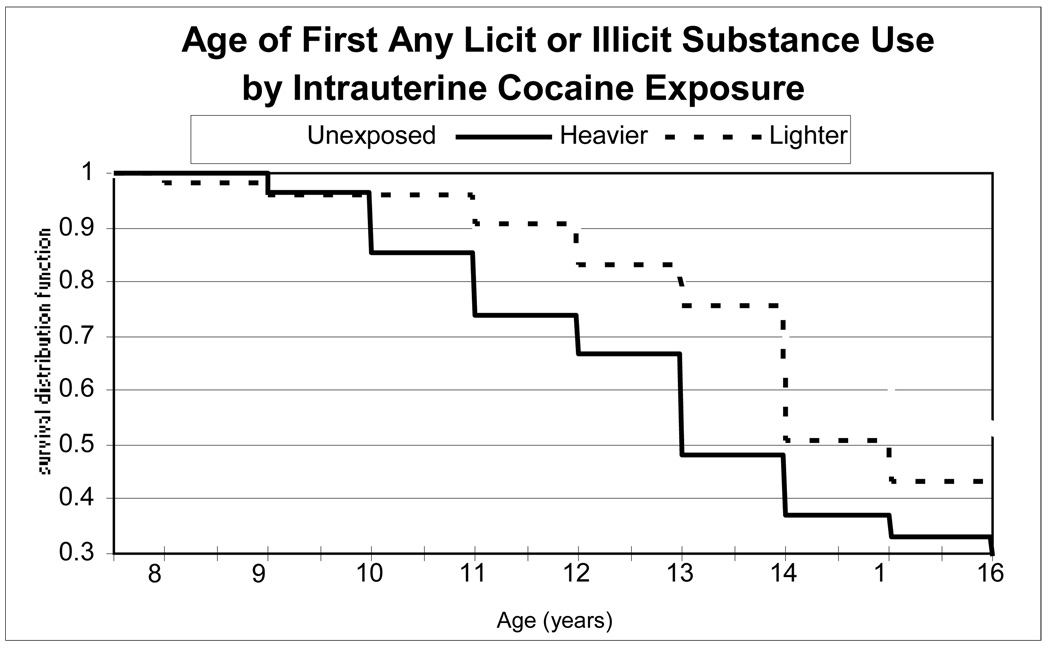
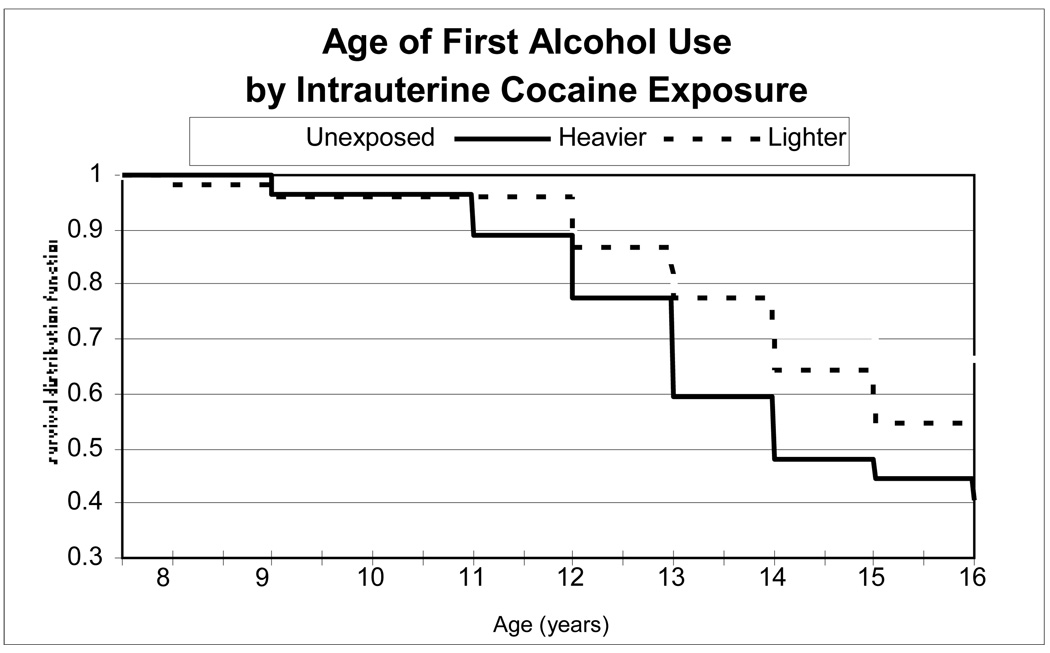
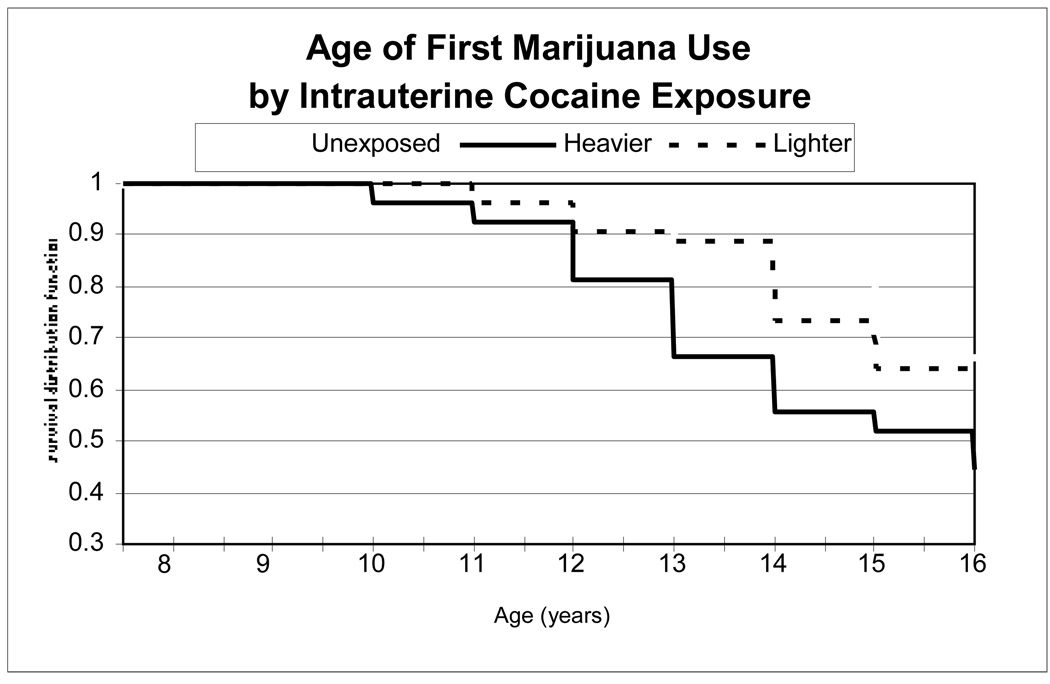
Whether intrauterine exposures to alcohol, tobacco, marijuana, or cocaine predispose offspring to substance use in adolescence has not been established. We followed a sample of 149 primarily African American/African Caribbean, urban adolescents, recruited at term birth, until age 16 to investigate intrauterine cocaine exposure (IUCE). We found that in Kaplan-Meier analyses higher levels of IUCE were associated with a greater likelihood of initiation of any substance (licit or illicit), as well as marijuana and alcohol specifically. Adolescent initiation of other illicit drugs and cigarettes were analyzed only in the "any" summary variable since they were used too infrequently to analyze as individual outcomes. In Cox proportional hazard models controlling for intrauterine exposure to alcohol, tobacco, and marijuana and demographic and post-natal covariates, those who experienced heavier IUCE had a greater likelihood of initiation of any substance, and those with lighter intrauterine marijuana exposure had a greater likelihood of initiation of any substance as well as of marijuana specifically. Time-dependent higher levels of exposure to violence between ages of 8 and 16 were also robustly associated with initiation of any licit or illicit substance, and of marijuana, and alcohol particularly.
尚未确定宫内暴露于酒精、烟草、大麻或可卡因是否会使后代在青春期更容易使用这些物质。我们跟踪了 149 名主要来自非裔美国/非裔加勒比地区的城市青少年,他们在足月出生时被招募,直到 16 岁,以调查宫内可卡因暴露(IUCE)。我们发现,在 Kaplan-Meier 分析中,较高水平的 IUCE 与更有可能开始使用任何物质(合法或非法)以及大麻和酒精有关。其他非法药物和香烟的青少年起始仅在“任何”综合变量中进行分析,因为它们使用频率太低,无法作为个体结果进行分析。在控制宫内暴露于酒精、烟草和大麻以及人口统计学和产后协变量的 Cox 比例风险模型中,那些经历较重 IUCE 的人更有可能开始使用任何物质,而那些宫内大麻暴露较轻的人更有可能开始使用任何物质,以及大麻特别。在 8 至 16 岁之间,与暴力相关的时间依赖性更高的暴露水平也与任何合法或非法物质的起始,以及大麻和酒精的起始特别相关。