Institute of Psychiatry, King's College London.
University of New South Wales.
J Abnorm Psychol. 2013 Nov;122(4):998-1009. doi: 10.1037/a0034957.
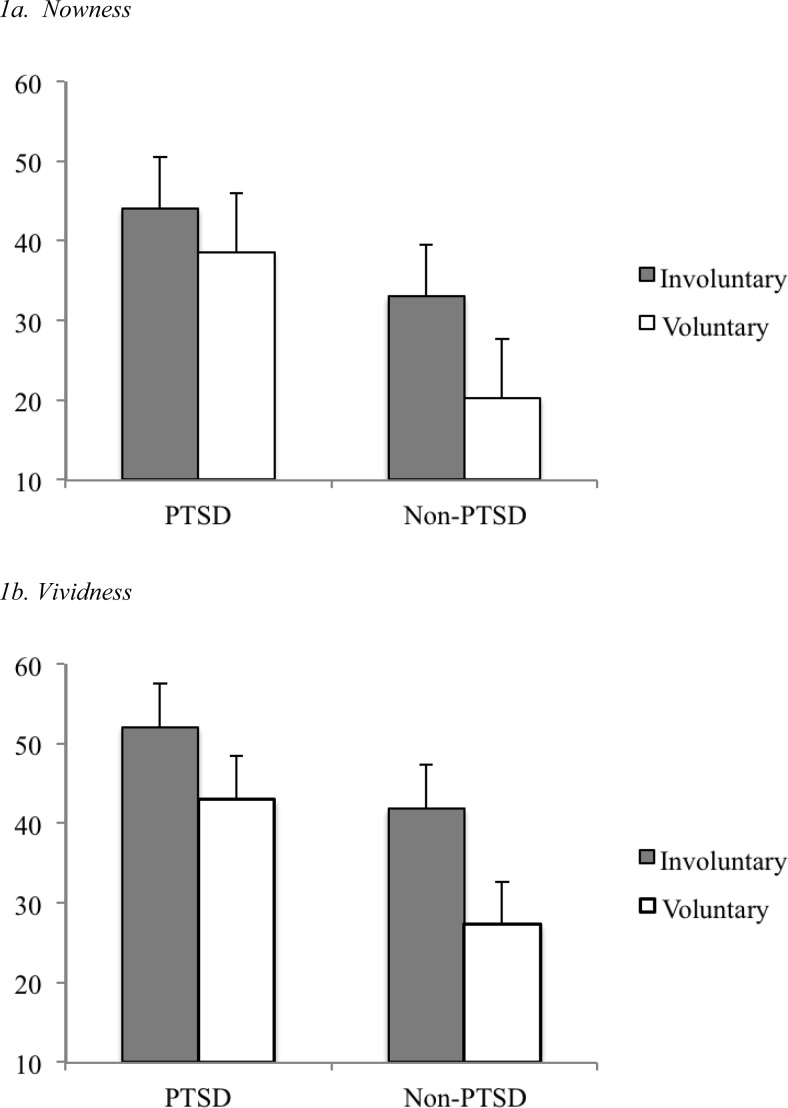
Intrusive memories are common following traumatic events and among the hallmark symptoms of posttraumatic stress disorder (PTSD). Most studies assess summarized accounts of intrusions retrospectively. We used an ecological momentary approach and index intrusive memories in trauma survivors with and without PTSD using electronic diaries. Forty-six trauma survivors completed daily diaries for 7 consecutive days recording a total of 294 intrusions. Participants with PTSD experienced only marginally more intrusions than those without PTSD, but experienced them with more "here and now quality," and responded with more fear, helplessness, anger, and shame than those without PTSD. Most frequent intrusion triggers were stimuli that were perceptually similar to stimuli from the trauma. Individuals with PTSD experienced diary-prompted voluntary trauma memories with the same sense of nowness and vividness as involuntary intrusive trauma memories. The findings contribute to a better understanding of everyday experiences of intrusive reexperiencing in trauma survivors with PTSD and offer clinical treatment implications.
侵入性记忆在创伤后事件后很常见,也是创伤后应激障碍(PTSD)的标志性症状之一。大多数研究都是回顾性地评估侵入性记忆的综合情况。我们使用生态瞬时评估法,通过电子日记,对 PTSD 和非 PTSD 创伤幸存者的侵入性记忆进行评估。46 名创伤幸存者连续 7 天每天完成日记记录,共记录了 294 次侵入。有 PTSD 的参与者经历的侵入性记忆只比没有 PTSD 的参与者稍多一些,但这些记忆具有更强的“此时此地”的感觉,他们的反应是更多的恐惧、无助、愤怒和羞耻,而不是没有 PTSD 的参与者。最常见的侵入性记忆触发因素是与创伤相关刺激在感知上相似的刺激。有 PTSD 的个体经历日记提示的自愿创伤记忆时,会有一种与非自愿侵入性创伤记忆相同的当下感和生动感。这些发现有助于更好地理解 PTSD 创伤幸存者的日常侵入性再体验体验,并为临床治疗提供了启示。