Das Mom, Vargas-Rodriguez Oscar, Goto Yuki, Suga Hiroaki, Musier-Forsyth Karin
Department of Chemistry and Biochemistry, The Ohio State University, Columbus, OH 43210, USA, Ohio State Biochemistry Program, The Ohio State University, Columbus, OH 43210, USA, Center for RNA Biology, The Ohio State University, Columbus, OH 43210, USA and Department of Chemistry, Graduate School of Science, The University of Tokyo, Bunkyo, Tokyo 113-0033, Japan.
Nucleic Acids Res. 2014 Apr;42(6):3943-53. doi: 10.1093/nar/gkt1332. Epub 2013 Dec 25.
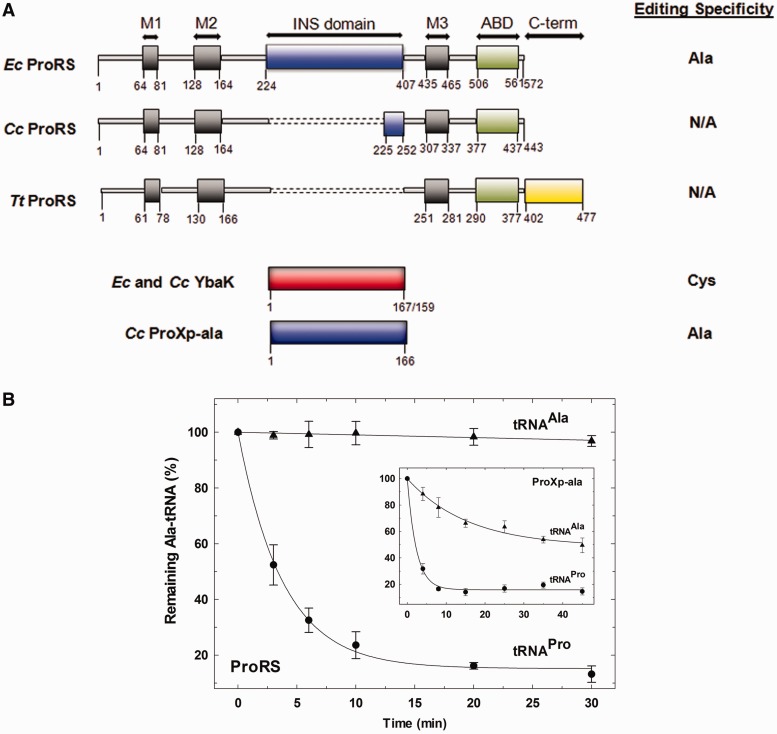
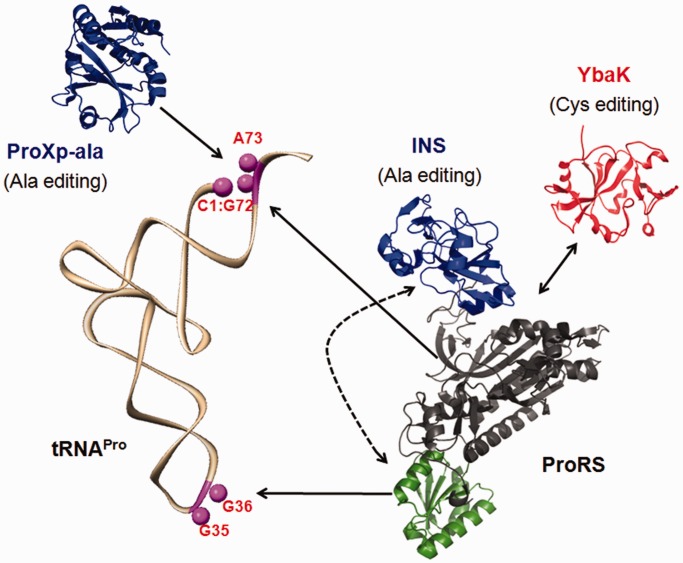
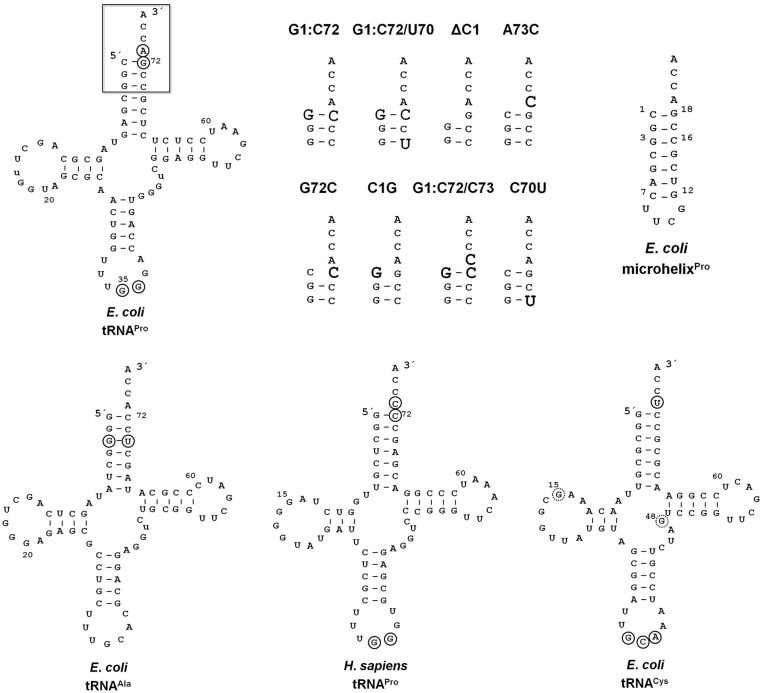
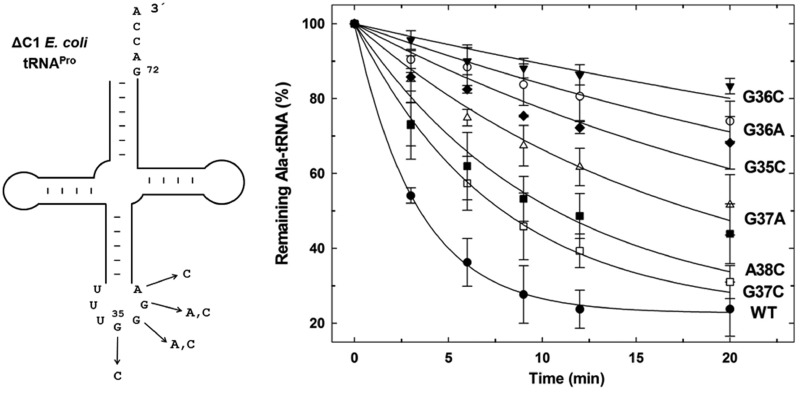
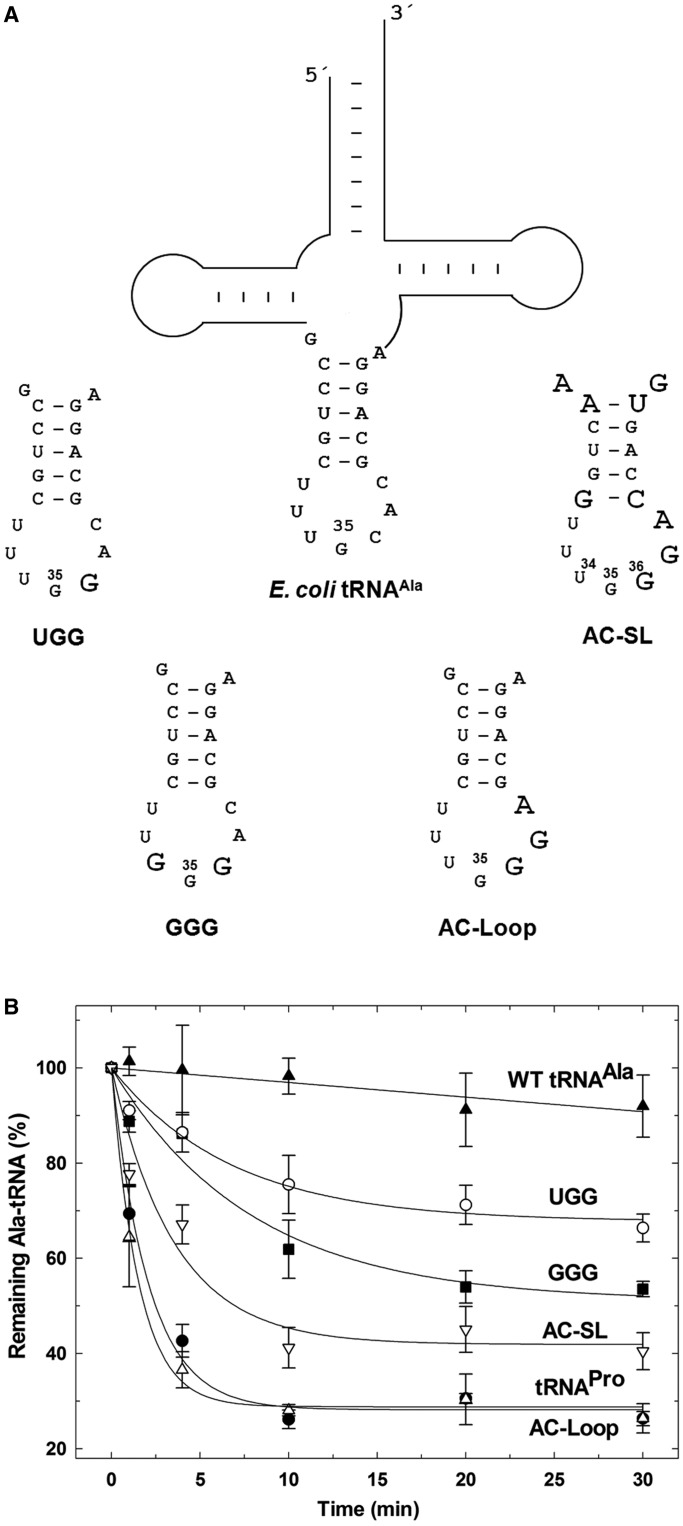
Errors in protein synthesis due to mispairing of amino acids with tRNAs jeopardize cell viability. Several checkpoints to prevent formation of Ala- and Cys-tRNA(Pro) have been described, including the Ala-specific editing domain (INS) of most bacterial prolyl-tRNA synthetases (ProRSs) and an autonomous single-domain INS homolog, YbaK, which clears Cys-tRNA(Pro) in trans. In many species where ProRS lacks an INS domain, ProXp-ala, another single-domain INS-like protein, is responsible for editing Ala-tRNA(Pro). Although the amino acid specificity of these editing domains has been established, the role of tRNA sequence elements in substrate selection has not been investigated in detail. Critical recognition elements for aminoacylation by bacterial ProRS include acceptor stem elements G72/A73 and anticodon bases G35/G36. Here, we show that ProXp-ala and INS require these same acceptor stem and anticodon elements, respectively, whereas YbaK lacks inherent tRNA specificity. Thus, these three related domains use divergent approaches to recognize tRNAs and prevent mistranslation. Whereas some editing domains have borrowed aspects of tRNA recognition from the parent aminoacyl-tRNA synthetase, relaxed tRNA specificity leading to semi-promiscuous editing may offer advantages to cells.
由于氨基酸与tRNA错配导致的蛋白质合成错误会危及细胞活力。已经描述了几种防止丙氨酸和半胱氨酸tRNA(Pro)形成的检查点,包括大多数细菌脯氨酰-tRNA合成酶(ProRS)的丙氨酸特异性编辑结构域(INS)和一种自主的单结构域INS同源物YbaK,它能反式清除半胱氨酸tRNA(Pro)。在许多ProRS缺乏INS结构域的物种中,另一种单结构域INS样蛋白ProXp-ala负责编辑丙氨酸tRNA(Pro)。尽管这些编辑结构域的氨基酸特异性已经确定,但tRNA序列元件在底物选择中的作用尚未得到详细研究。细菌ProRS进行氨酰化的关键识别元件包括受体茎元件G72/A73和反密码子碱基G35/G36。在这里,我们表明ProXp-ala和INS分别需要这些相同的受体茎和反密码子元件,而YbaK缺乏固有的tRNA特异性。因此,这三个相关结构域使用不同的方法来识别tRNA并防止错误翻译。虽然一些编辑结构域从亲本氨酰-tRNA合成酶那里借用了tRNA识别的方面,但导致半混杂编辑的宽松tRNA特异性可能对细胞具有优势。