Institute of Medical Biology, ASTAR, Singapore.
Bioprocessing Technology Institute, ASTAR, Singapore.
J Extracell Vesicles. 2013 Dec 23;2. doi: 10.3402/jev.v2i0.22614. eCollection 2013.
Mesenchymal stem cell (MSC) was previously shown to secrete lipid vesicles that when purified by high performance liquid chromatography as a population of homogenously sized particles with a hydrodynamic radius of 55-65 nm reduce infarct size in a mouse model of myocardial ischemia/reperfusion injury. As these vesicles exhibit many biophysical and biochemical properties of exosomes, they were identified as exosomes. Here we investigated if these lipid vesicles were indeed exosomes that have an endosomal biogenesis.
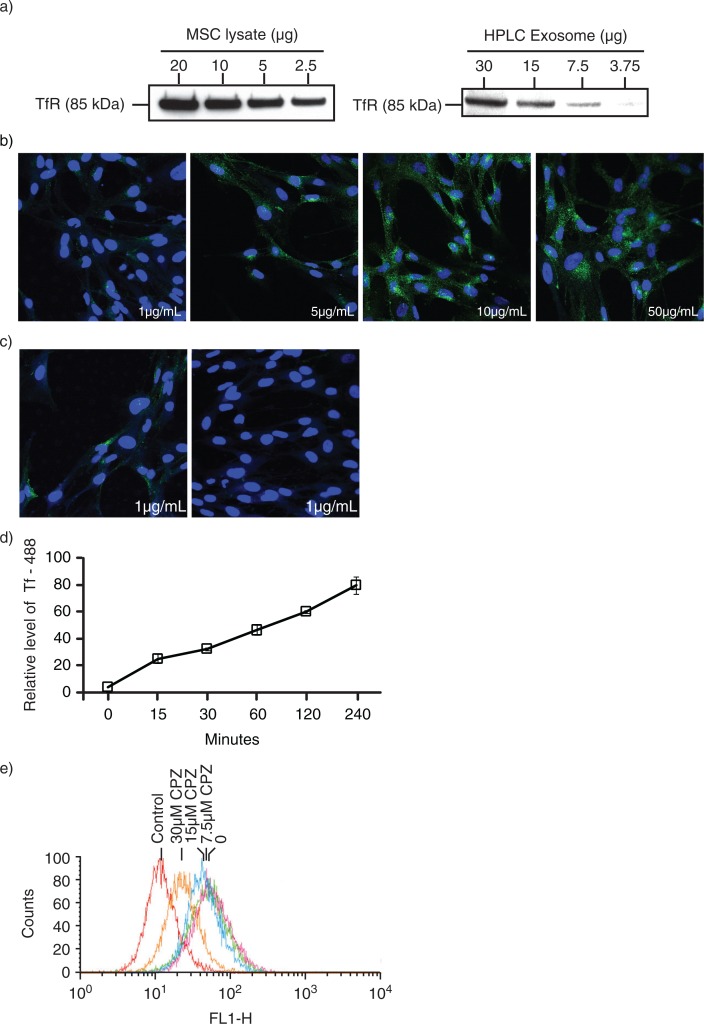
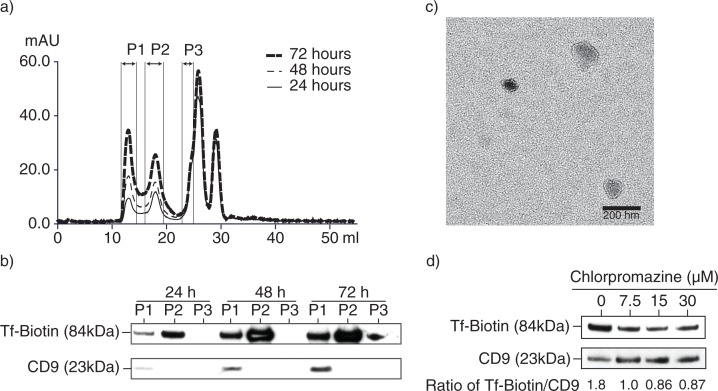
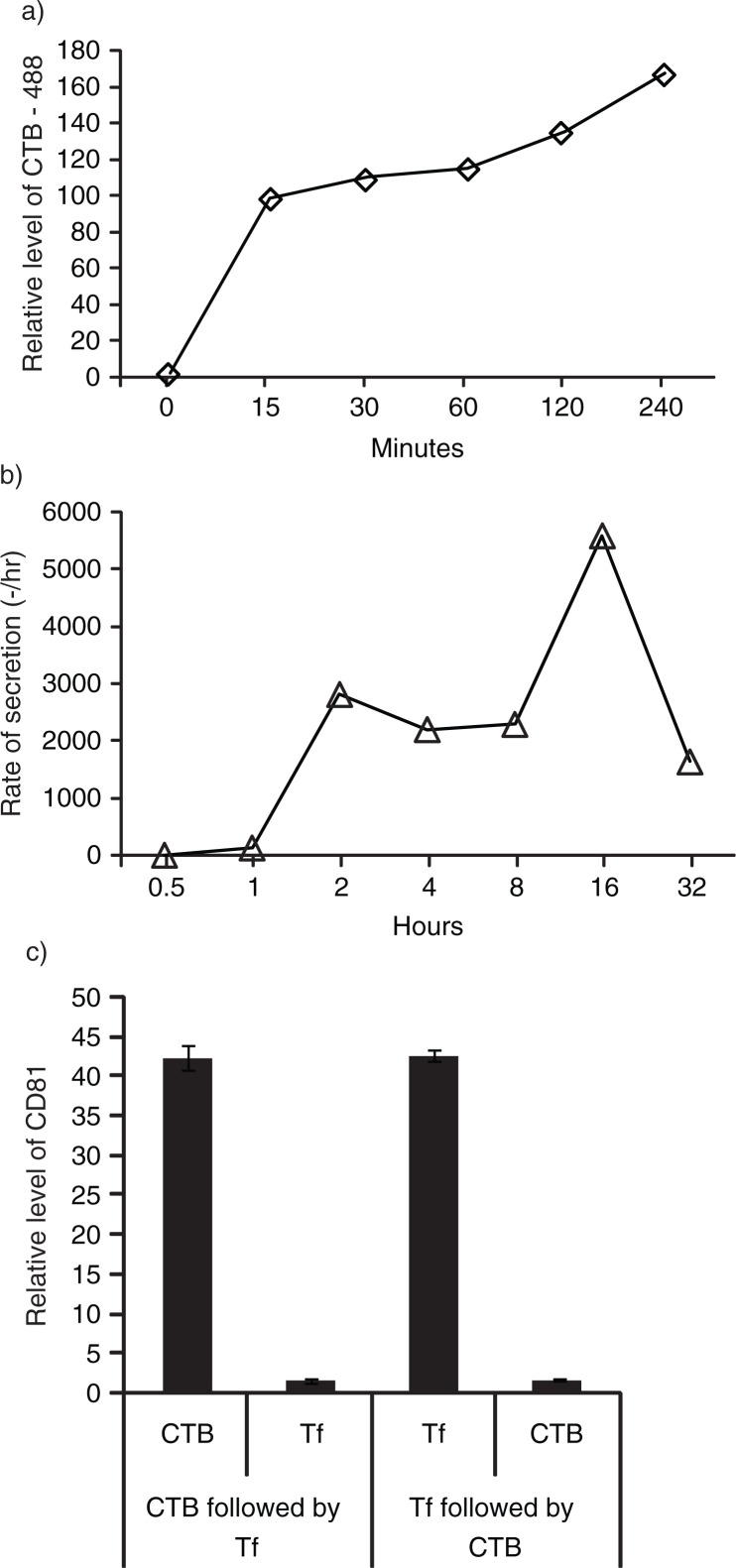
In most cells, endocytosis is thought to occur at specialized microdomains known as lipid rafts. To demonstrate an endosomal origin for MSC exosomes, MSCs were pulsed with ligands e.g. transferrin (Tfs) and Cholera Toxin B (CTB) that bind receptors in lipid rafts. The endocytosed ligands were then chased to determine if they were incorporated into the exosomes.
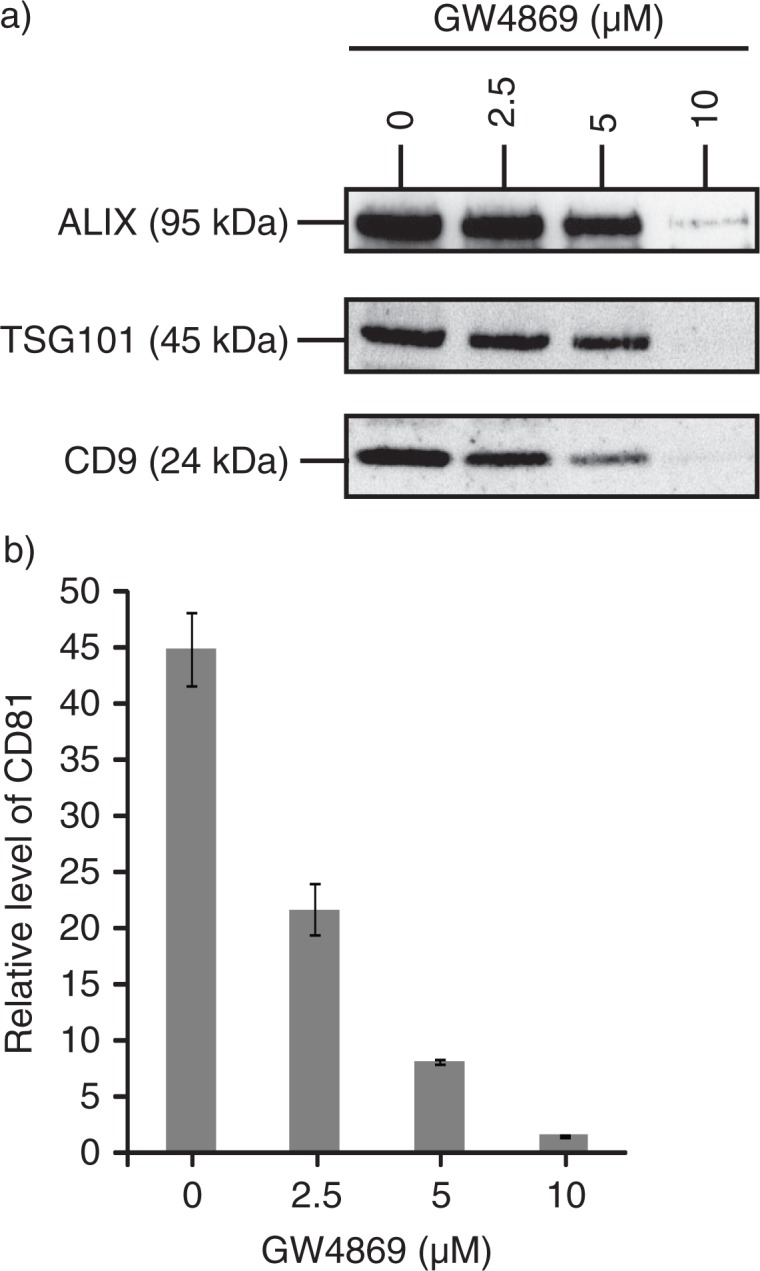
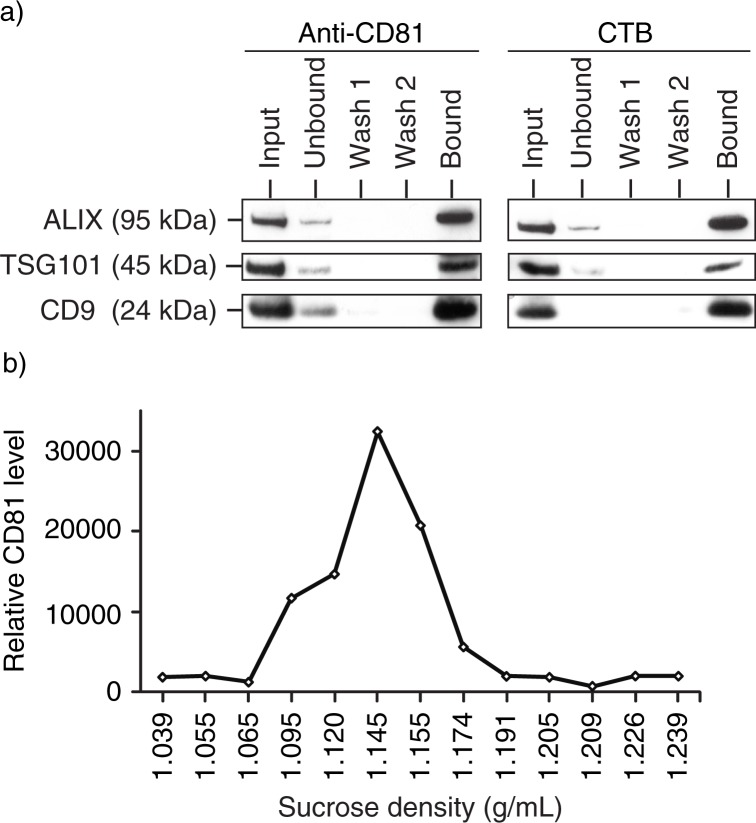
A fraction of exogenous Tfs was found to recycle into MSC exosomes. When MSCs were pulsed with labelled Tfs in the presence of chlorpromazine, an inhibitor of clathrin-mediated endocytosis, Tf incorporation in CD81-immunoprecipitate was reduced during the chase. CTB which binds GM1 gangliosides that are enriched in lipid rafts extracted exosome-associated proteins, CD81, CD9, Alix and Tsg101 from MSC-conditioned medium. Exogenous CTBs were pulse-chased into secreted vesicles. Extraction of Tf- or CTB-binding vesicles in an exosome preparation mutually depleted each other. Inhibition of sphingomyelinases reduced CTB-binding vesicles.
Together, our data demonstrated that MSC exosomes are derived from endocytosed lipid rafts and that their protein cargo includes exosome-associated proteins CD81, CD9, Alix and Tsg101.
间充质干细胞 (MSC) 先前被证明分泌脂质囊泡,当通过高效液相色谱法纯化时,这些囊泡作为具有 55-65nm 水动力半径的均一大小颗粒的群体存在,可减少心肌缺血/再灌注损伤小鼠模型中的梗死面积。由于这些囊泡表现出许多外体的生物物理和生化特性,因此被鉴定为外体。在这里,我们研究了这些脂质囊泡是否确实是具有内体发生的外体。
在大多数细胞中,内吞作用被认为发生在称为脂筏的特化微域中。为了证明 MSC 外体的内体起源,将配体(例如转铁蛋白 (Tfs) 和霍乱毒素 B (CTB))脉冲到 MSCs 中,这些配体与脂筏中的受体结合。然后追踪内吞的配体,以确定它们是否被纳入外体中。
发现一部分外源性 Tfs 被发现可再循环到 MSC 外体中。当 MSCs 在氯丙嗪存在下用标记的 Tfs 脉冲时,在追踪过程中 CD81-免疫沉淀中的 Tf 掺入减少。CTB 结合富含脂筏的 GM1 神经节苷脂,从 MSC 条件培养基中提取外体相关蛋白 CD81、CD9、Alix 和 Tsg101。外源性 CTB 被脉冲追踪到分泌的囊泡中。在外体制剂中提取 Tf 或 CTB 结合囊泡彼此耗尽。鞘磷脂酶的抑制减少了 CTB 结合囊泡。
总之,我们的数据表明 MSC 外体源自内吞的脂筏,其蛋白质货物包括外体相关蛋白 CD81、CD9、Alix 和 Tsg101。