A*STAR Institute of Medical Biology, Singapore.
A*STAR Bioprocessing Technology Institute, Singapore.
J Extracell Vesicles. 2016 Feb 24;5:29828. doi: 10.3402/jev.v5.29828. eCollection 2016.
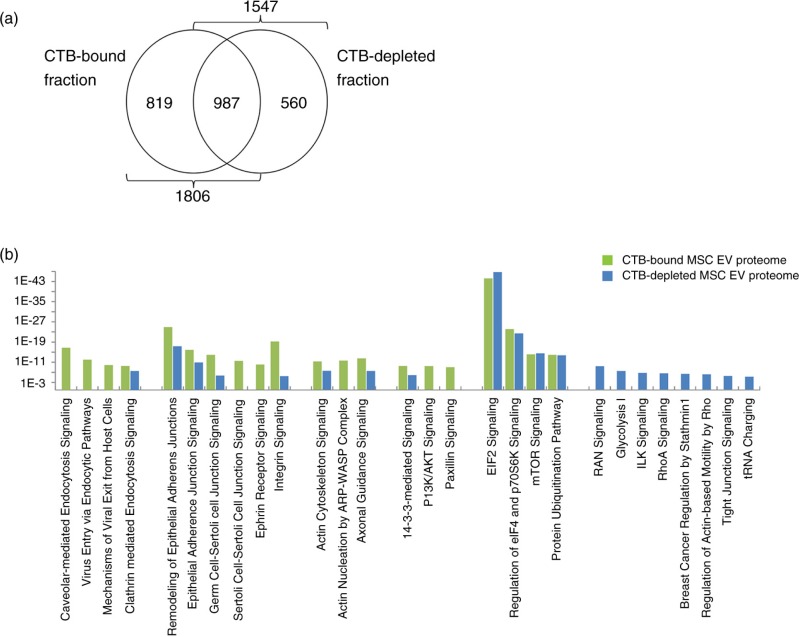
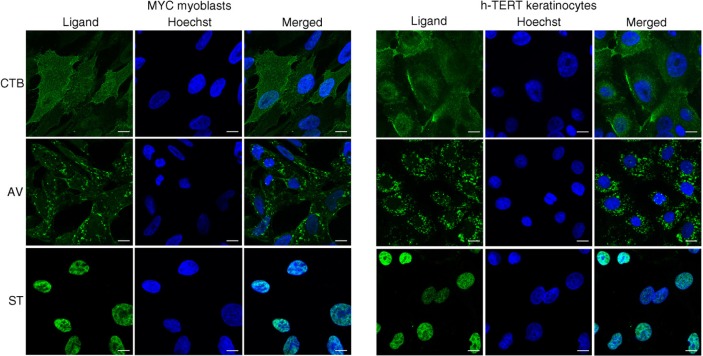
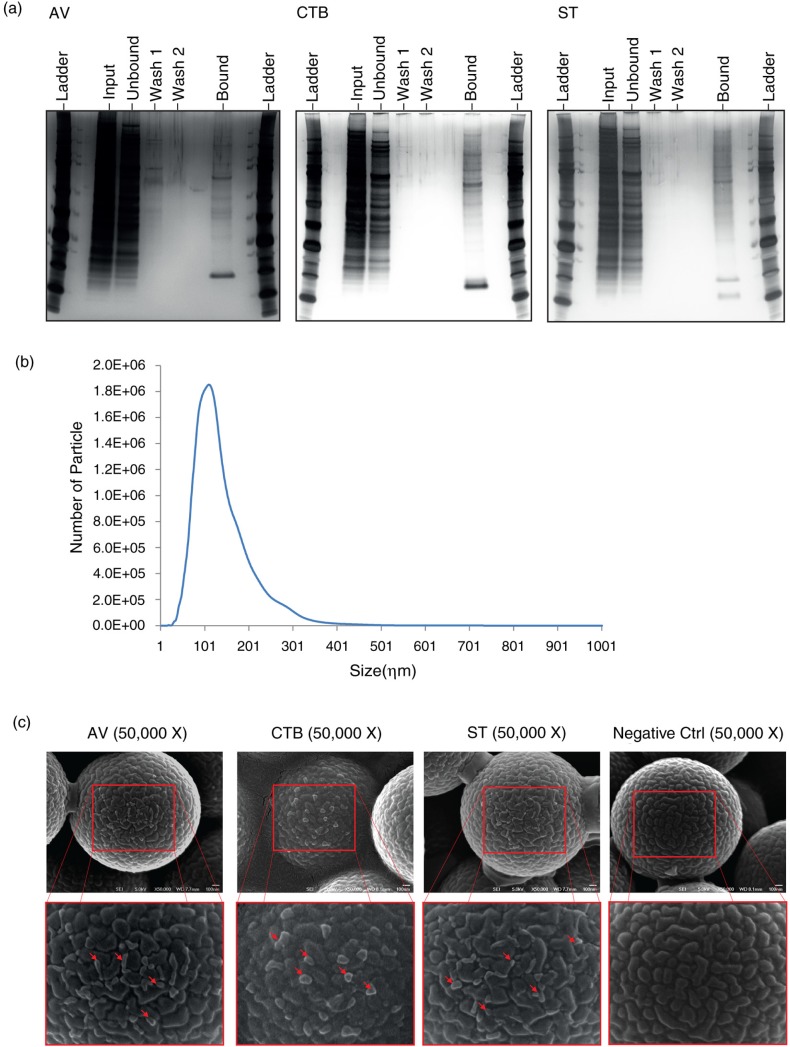
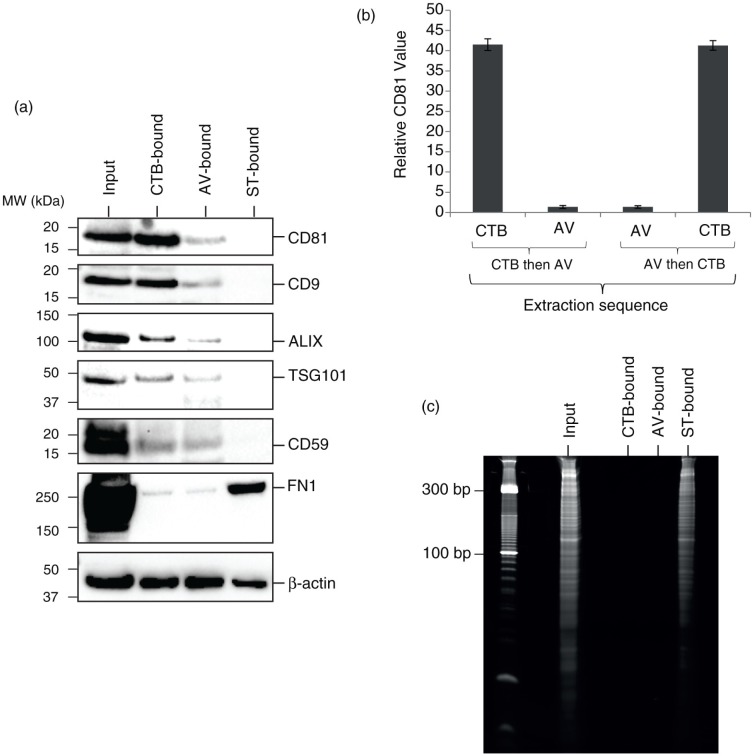
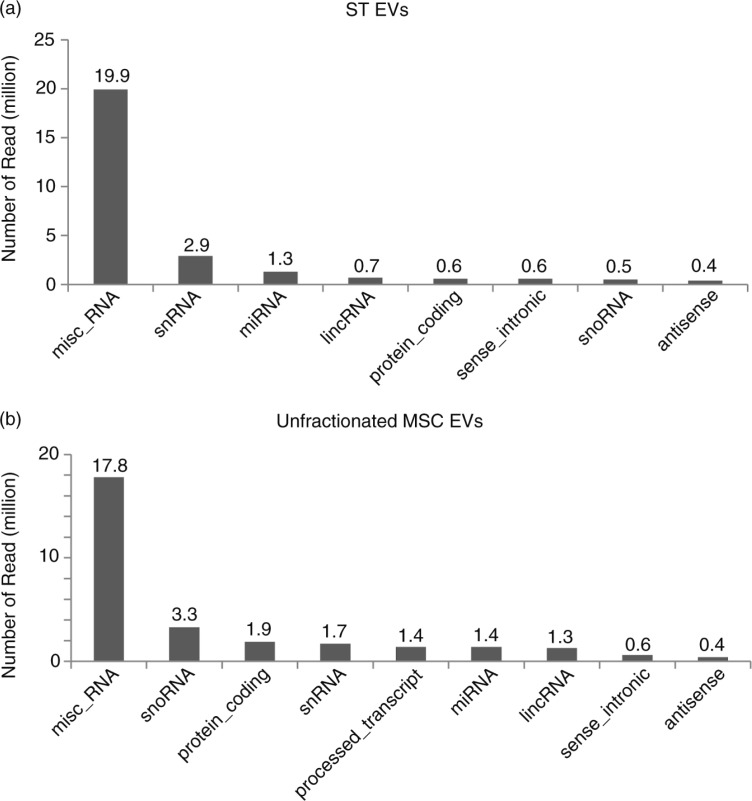
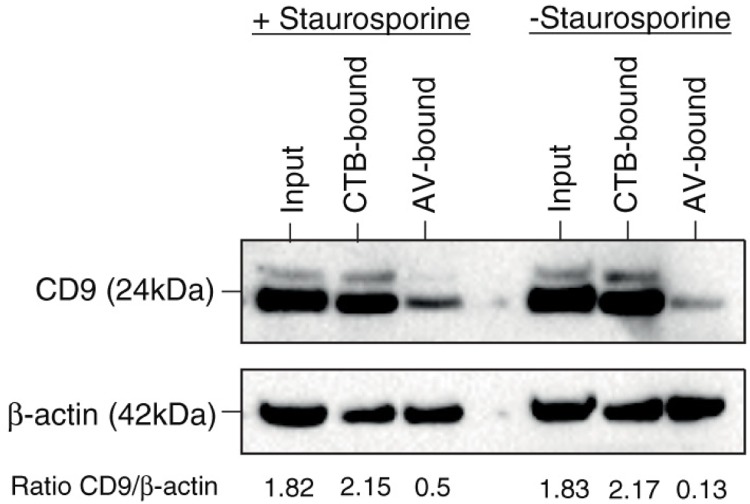
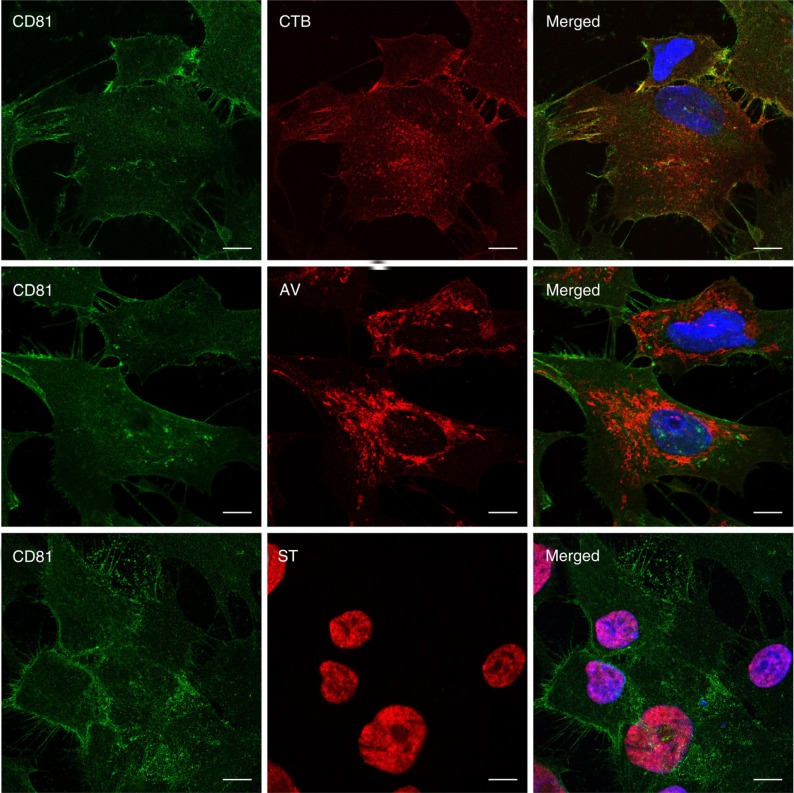
Mesenchymal stem cell (MSC), a widely used adult stem cell candidate for regenerative medicine, has been shown to exert some of its therapeutic effects through the secretion of extracellular vesicles (EVs). These homogenously sized EVs of 100-150 ηm exhibited many exosome-like biophysical and biochemical properties and carry both proteins and RNAs. Recently, exosome-associated proteins in this MSC EV preparation were found to segregate primarily to those EVs that bind cholera toxin B chain (CTB), a GM1 ganglioside-specific ligand, and pulse-chase experiments demonstrated that these EVs have endosomal origin and carried many of the exosome-associated markers. Here, we report that only a fraction of the MSC EV proteome was found in CTB-bound EVs. Using Annexin V (AV) and Shiga toxin B subunit (ST) with affinities for phosphatidylserine and globotriaosylceramide, respectively, AV- and a ST-binding EV were identified. CTB-, AV- and ST-binding EVs all carried actin. However, the AV-binding EVs carried low or undetectable levels of the exosome-associated proteins. Only the ST-binding EVs carried RNA and EDA-containing fibronectin. Proteins in AV-binding EVs were also different from those released by apoptotic MSCs. CTB- and AV-binding activities were localized to the plasma membrane and cytoplasm of MSCs, while ST-binding activity was localized to the nucleus. Together, this study demonstrates that cells secrete many types of EVs. Specifically, MSCs secrete at least 3 types. They can be differentially isolated based on their affinities for membrane lipid-binding ligands. As the subcellular sites of the binding activities of these ligands and cargo load are different for each EV type, they are likely to have a different biogenesis pathway and possibly different functions.
间充质干细胞(MSC)是一种广泛应用于再生医学的成人干细胞候选物,已被证明通过细胞外囊泡(EVs)的分泌发挥其部分治疗作用。这些 100-150 ηm 大小均一的 EV 表现出许多类似外泌体的生物物理和生化特性,并携带蛋白质和 RNA。最近,在这种 MSC EV 制剂中发现,外泌体相关蛋白主要分离到那些与霍乱毒素 B 链(CTB)结合的 EV 中,CTB 是 GM1 神经节苷脂的特异性配体,脉冲追踪实验表明这些 EV 具有内体起源,并携带许多外泌体相关标记物。在这里,我们报告仅在 CTB 结合的 EV 中发现了 MSC EV 蛋白质组的一部分。使用对磷脂酰丝氨酸和Globotriaosylceramide 具有亲和力的 Annexin V(AV)和 Shiga 毒素 B 亚基(ST),鉴定了 AV 和 ST 结合的 EV。CTB-、AV-和 ST 结合的 EV 均携带肌动蛋白。然而,AV 结合的 EV 携带的外泌体相关蛋白水平较低或无法检测到。只有 ST 结合的 EV 携带 RNA 和含有 EDA 的纤维连接蛋白。AV 结合的 EV 中的蛋白质也与凋亡 MSC 释放的蛋白质不同。CTB-和 AV 结合活性定位于 MSC 的质膜和细胞质,而 ST 结合活性定位于细胞核。总之,这项研究表明细胞分泌多种类型的 EV。具体而言,MSC 至少分泌 3 种类型。它们可以根据其对膜脂质结合配体的亲和力进行差异分离。由于这些配体和货物负载的结合活性的亚细胞位点对于每种 EV 类型都不同,因此它们可能具有不同的生物发生途径和可能不同的功能。