Benavides Damm Tatiana, Walther Isabelle, Wüest Simon L, Sekler Jörg, Egli Marcel
CC Aerospace Biomedical Science & Technology, Space Biology Group, Lucerne University of Applied Sciences and Arts (HSLU), Hergiswil, Nidwalden, Switzerland; Institute for Biomechanics, Eidgenössische Technische Hochschule Zürich (ETHZ), Zürich, Switzerland.
Biotechnol Bioeng. 2014 Jun;111(6):1180-90. doi: 10.1002/bit.25179. Epub 2014 Jan 22.
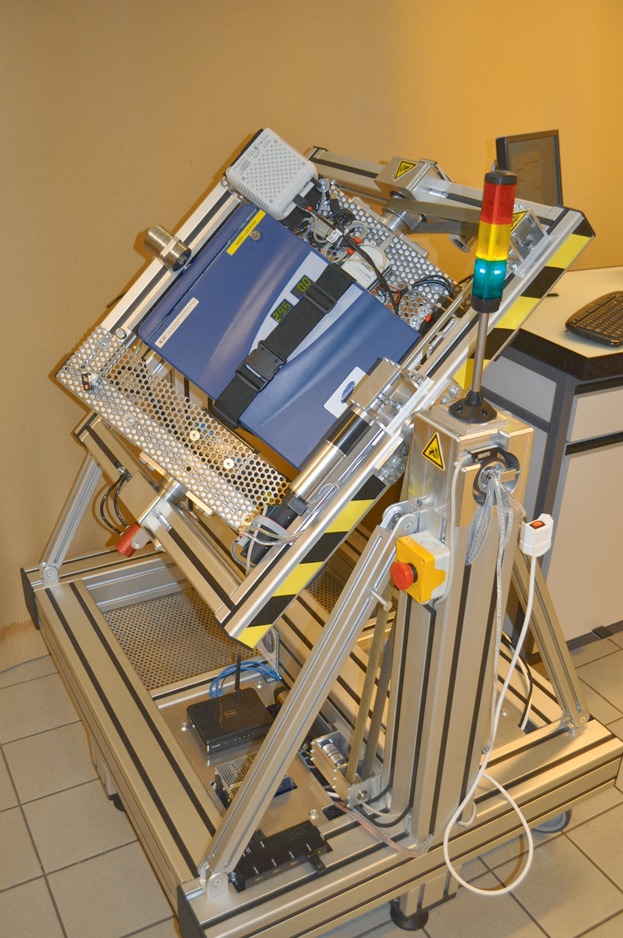
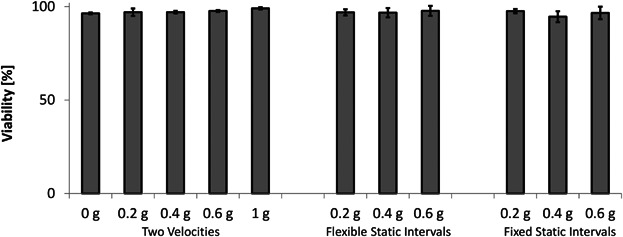
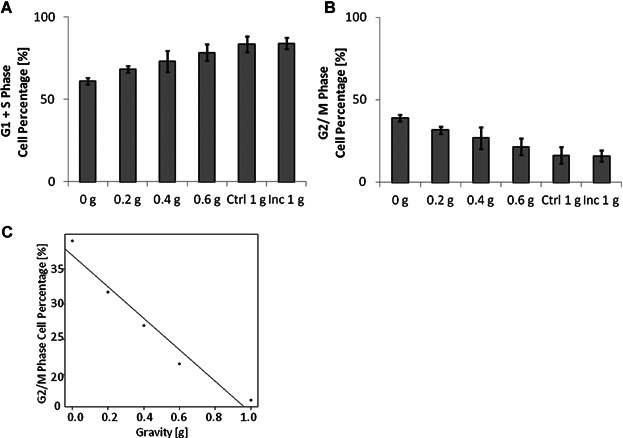
Important in biotechnology is the establishment of cell culture methods that reflect the in vivo situation accurately. One approach for reaching this goal is through 3D cell cultivation that mimics tissue or organ structures and functions. We present here a newly designed and constructed random positioning incubator (RPI) that enables 3D cell culture in simulated microgravity (0 g). In addition to growing cells in a weightlessness-like environment, our RPI enables long-duration cell cultivation under various gravitational loads, ranging from close to 0 g to almost 1 g. This allows the study of the mechanotransductional process of cells involved in the conversion of physical forces to an appropriate biochemical response. Gravity is a type of physical force with profound developmental implications in cellular systems as it modulates the resulting signaling cascades as a consequence of mechanical loading. The experiments presented here were conducted on mouse skeletal myoblasts and human lymphocytes, two types of cells that have been shown in the past to be particularly sensitive to changes in gravity. Our novel RPI will expand the horizon at which mechanobiological experiments are conducted. The scientific data gathered may not only improve the sustainment of human life in space, but also lead to the design of alternative countermeasures against diseases related to impaired mechanosensation and downstream signaling processes on earth.
在生物技术领域,建立能够准确反映体内情况的细胞培养方法至关重要。实现这一目标的一种方法是通过三维细胞培养,这种培养方式能够模拟组织或器官的结构与功能。我们在此展示一种新设计并构建的随机定位培养箱(RPI),它能够在模拟微重力(0g)条件下进行三维细胞培养。除了能在类似失重的环境中培养细胞外,我们的RPI还能在从接近0g到几乎1g的各种重力负荷下进行长时间细胞培养。这使得对参与将物理力转化为适当生化反应的细胞机械转导过程的研究成为可能。重力是一种对细胞系统发育具有深远影响的物理力,因为它会因机械负荷而调节由此产生的信号级联反应。这里展示的实验是在小鼠骨骼肌成肌细胞和人类淋巴细胞上进行的,过去已证明这两种细胞类型对重力变化特别敏感。我们新颖的RPI将拓展机械生物学实验的视野。所收集的科学数据不仅可能改善人类在太空中的生存保障,还可能促使设计出针对地球上与机械感觉受损及下游信号传导过程相关疾病的替代对策。