Education and Brain Sciences Research Lab, Peabody College of Education and Human Development, Vanderbilt University Nashville, TN, USA.
Department of Psychology and Neuroscience, Regis University Denver, CO, USA.
Front Hum Neurosci. 2013 Dec 12;7:853. doi: 10.3389/fnhum.2013.00853. eCollection 2013.
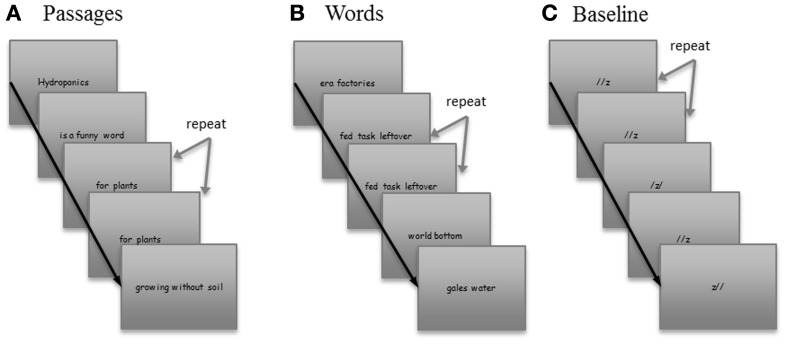
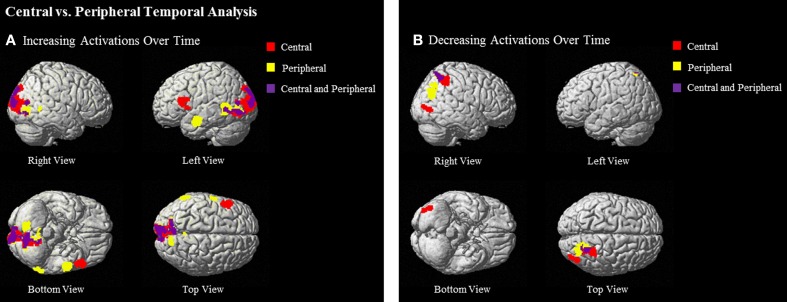
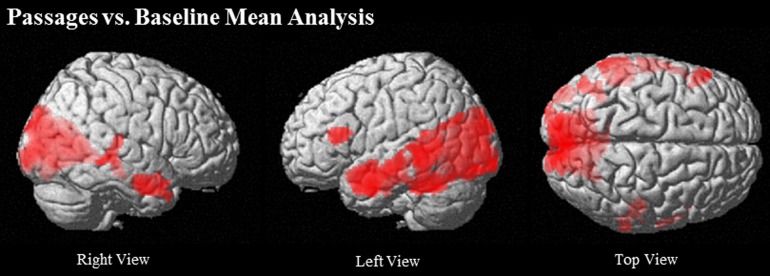
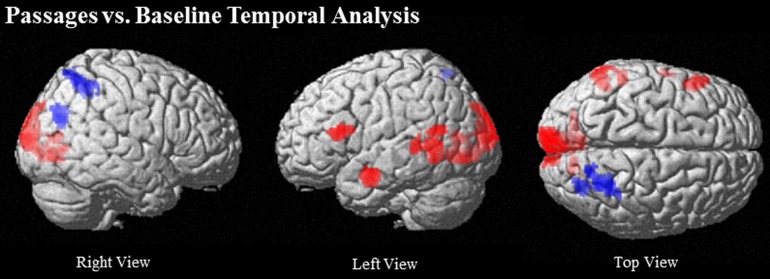
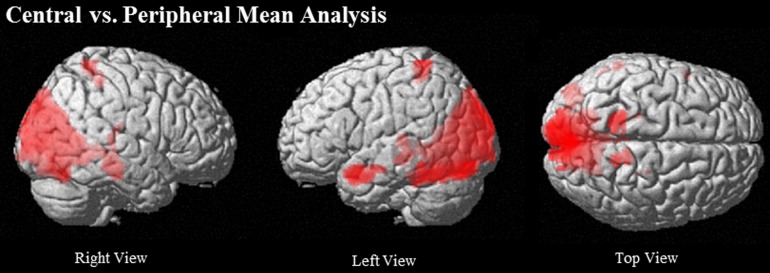
Little is known about the neural correlates of expository text comprehension. In this study, we sought to identify neural networks underlying expository text comprehension, how those networks change over the course of comprehension, and whether information central to the overall meaning of the text is functionally distinct from peripheral information. Seventeen adult subjects read expository passages while being scanned using functional magnetic resonance imaging (fMRI). By convolving phrase onsets with the hemodynamic response function (HRF), we were able to identify regions that increase and decrease in activation over the course of passage comprehension. We found that expository text comprehension relies on the co-activation of the semantic control network and regions in the posterior midline previously associated with mental model updating and integration [posterior cingulate cortex (PCC) and precuneus (PCU)]. When compared to single word comprehension, left PCC and left Angular Gyrus (AG) were activated only for discourse-level comprehension. Over the course of comprehension, reliance on the same regions in the semantic control network increased, while a parietal region associated with attention [intraparietal sulcus (IPS)] decreased. These results parallel previous findings in narrative comprehension that the initial stages of mental model building require greater visuospatial attention processes, while maintenance of the model increasingly relies on semantic integration regions. Additionally, we used an event-related analysis to examine phrases central to the text's overall meaning vs. peripheral phrases. It was found that central ideas are functionally distinct from peripheral ideas, showing greater activation in the PCC and PCU, while over the course of passage comprehension, central and peripheral ideas increasingly recruit different parts of the semantic control network. The finding that central information elicits greater response in mental model updating regions than peripheral ideas supports previous behavioral models on the cognitive importance of distinguishing textual centrality.
关于说明文阅读理解的神经关联,我们知之甚少。在这项研究中,我们试图确定说明文阅读理解的神经网络,这些网络在理解过程中如何变化,以及文本整体意义的核心信息与外围信息在功能上是否不同。17 名成年被试在阅读说明文的同时接受功能磁共振成像(fMRI)扫描。通过将短语起始与血流动力学响应函数(HRF)卷积,我们能够识别在篇章理解过程中激活增加和减少的区域。我们发现,说明文理解依赖于语义控制网络和先前与心理模型更新和整合相关的后中线区域(后扣带回皮层(PCC)和楔前叶(PCU))的共同激活。与单个单词理解相比,左 PCC 和左角回(AG)仅在话语水平理解时被激活。在理解过程中,对语义控制网络中相同区域的依赖增加,而与注意力相关的顶叶区域(顶内沟(IPS))减少。这些结果与之前关于叙事理解的发现一致,即心理模型构建的初始阶段需要更多的空间视觉注意过程,而模型的维持越来越依赖于语义整合区域。此外,我们使用事件相关分析来检查文本整体意义的短语与外围短语。结果发现,核心思想在功能上与外围思想不同,在 PCC 和 PCU 中显示出更大的激活,而在篇章理解过程中,核心思想和外围思想越来越多地招募语义控制网络的不同部分。核心信息比外围思想在心理模型更新区域引起更大反应的发现支持了先前关于区分文本中心性的认知重要性的行为模型。