Institute of Cognitive Science, University of Colorado Boulder Boulder, CO, USA.
Department of Psychology and Neuroscience, University of Colorado Boulder Boulder, CO, USA.
Front Psychol. 2013 Nov 29;4:900. doi: 10.3389/fpsyg.2013.00900. eCollection 2013.
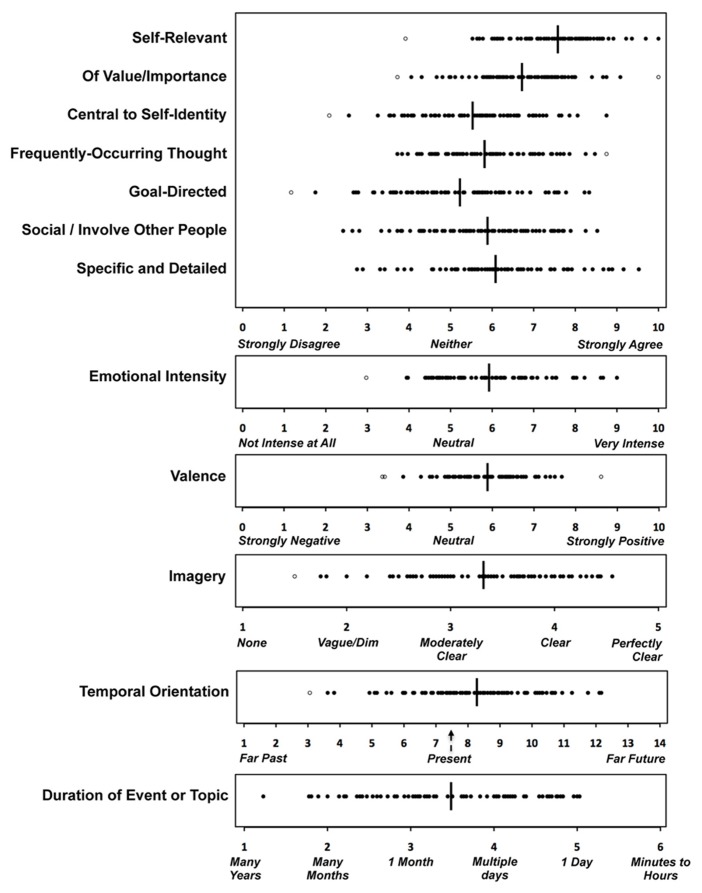
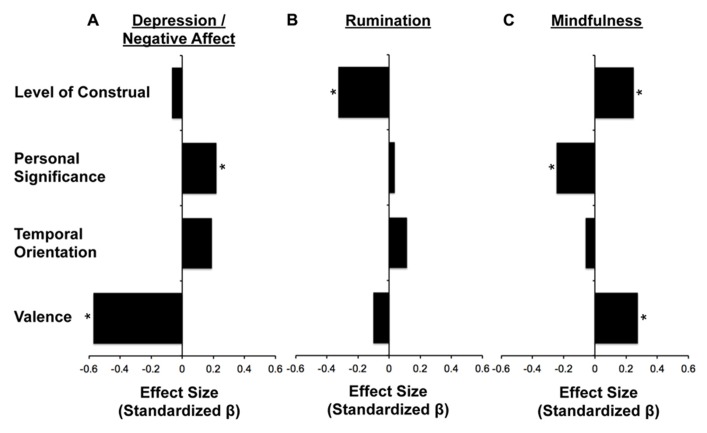
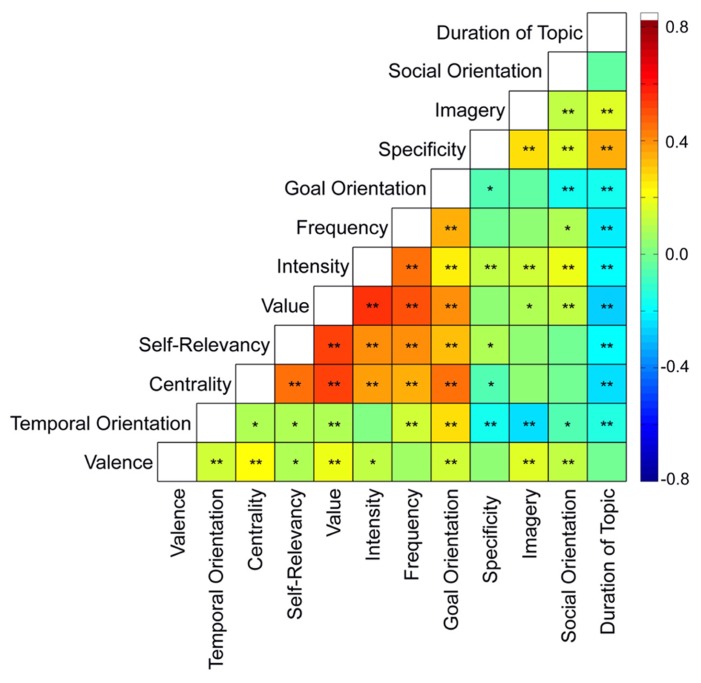
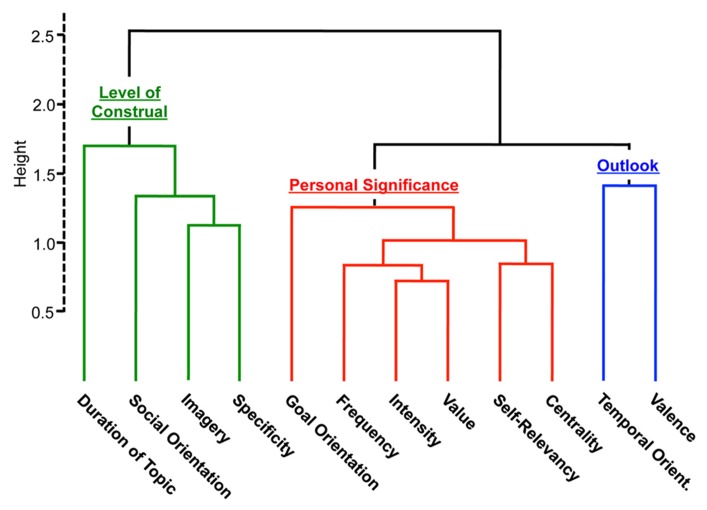
A core aspect of human cognition involves overcoming the constraints of the present environment by mentally simulating another time, place, or perspective. Although these self-generated processes confer many benefits, they can come at an important cost, and this cost is greater for some individuals than for others. Here we explore the possibility that the costs and benefits of self-generated thought depend, in part, upon its phenomenological content. To test these hypotheses, we first developed a novel thought sampling paradigm in which a large sample of young adults recalled several recurring thoughts and rated each thought on multiple content variables (i.e., valence, specificity, self-relevance, etc.). Next, we examined multi-level relationships among these content variables and used a hierarchical clustering approach to partition self-generated thought into distinct dimensions. Finally, we investigated whether these content dimensions predicted individual differences in the costs and benefits of the experience, assessed with questionnaires measuring emotional health and wellbeing. Individuals who characterized their thoughts as more negative and more personally significant scored higher on constructs associated with Depression and Trait Negative Affect, whereas those who characterized their thoughts as less specific scored higher on constructs linked to Rumination. In contrast, individuals who characterized their thoughts as more positive, less personally significant, and more specific scored higher on constructs linked to improved wellbeing (Mindfulness). Collectively, these findings suggest that the content of people's inner thoughts can (1) be productively examined, (2) be distilled into several major dimensions, and (3) account for a large portion of variability in their functional outcomes.
人类认知的一个核心方面涉及通过心理模拟另一个时间、地点或视角来克服当前环境的限制。虽然这些自我产生的过程带来了许多好处,但它们也会带来重要的代价,而且对于某些人来说,这种代价比其他人更大。在这里,我们探讨了自我生成思维的成本和收益在一定程度上取决于其现象学内容的可能性。为了检验这些假设,我们首先开发了一种新颖的思维抽样范式,其中大量年轻成年人回忆了几个反复出现的思维,并对每个思维的多个内容变量(即情绪、特异性、自我相关性等)进行了评价。接下来,我们研究了这些内容变量之间的多层次关系,并使用层次聚类方法将自我生成的思维分为不同的维度。最后,我们研究了这些内容维度是否可以预测经验成本和收益的个体差异,使用评估情感健康和幸福感的问卷进行了测量。将自己的思维描述为更消极和更个人化的人在与抑郁和特质消极情绪相关的结构上得分更高,而将自己的思维描述为不那么具体的人在与沉思相关的结构上得分更高。相比之下,将自己的思维描述为更积极、不那么个人化和更具体的人在与改善幸福感(正念)相关的结构上得分更高。总的来说,这些发现表明,人们内心思维的内容可以(1)被有效地检查,(2)被提炼成几个主要维度,(3)可以解释其功能结果的很大一部分变异性。