Guimont-Desrochers Fanny, Lesage Sylvie
Immunology-Oncology Section, Maisonneuve-Rosemont Hospital , Montreal, QC , Canada ; Département de Microbiologie, Infectiologie et Immunologie, Université de Montréal , Montreal, QC , Canada.
Front Immunol. 2013 Dec 11;4:446. doi: 10.3389/fimmu.2013.00446.
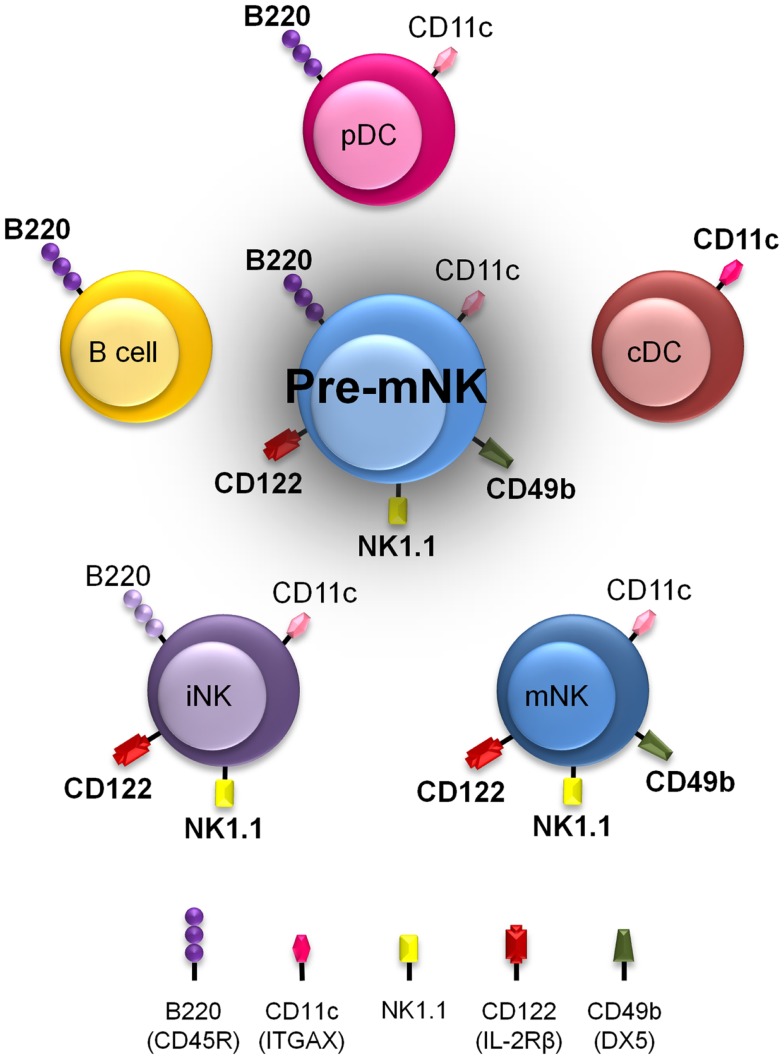
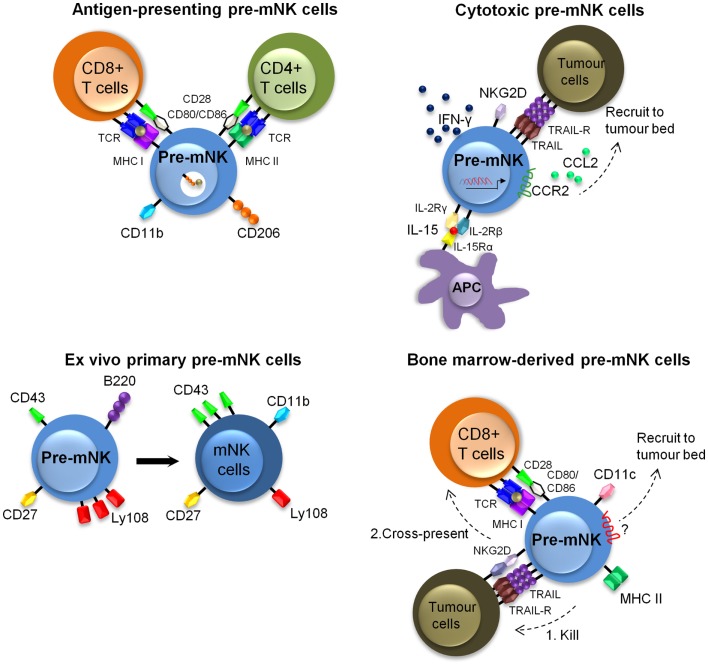
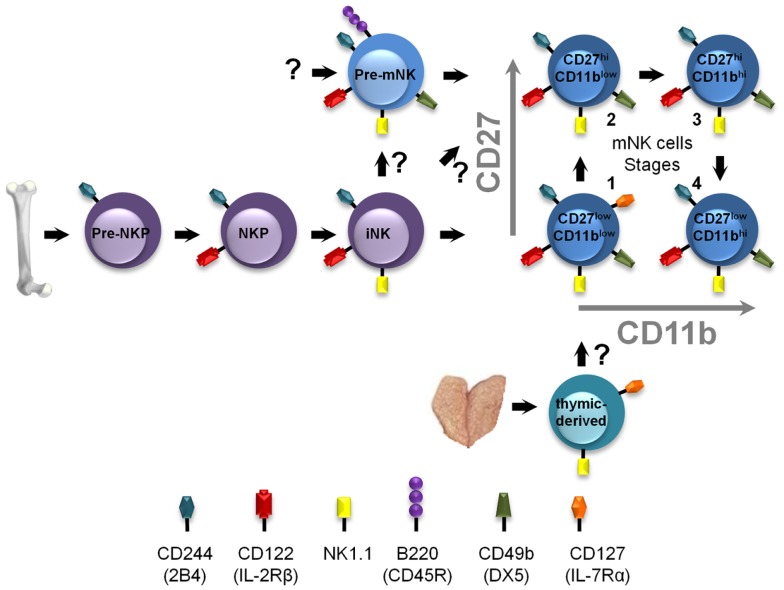
Interferon-producing killer dendritic cells (IKDC) were first described for their outstanding anti-tumoral properties. The "IKDC" terminology implied the description of a novel DC subset and initiated a debate on their cellular lineage origin. This debate shifted the focus away from their notable anti-tumoral potential. IKDC were recently redefined as precursors to mature NK (mNK) cells and consequently renamed pre-mNK cells. Importantly, a putative human equivalent of pre-mNK cells was recently associated with improved disease outcome in cancer patients. It is thus timely to revisit the functional attributes as well as the therapeutic potential of pre-mNK cells in line with their newly defined NK-cell precursor function.
产生干扰素的杀伤性树突状细胞(IKDC)最初因其出色的抗肿瘤特性而被描述。“IKDC”这一术语意味着对一种新型树突状细胞亚群的描述,并引发了关于其细胞谱系起源的争论。这场争论将焦点从它们显著的抗肿瘤潜力上转移开了。IKDC最近被重新定义为成熟自然杀伤(mNK)细胞的前体,因此被重新命名为前mNK细胞。重要的是,最近一种假定的人类前mNK细胞等效物与癌症患者更好的疾病预后相关。因此,根据前mNK细胞新定义的自然杀伤细胞前体功能,及时重新审视其功能特性以及治疗潜力是很有必要的。